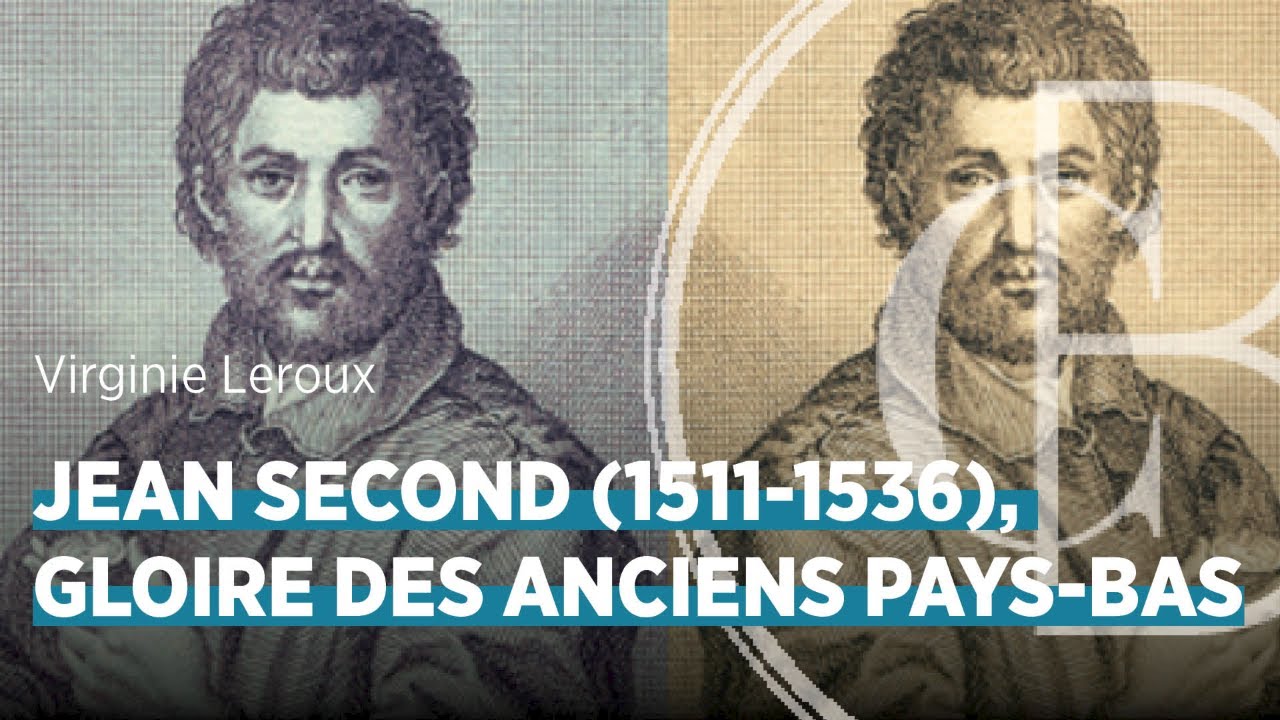
Jean Second (1511-1536), gloire des Anciens Pays-Bas
Keywords
Summary
143 words
Critical Evaluation
Value of the Information & Strength of the Argument
The lecture provides valuable insights into the life and work of a relatively obscure poet, situating him within the broader context of Renaissance humanism and imperial politics. Leroux’s argumentation is solid, supported by close readings of the poems and references to historical sources. She effectively demonstrates how Second’s poetry was intertwined with his social and political aspirations, offering a nuanced interpretation that goes beyond the traditional focus on his erotic verse. The discussion of the new edition and the restoration of censored poems adds scholarly value.
Scientific Rigor, Source Quality, Title Accuracy
The lecture is based on a recent critical edition co-edited by the speaker, ensuring a high level of textual accuracy. Leroux cites various primary sources, including Second’s poems and letters, as well as secondary literature on the period. The title accurately reflects the content, which is a comprehensive overview of Second’s life and work. The lecture is well-structured and maintains a scholarly tone throughout.
165 words
Title / Content Match
The title accurately reflects the content, which focuses on the life and work of Jean Second, a poet from the ancient Netherlands.
Quality & Reliability
8/10
The lecture is given by a recognized specialist in Neo-Latin literature, based on a recent critical edition of the complete works. The content is well-documented, with references to historical sources and scholarly works. However, the format is a conference, not a peer-reviewed publication, and some interpretations may be subjective.
Key Moments
Markers derived by PSI from the transcript: the creator did not define chapters.
- Introduction: presentation of Jean Second as a poet and medal engraver, and the recent edition of his complete works.
- Family background: Jean Second's father, Nicolas Everaerts, and his brothers' careers.
- Early poems: elegies to Julie and odes celebrating Charles V's coronation.
- Stay in Bourges: influence of André Alciat and the study of Roman law.
- Journey to Spain: service as secretary to the Archbishop of Toledo, and the planned epic on the Tunis campaign.
- Censored poems: epigrams against Francis I and Thomas More, restored in the new edition.
- Erotic poetry: the 'Basia' and their role in political and social ambitions.
- Conclusion: summary of Second's legacy and the importance of the new edition.
Cited Sources
- Académie royale de Belgique - Collège Belgique — Official page of the Collège Belgique, where the lecture was given.
Concurring Sources
- Académie royale de Belgique - Collège Belgique — The lecture was hosted by the Collège Belgique, and the page provides information about the event.
Contribution & Novelties
The lecture offers a fresh perspective on Jean Second, emphasizing the social and political dimensions of his poetry, which are often overshadowed by his erotic works. It also highlights the recent critical edition, which restores previously censored poems and provides a more complete picture of his oeuvre. The discussion of Second’s engagement with classical models and his role in imperial propaganda adds depth to our understanding of Renaissance humanism.
Pour aller plus loin :
- Neo-Latin literature — Overview of Neo-Latin literature, the context of Second’s work.
- Charles V, Holy Roman Emperor — Background on the emperor celebrated in Second’s poems.
- André Alciat — The jurist and humanist who influenced Second during his stay in Bourges.
115 words
Radar Profile
The radar profile shows high scores in information quantity and quality, reflecting the lecture's depth and scholarly basis. The technical level is also high, indicating a specialized audience. The overall reliability is strong, given the speaker's expertise and the recent edition.
💬 No comments were provided for analysis.