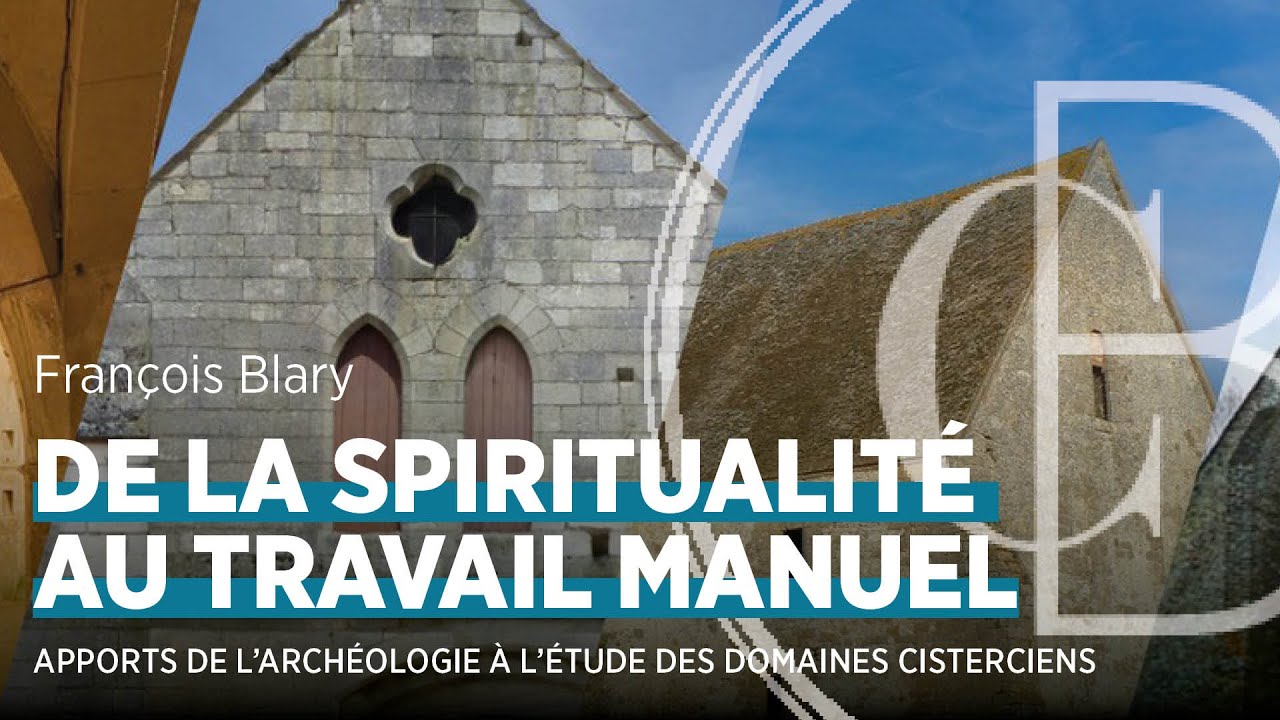
De la spiritualité au travail manuel : apports de l'archéologie à l'étude des domaines cisterciens
Keywords
Summary
157 words
Critical Evaluation
Value of the Information & Strength of the Argument
The lecture provides valuable insights into the economic and material aspects of Cistercian monasticism, a topic often overshadowed by spiritual and architectural studies. Blary’s argumentation is solid, grounded in his extensive archaeological fieldwork and engagement with primary sources. He effectively demonstrates how archaeology can correct and enrich historical narratives, for instance by revealing the diversity of grange types and the scale of economic activities. The discussion of the ‘grange des Beauvais’ exemplifies the interpretative challenges and the value of detailed building analysis. However, some arguments rely on interpretations that may be debated, and the lecture occasionally assumes prior knowledge of monastic history.
Scientific Rigor, Source Quality, Title Accuracy
The lecture demonstrates high scientific rigor, with explicit references to scholars such as Charles Higounet, Robert Fossier, and Léon Pressouyre, and to primary sources like charters. The archaeological evidence is presented with methodological care, and the speaker acknowledges uncertainties. The title accurately reflects the content, which focuses on the transition from spiritual ideals to the practical manual labor organization in Cistercian domains, as revealed by archaeology. The lecture is well-structured and the sources are credible, though the lack of detailed citations in the description limits verification.
203 words
Title / Content Match
The title accurately reflects the content, which focuses on the transition from spiritual ideals to the practical manual labor organization in Cistercian domains, as revealed by archaeology.
Quality & Reliability
8/10
The lecture is given by a recognized expert in medieval archaeology, based on extensive research and archaeological fieldwork, with references to established scholars and primary sources. The content is well-structured and supported by concrete examples, though some interpretations remain debated.
Key Moments
Markers derived by PSI from the transcript: the creator did not define chapters.
- Introduction by Alain Dierkens, presenting François Blary's career and research focus.
- Blary begins his lecture, outlining the Cistercian reform and its contrast with Cluniac practices.
- Definition of 'temporel' and 'grange', and discussion of their functions and typologies.
- Presentation of the Abbey of Preuilly and its archaeological study, including the 'grange des Beauvais'.
- Discussion on the expansion of the Cistercian order and the role of conversi in managing granges.
- Analysis of economic activities, including surplus production and trade, and the impact of papal exemptions.
- Examples of archaeological findings that challenge idealized views of Cistercian spirituality.
- Conclusion emphasizing the importance of archaeological research for understanding monastic domains.
Cited Sources
- Collège Belgique — Mentioned in the video description as the organizer of the lecture.
Concurring Sources
- Léon Pressouyre, 'Le rêve cistercien' — Referenced by the speaker as a key influence and source on Cistercian spirituality.
Dissenting Sources
- Traditional Cistercian historiography — The speaker challenges idealized narratives of Cistercian economic practices, suggesting that archaeological evidence reveals a more pragmatic and commercially oriented system.
Contribution & Novelties
The lecture offers a comprehensive archaeological perspective on Cistercian granges, synthesizing recent fieldwork and historical research. It challenges traditional views by highlighting the diversity of grange types and the economic sophistication of monastic domains. The case study of Preuilly provides new insights into building typologies and industrial activities.
Pour aller plus loin :
- Cistercians — Overview of the Cistercian order and its history.
- Grangia — Definition and function of granges in monastic context.
- Archaeology of monasticism — Introduction to the field and its methods.
84 words
Radar Profile
The radar profile shows high scores in information quantity, quality, and reliability, with a slightly lower technical level, indicating a lecture that is rich in content and well-supported, but accessible to a broader audience.