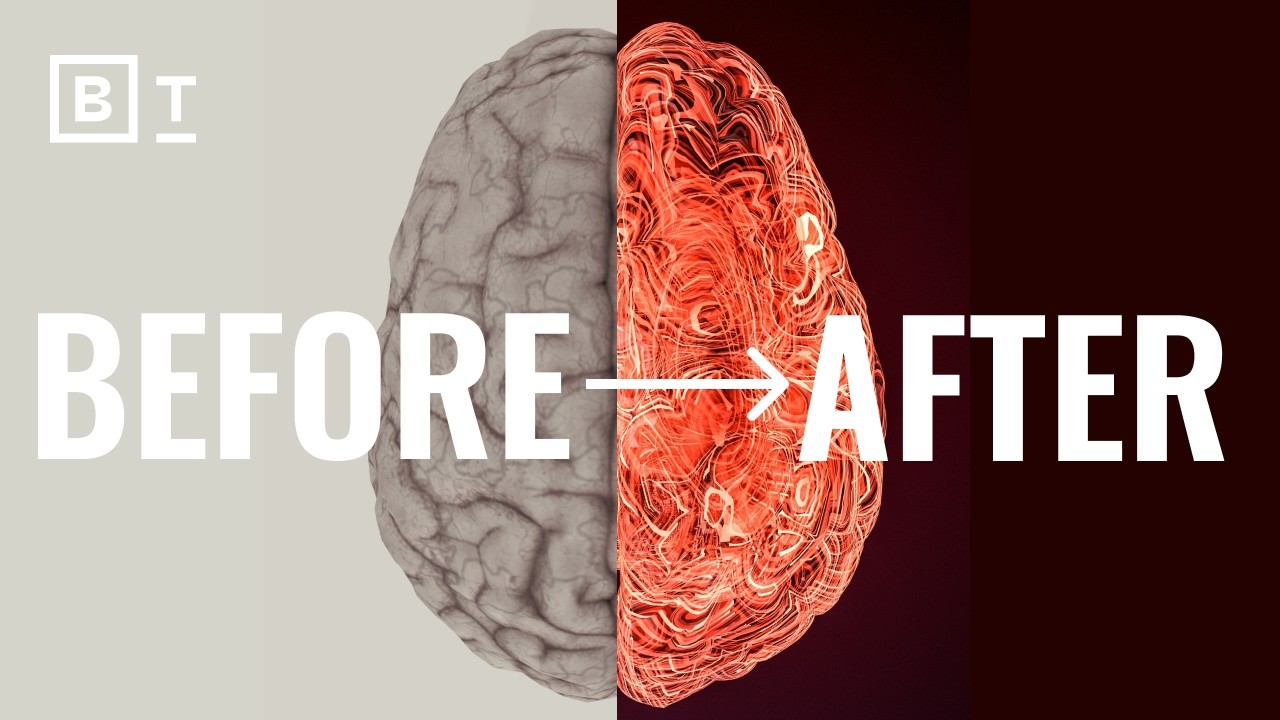
Keep your brain from declining after age 30
Keywords
Summary
161 words
Critical Evaluation
The video provides a clear and engaging overview of the relationship between physical activity and brain health, drawing on the expertise of three respected neuroscientists. The central thesis—that exercise triggers a ‘bubble bath’ of neurochemicals and promotes neuroplasticity via BDNF—is well-supported by current neuroscience research. The experts effectively communicate complex concepts like synaptic plasticity and neurotrophic factors in accessible language, making the content valuable for a general audience. However, the video suffers from several limitations. First, it lacks specific citations or references to the studies mentioned (e.g., the spin class vs. video Scrabble study), which reduces its scientific rigor. Second, the claim that memory peaks at age 30 is an oversimplification; while some cognitive functions may peak in early adulthood, others (e.g., vocabulary) can improve with age. The video does not address this nuance. Third, the discussion of Alzheimer’s pathology (plaques and tangles) is brief and does not explore the ongoing debate about whether these are causes or consequences of cell death. Fourth, the video omits other important factors for brain health, such as sleep, diet, and social interaction, which are mentioned only in passing in the comments. The production quality is high, with clear visuals and expert interviews, but the content is relatively shallow, functioning more as a motivational piece than an in-depth analysis. The presence of a sponsorship (Unlikely Collaborators) is disclosed but does not bias the scientific content. Overall, the video is a useful introduction to the topic but should be supplemented with more detailed sources for a comprehensive understanding.
253 words
Title / Content Match
The title accurately reflects the content, which focuses on exercise and lifestyle strategies to mitigate age-related cognitive decline.
Quality & Reliability
The video features credible neuroscientists (Wendy Suzuki, Samuel Wang, Gary Small) and presents established concepts like BDNF, neuroplasticity, and exercise-induced neurochemical release. However, it lacks detailed citations or references to specific studies, and the claim that memory peaks at age 30 is oversimplified. The content is accurate but simplified for a general audience.
Key Moments
- Introduction: brain-body connection and neuroplasticity.
- Exercise as a 'bubble bath' of neurochemicals (dopamine, serotonin, etc.).
- Memory peaks at age 30; normal vs. dementia-related memory loss.
- BDNF and its role in promoting neuronal growth and plasticity.
- Recommendation: mentally challenging but enjoyable activities (crosswords, languages, instruments).
- Brain plasticity: positive changes from physical activity.
- Conclusion: even 10 minutes of walking can improve brain health.
Cited Sources
- The most transformative brain activity ✓ verified — Full interview with neuroscientists on exercise and brain health.
- Perception Box series hub ✓ verified — Series exploring perception and cognition.
Concurring Sources
- Exercise and the Brain: BDNF and Neuroplasticity — Review article supporting the link between exercise, BDNF, and cognitive benefits.
- Physical Activity and Brain Health — Meta-analysis showing positive effects of exercise on brain structure and function.
Dissenting Sources
- Memory Decline: Not Always at Age 30 — Some research suggests that certain memory types peak later than 30, and decline is not uniform.
Contribution & Novelties
The video synthesizes expert opinions to emphasize that even minimal physical activity (10 minutes of walking) can immediately benefit brain chemistry and long-term plasticity. It frames exercise as a ‘bubble bath’ of neurochemicals, a memorable metaphor that may motivate viewers. The inclusion of multiple neuroscientists adds credibility, though the content is not novel for those familiar with the field.
Pour aller plus loin :
- BDNF and Exercise — Overview of BDNF’s role in neuroplasticity and its upregulation by exercise.
- Neuroplasticity — Comprehensive article on the brain’s ability to reorganize itself throughout life.
- Cognitive Reserve — Concept explaining how lifestyle factors can buffer against age-related decline.
105 words
Radar Profile
The radar profile shows moderate scores across all dimensions, with slightly higher quality and reliability (7) compared to quantity and technical level (6 and 4). This reflects a well-produced but simplified overview suitable for a general audience, lacking deep technical detail but maintaining scientific accuracy.
💬 Positif. Sur les 30 commentaires analysés, la majorité exprime gratitude et partage des conseils supplémentaires (sommeil, méditation), bien que certains critiquent le manque de profondeur et la simplification excessive.