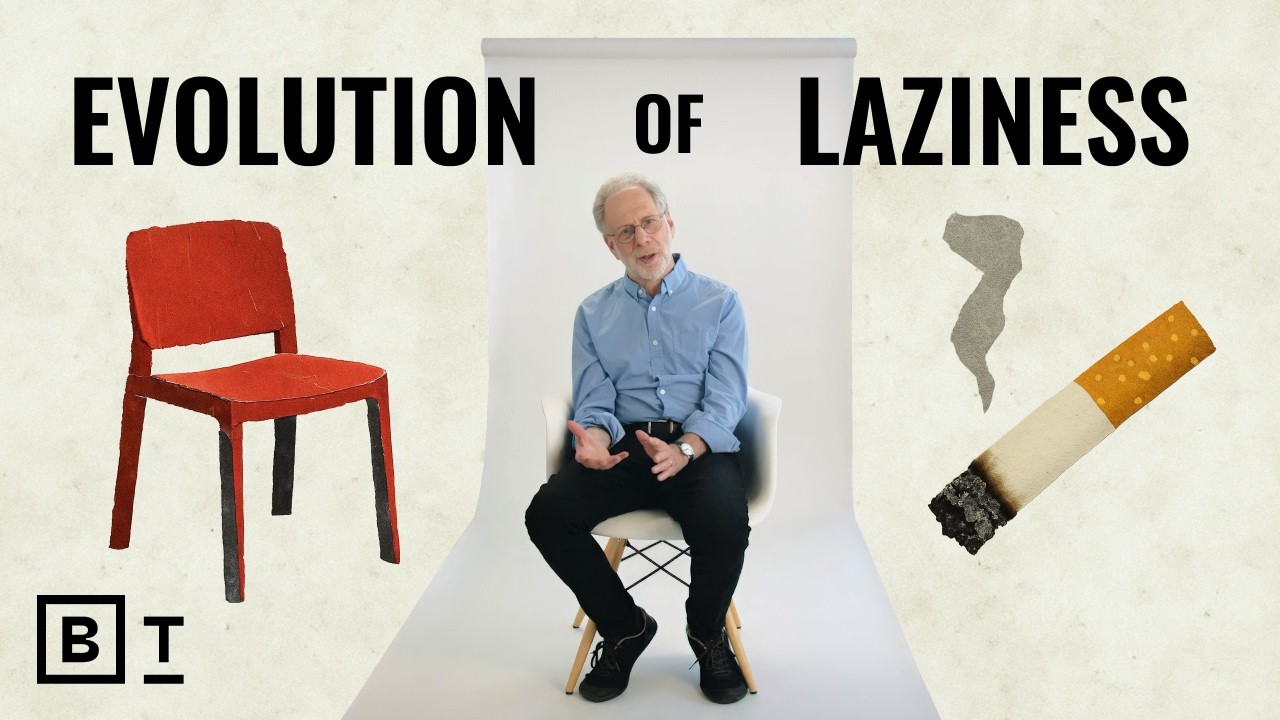
The evolution of laziness: Why humans resist the gym | Daniel Lieberman: Full Interview
Keywords
Summary
161 words
Critical Evaluation
The interview provides a compelling and scientifically grounded perspective on exercise from an evolutionary standpoint. Lieberman, a renowned expert, effectively communicates complex ideas in an accessible manner. His arguments are well-supported by evolutionary biology and anthropological evidence, and he successfully challenges common misconceptions about exercise. The discussion is nuanced, acknowledging the cultural and environmental factors that shape our behavior. The quality of information is high, with references to his book and research, though specific citations are not provided in the video. The interview’s strength lies in its ability to reframe exercise as a modern challenge rather than a natural behavior, which can help reduce guilt and promote a more positive approach to physical activity. The title accurately reflects the content, and the overall presentation is engaging and informative. The only minor weakness is the lack of direct references to specific studies, but this does not significantly detract from the credibility. The interview is a valuable resource for anyone interested in understanding the evolutionary basis of exercise and how to incorporate more movement into modern life.
175 words
Title / Content Match
The title accurately reflects the content, focusing on the evolutionary perspective on why humans resist exercise.
Quality & Reliability
9/10
High-quality content from a Harvard professor and expert in human evolutionary biology. The interview is based on scientific research and published work, with clear explanations and references to studies. Minor limitations include the lack of direct citations to specific studies in the video, but the overall credibility is high.
Chapters
- How evolution shaped the human body
- How we stabilize our heads when we run
- How bodies change in industrial cities
- The origins of exercise
- Exercise vs. physical activity
- How many of us get enough exercise?
- Myths about exercise
- Smarter sitting, smarter sleeping
- Typical calorie expenditure
- Myths about physical inactivity
- Is sitting the new smoking?
- Myths about sleep
- Walking, running, and everyday strength
- Bipeds vs. quadrupeds
- The origins of different sports
- Not all sports are physically active
- Average American step counts
- The myth of 10,000 steps
- Exercise as medicine
- How much exercise do I need?
Cited Sources
- Big Think: The evolution of laziness (transcript) — Official transcript of the interview.
- Big Think Plus — Big Think's membership platform for exclusive content.
- Big Think Media Substack — Newsletter subscription for Big Think content.
- Harvard professor debunks the ‘10,000 steps per day’ myth — Related video on the 10,000 steps myth.
Concurring Sources
- WHO physical activity fact sheet — Supports the recommended levels of physical activity.
Contribution & Novelties
The interview offers a fresh perspective on exercise by framing it as a cultural invention rather than a natural behavior. It synthesizes evolutionary biology and anthropology to explain why modern humans struggle with exercise, and it provides practical insights for making physical activity more enjoyable and sustainable. The discussion of the 10,000 steps myth and the comparison with hunter-gatherer lifestyles adds depth to the topic.
Pour aller plus loin :
- Exercised: Why Something We Never Evolved to Do Is Healthy and Rewarding — The book by Daniel Lieberman that expands on these ideas.
- Evolutionary mismatch — Concept explaining how our bodies are adapted to past environments, not modern ones.
- Physical activity guidelines — WHO recommendations for physical activity.
118 words
Radar Profile
The radar profile shows high scores in information quantity, quality, and reliability, with a slightly lower technical level, indicating that the content is accessible yet scientifically robust.
💬 Très positif. Sur les 30 commentaires analysés, la majorité exprime une appréciation pour la perspective évolutive et la compassion de Lieberman, avec des anecdotes personnelles sur l'activité physique.