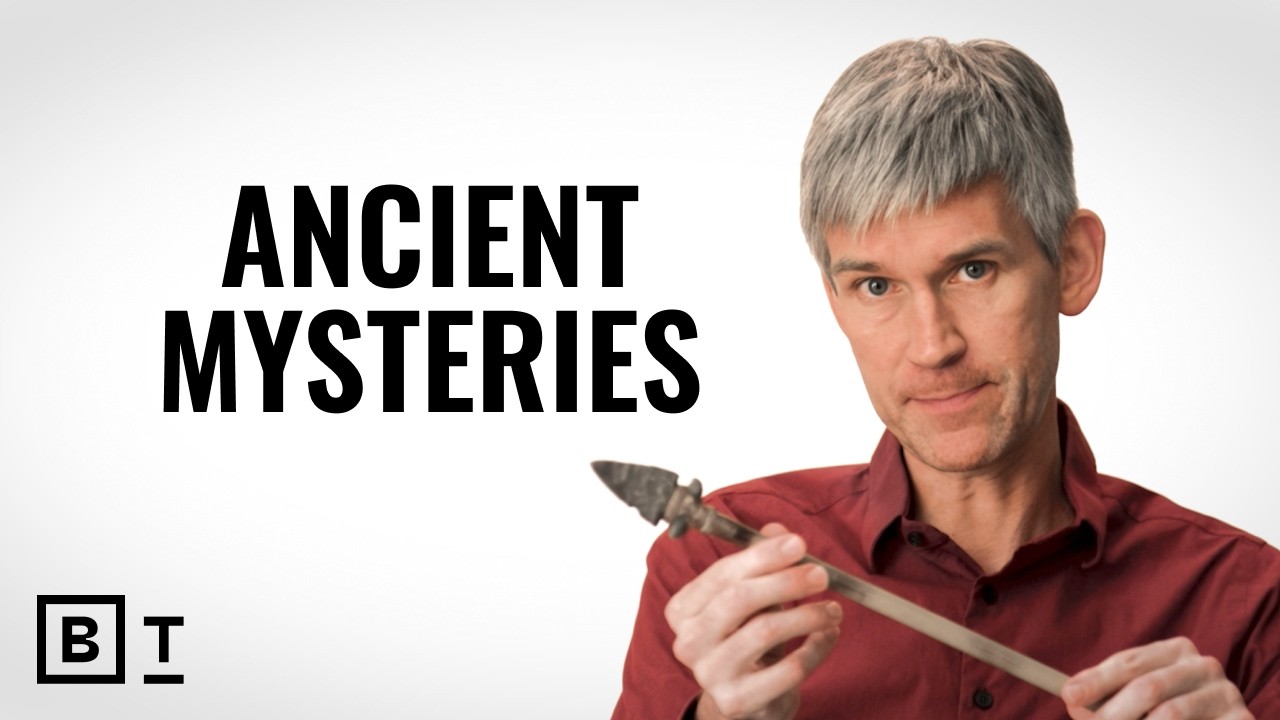
Lost technologies and the secrets they hold, in 53 minutes | Sam Kean: Full Interview
Keywords
Summary
129 words
Critical Evaluation
The interview provides a compelling and accessible introduction to experimental archaeology, showcasing its value in understanding the past through sensory and practical recreation. Sam Kean’s enthusiasm and personal anecdotes make the content engaging, and his credentials as a science writer lend credibility. However, the discussion is largely anecdotal, and while he mentions specific experiments and recreations, he does not cite specific academic studies or sources, which limits the scientific rigor. The segment on the Nazi atomic bomb is historically interesting but is presented as a narrative without deep analysis or citation of primary sources. The title accurately reflects the content, and the interview is well-structured with clear chapters. The main strengths are the vivid descriptions and the demonstration of how experimental archaeology can challenge assumptions and provide new perspectives. The weaknesses include a lack of critical evaluation of the methods and potential biases, and the absence of references to peer-reviewed literature. Overall, the interview is informative and thought-provoking, but it should be complemented with more rigorous sources for a fully scientific perspective.
172 words
Title / Content Match
The title accurately reflects the content, which explores lost technologies and their secrets through experimental archaeology and historical sabotage missions.
Quality & Reliability
8/10
The interview features Sam Kean, a recognized science writer, discussing experimental archaeology and historical events. The content is based on his book and includes practical demonstrations, but it is primarily anecdotal and lacks peer-reviewed citations. The information is plausible and aligns with known historical contexts, but the lack of direct references to academic sources reduces the score.
Chapters
- Part 1: Bringing ancient history to life
- Chapter 1: Resurrecting Ancient Practices
- Chapter 2: Africa – 72,000 years ago
- Chapter 3: Egypt – 2,000 BC
- Chapter 4: Roman Empire – 100 BCE
- Chapter 5: Viking – 900 BCE
- Part 2: How the Allies sabotaged the Nazi atomic bomb
- Rumors of a Nazi atomic bomb
- The mission to sabotage Hitler’s bomb
- Ethical dilemmas in the atomic age
Cited Sources
- Big Think Membership — Mentioned as a way to support the channel and access exclusive content.
- Big Think Full Interview Series — Link to the video transcript and related content.
- Big Think on Substack — Subscription option for Big Think content.
- Big Think Podcast on Spotify — Podcast version of Big Think content.
- Mary Beard Interview on Ancient Rome — Suggested next video related to ancient history.
Concurring Sources
- Experimental archaeology - Wikipedia — Supports the concept and methods of experimental archaeology discussed in the interview.
- German nuclear weapons program - Wikipedia — Provides historical context for the Nazi atomic bomb and Allied sabotage efforts.
Dissenting Sources
- No direct discordant sources found — The interview does not present controversial claims that would have direct contradictions in the provided sources.
Contribution & Novelties
The interview offers a unique perspective on experimental archaeology, emphasizing the sensory and practical aspects of ancient life. It highlights how recreating ancient technologies can provide insights that traditional archaeology cannot. The discussion of the Nazi atomic bomb sabotage adds a historical narrative that is often overlooked.
Pour aller plus loin :
- Experimental archaeology - Wikipedia — Provides an overview of the field and its methodologies.
- Ostrich egg canteens - research article — Discusses the use of ostrich eggshells as water containers in prehistoric times.
- Nazi atomic bomb program - Wikipedia — Details the German nuclear project and the Allied efforts to sabotage it.
104 words
Radar Profile
The radar profile shows high scores in quantity of information and fiabilité, reflecting the rich content and the credibility of the speaker. The lower score in niveau technique indicates that the content is accessible to a general audience, while qualite_information is moderate due to the lack of explicit citations.