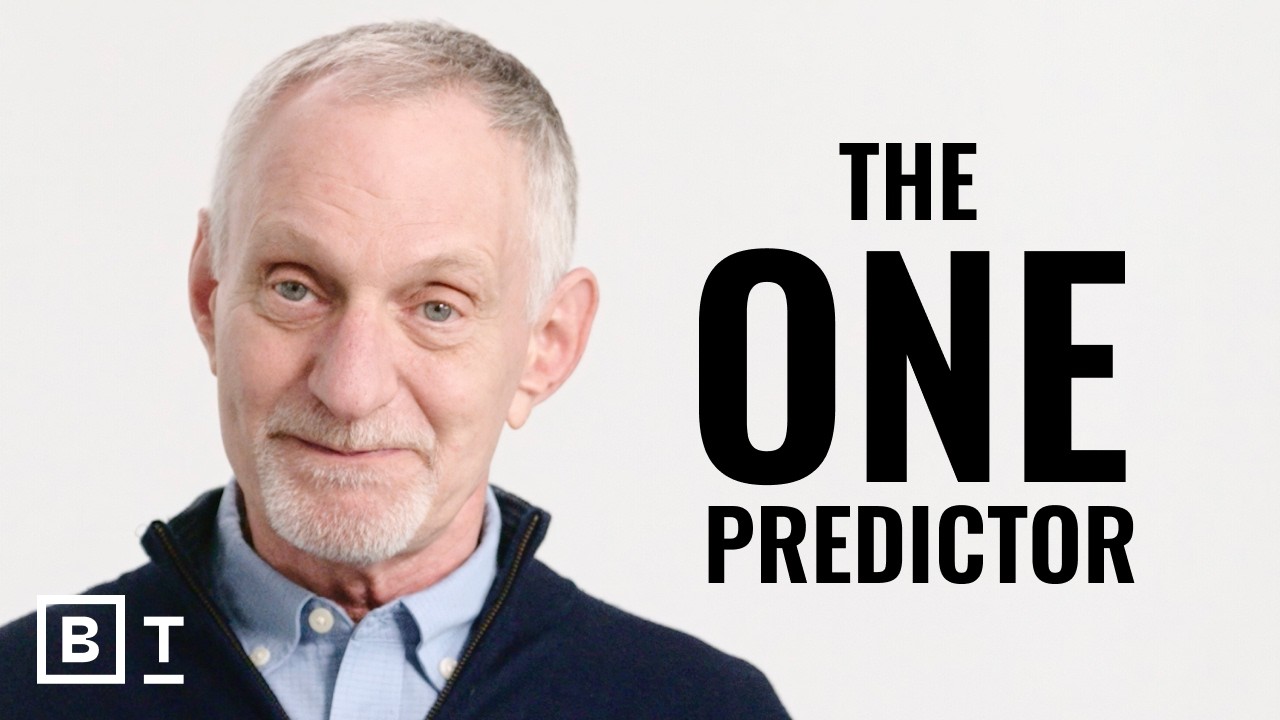
What actually makes a good life, according to 85 years of data | Robert Waldinger
Keywords
Summary
127 words
Critical Evaluation
The video provides a compelling and accessible overview of the Harvard Study of Adult Development, one of the most comprehensive longitudinal studies on human wellbeing. Waldinger’s expertise as the study’s director lends credibility, and he effectively communicates complex research findings in an engaging manner. The argumentation is solid, grounded in decades of data, and he appropriately acknowledges limitations, such as the original sample’s lack of diversity. However, the presentation simplifies some nuances, such as the exact percentage of happiness attributed to genetics versus circumstances, which may be more complex than presented. The sources cited are primarily the study itself and related research, but specific references are not provided in the video, limiting verifiability. The title accurately reflects the content, and the video’s structure with chapters aids comprehension. Overall, the video is a valuable resource for understanding the importance of relationships, though viewers should seek additional sources for a more detailed scientific perspective.
152 words
Title / Content Match
The title accurately reflects the content, which discusses findings from 85 years of data on what makes a good life.
Quality & Reliability
8/10
The content is based on the Harvard Study of Adult Development, a long-running longitudinal study, and the speaker is its current director. The claims are supported by scientific research, though some specific statistics (e.g., 50% set point) are simplified. The presentation is clear and credible, but the video is an interview, not a peer-reviewed publication.
Chapters
Cited Sources
- Big Think Membership — Mentioned as a way to support the channel and access exclusive content.
- Full Interview: What 85 years of research says is the real key to happiness — Linked as a related video with more in-depth discussion.
- Video Transcript — Provided for further reading of the content.
Concurring Sources
- The Grant and Glueck Study — Wikipedia article on the Harvard Study of Adult Development, confirming its scope and findings.
Dissenting Sources
External References
Contribution & Novelties
The video synthesizes decades of longitudinal data to highlight relationships as the central factor in wellbeing, offering practical insights for individuals. It emphasizes that relationships are not just emotionally beneficial but also physiologically protective, influencing stress and health outcomes.
Pour aller plus loin :
- Harvard Study of Adult Development — Official page of the study, providing detailed information and publications.
- Sonja Lyubomirsky’s research on happiness — Her work on the determinants of happiness, including the 50% set point, 10% circumstances, and 40% intentional activity.
- Loneliness and health: a review — A scientific review on the physiological effects of loneliness.
99 words
Radar Profile
The radar profile shows high scores in quantity and quality of information, reflecting the depth of the study and the clarity of presentation. The technical level is moderate, making it accessible to a general audience while still providing scientific insights. Overall, the video is highly reliable and informative.
💬 The comments are predominantly positive, with many viewers sharing personal stories and expressing gratitude for the insights. Some express sadness or loneliness, but overall the tone is appreciative and reflective. Sur les 30 commentaires analysés, la majorité sont positifs et reflètent une résonance émotionnelle avec le contenu.