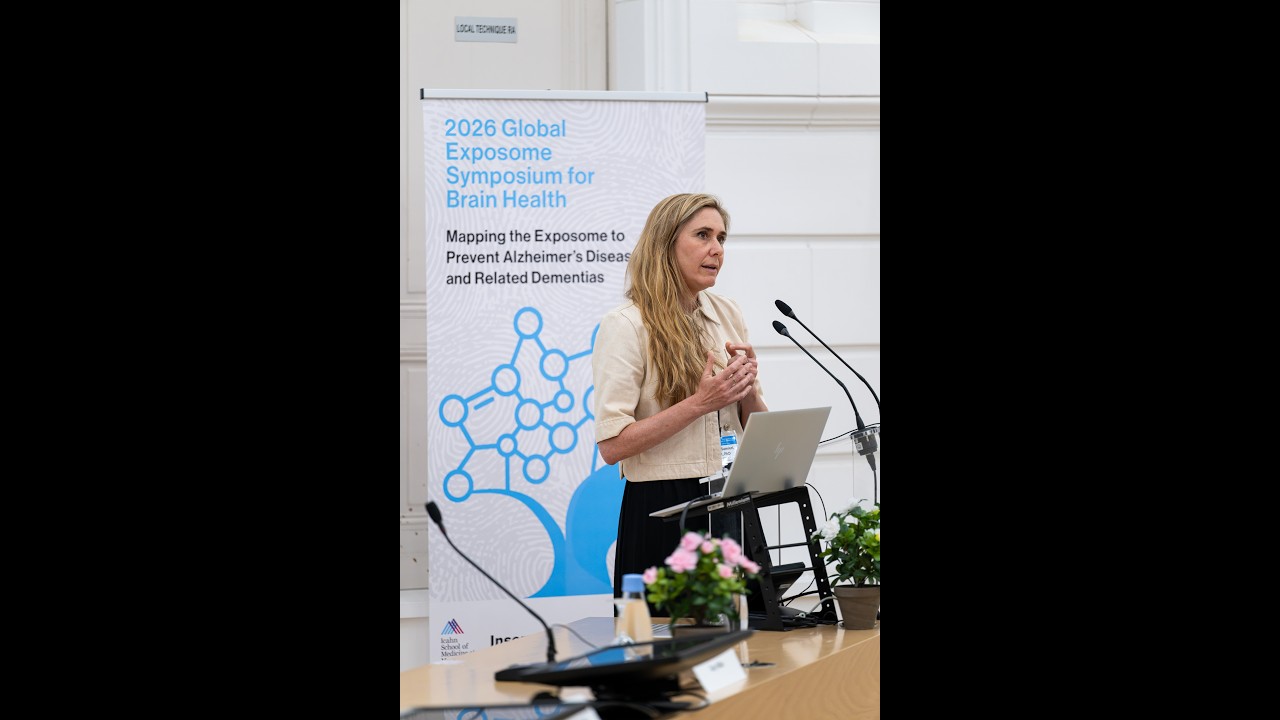
Assessing the Contribution of the Chemical Exposome to Brain Aging
Keywords
Summary
213 words
Critical Evaluation
Value of the Information & Strength of the Argument
The presentation provides valuable insights into the current state of research on the chemical exposome and brain aging. Samieri effectively argues for the importance of studying the exposome to improve prevention strategies, citing robust epidemiological evidence from large cohorts. She clearly explains the rationale behind the LIBRA score and its potential public health impact, while acknowledging the need for further research on causal factors and mechanisms. The argumentation is well-structured, moving from established knowledge to ongoing research initiatives, and she transparently discusses limitations, such as the null results in the POPs study and the challenges of capturing long-term effects. The inclusion of specific cohort data and project details enhances the credibility of her arguments.
Scientific Rigor, Source Quality, Title Accuracy
Samieri demonstrates scientific rigor by referencing established cohorts (PAQUID, Three-City, Memento, B-Cube) and published research, including the Lancet Commission’s 14 risk factors. She cites specific studies, such as the LIBRA score analysis and the scoping review on chemical exposome and neurodegenerative diseases. The presentation is supported by NIH grants and collaborations with recognized institutions. The title accurately reflects the content, focusing on the chemical exposome’s contribution to brain aging. The talk is well-referenced, though it primarily presents an overview of ongoing research rather than detailed methodology, which is appropriate for a symposium presentation.
222 words
Title / Content Match
The title accurately reflects the content, which focuses on the chemical exposome's role in brain aging, with a clear epidemiological perspective.
Quality & Reliability
8/10
Presentation by a recognized expert in the field, based on established cohorts and published research, with transparent discussion of limitations and ongoing projects.
Key Moments
Markers derived by PSI from the transcript: the creator did not define chapters.
- Introduction to brain aging as a lifelong process and the importance of prevention.
- Discussion of the LIBRA score and its association with dementia risk.
- Overview of the exposome concept and its three main groups of factors.
- Scoping review results on chemical exposome and neurodegenerative diseases.
- Introduction of the B-Cube cohort and its design for exposomics research.
- Description of the ExpoSignals project and its multi-cohort approach.
- Discussion on challenges of long-term research funding and the need for longevity cohorts.
Cited Sources
- Lancet Commission on dementia prevention — Cited as listing 14 modifiable risk factors for dementia.
- PAQUID study — Landmark cohort in Bordeaux for dementia research.
- Three-City study — Population-based cohort used for LIBRA score analysis.
- Memento cohort — Clinical cohort for brain aging and dementia.
- B-Cube study — New cohort designed for exposomics and brain aging.
- ExpoSignals project — Horizon Europe project on exposome and neurodegeneration.
Concurring Sources
- Lancet Commission on dementia prevention — Supports the list of modifiable risk factors.
- PAQUID study — Provides longitudinal data on dementia risk factors.
- Three-City study — Used for LIBRA score validation.
Dissenting Sources
- POPs and dementia study — Reported null results, suggesting need for larger samples.
Contribution & Novelties
The presentation provides an original synthesis of the chemical exposome’s role in brain aging, highlighting the need for more research on ubiquitous pollutants. It introduces the B-Cube cohort as a novel resource for exposomics, with comprehensive biospecimen collection and advanced neuroimaging. The ExpoSignals project represents a collaborative effort to identify pollutant mixtures affecting neurodegeneration. The talk emphasizes the importance of integrating exposome data with genetic and phenotypic information to advance precision environmental health.
Pour aller plus loin :
- Exposome — Overview of the exposome concept.
- Alzheimer’s disease — Background on the disease.
- Lancet Commission on dementia prevention — Official commission page.
- B-Cube study — Official website of the B-Cube cohort.
- ExpoSignals project — Project website.
115 words
Radar Profile
The radar profile shows high scores in quantity and quality of information, with moderate technical level and high reliability, indicating a well-balanced presentation suitable for a scientific audience.
💬 No comments were provided for analysis.