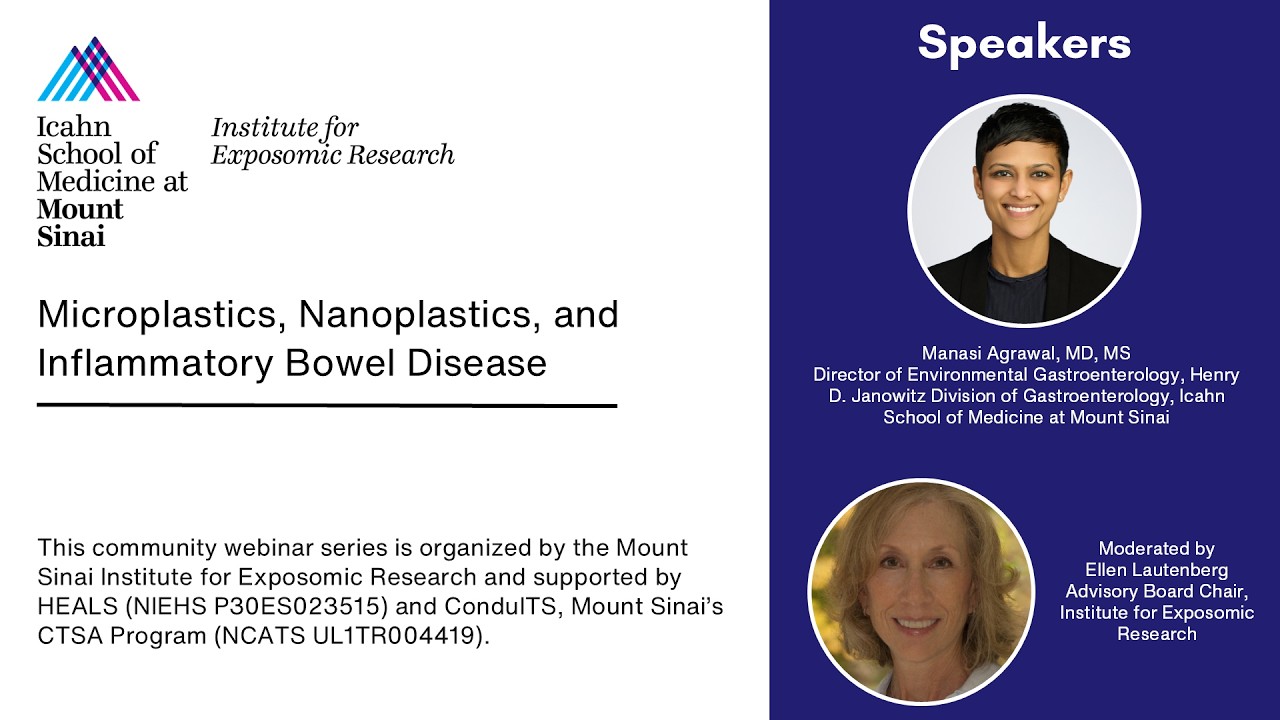
Microplastics, Nanoplastics, and Inflammatory Bowel Disease (with Manasi Agrawal)
Keywords
Summary
200 words
Critical Evaluation
Value of the Information & Strength of the Argument
The presentation provides valuable insights into the emerging field of microplastics and IBD, synthesizing current evidence and presenting novel preliminary data. The argumentation is well-structured, building from basic definitions to complex research findings. Dr. Agrawal carefully distinguishes between established findings and hypotheses, and acknowledges limitations in existing studies. The inclusion of her own research adds originality, though the preliminary nature of the data is appropriately emphasized. The discussion of methodological challenges is particularly valuable for understanding the complexities of this research area.
Scientific Rigor, Source Quality, Title Accuracy
The scientific rigor is high, with references to peer-reviewed studies, including a notable NEJM publication. The speaker is transparent about the limitations of her own pilot data and the need for further research. The title accurately reflects the content, and the presentation stays focused on the topic. The sources cited are credible, and the speaker does not overstate conclusions. The webinar format includes a Q&A session, but no comments are provided for analysis.
170 words
Title / Content Match
The title accurately reflects the content, which focuses on the relationship between microplastics/nanoplastics and IBD.
Quality & Reliability
8/10
The presentation is given by a physician-scientist specializing in environmental gastroenterology, with references to peer-reviewed studies and ongoing research. It includes preliminary data from the speaker's own studies, which are clearly labeled as such. The content is well-structured and acknowledges limitations.
Key Moments
Markers derived by PSI from the transcript: the creator did not define chapters.
- Introduction to IBD and its subtypes
- Discussion on rising incidence and environmental factors
- Explanation of exposome and its role in IBD
- Characteristics of microplastics and nanoplastics
- Methodological challenges in measuring microplastics
- Review of key studies linking microplastics to health outcomes
- Introduction to PLANET study and preliminary findings
- Discussion on co-pollutants like PFAS and metals
- Potential dietary interventions and practical tips
Cited Sources
- Microplastics and Nanoplastics in Atheromas and Cardiovascular Events — Italian study measuring microplastics in carotid plaques and association with cardiovascular events.
- Microplastics in the gut of patients with inflammatory bowel disease — Chinese study comparing microplastic levels in stool of IBD patients and controls.
- Rapid single-particle chemical imaging of nanoplastics by SRS microscopy — Study by Columbia researchers detecting nanoplastics in bottled water.
Concurring Sources
- Microplastics and human health: A systematic review — Systematic review summarizing evidence on microplastics and health outcomes.
Dissenting Sources
- Microplastics in human tissues: A review — Some studies question the clinical significance of microplastics due to methodological limitations and lack of standardized detection methods.
Contribution & Novelties
The webinar provides an up-to-date overview of the emerging evidence linking microplastics and nanoplastics to IBD, with a focus on the exposome framework. Dr. Agrawal presents preliminary data from her PLANET study, which is among the first to examine microplastic exposure during pregnancy and early life in relation to IBD risk. The finding of distinct microplastic size distributions in Crohn’s disease patients is novel and suggests potential mechanisms. The discussion of methodological challenges and the need for plastic-free protocols is a valuable contribution to the field.
Pour aller plus loin :
- Exposome — Overview of the exposome concept.
- Inflammatory bowel disease — General information on IBD.
- Microplastics — Overview of microplastics and their environmental impact.
- PFAS — Information on forever chemicals.
- Anthocyanins — Overview of anthocyanins and their potential health benefits.
131 words
Radar Profile
The radar profile shows high scores across all dimensions, indicating a well-balanced presentation with substantial information, strong scientific rigor, and appropriate technical depth. The lowest score is in technical level, but it remains adequate for a general audience.