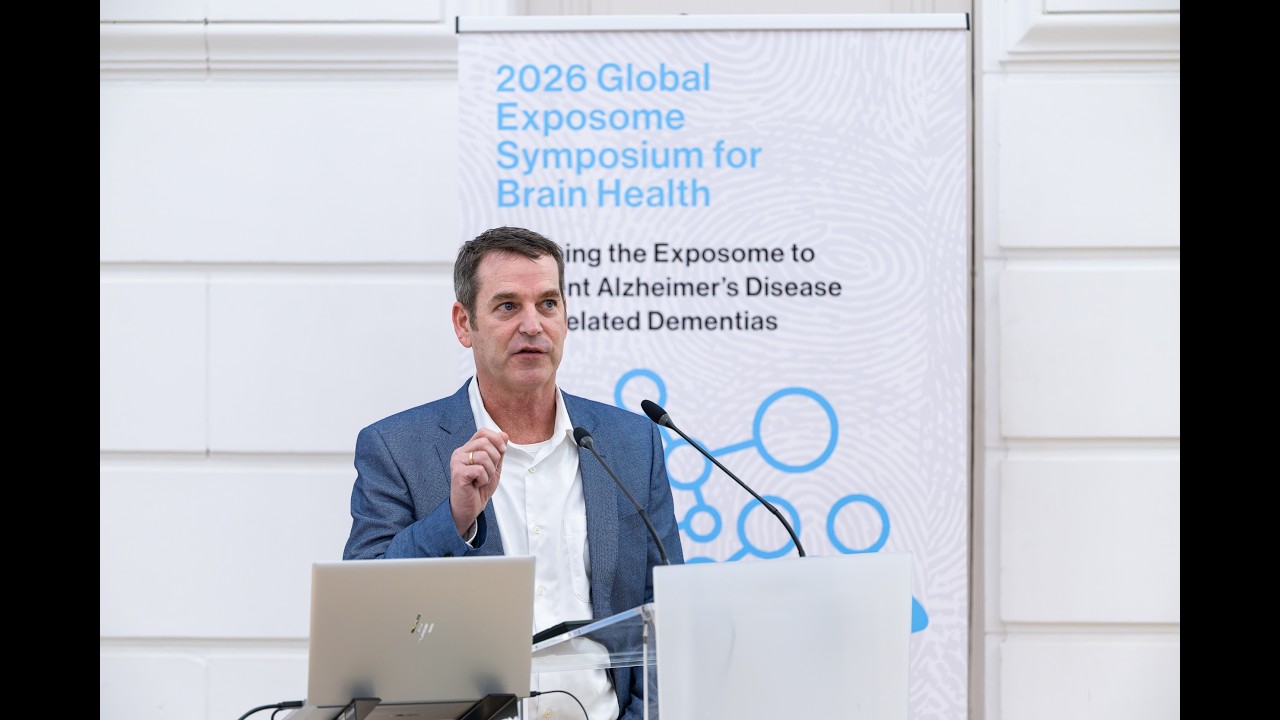
Using Exposomics to Define the Trajectory of Alzheimer’s Disease, Gary Miller, PhD
Keywords
Summary
151 words
Critical Evaluation
Value of the Information & Strength of the Argument
The talk provides valuable insights into the application of exposomics to Alzheimer’s disease, showcasing a multi-omics approach that integrates environmental exposures, metabolomics, and genetics. The argumentation is solid, based on data from multiple cohorts and replication across populations. The speaker is transparent about limitations and the need for further validation, which enhances credibility. The use of specific examples, such as the lysoPC findings and the creatinine observation, illustrates the potential of this approach to uncover novel biomarkers and mechanistic pathways.
Scientific Rigor, Source Quality, Title Accuracy
The presentation demonstrates scientific rigor through the use of high-resolution mass spectrometry, careful study design, and replication across cohorts. The speaker cites specific studies and collaborators, and the talk is part of a symposium supported by NIH grants. The title accurately reflects the content. The speaker acknowledges the preliminary nature of some findings and the need for further research, which is appropriate for a conference presentation.
161 words
Title / Content Match
The title accurately reflects the content, focusing on using exposomics to understand Alzheimer's disease trajectory.
Quality & Reliability
8/10
Presentation by a leading researcher in exposomics, based on published studies and ongoing research, with transparent discussion of methods and limitations. However, it is a conference talk with preliminary data and not peer-reviewed in this form.
Key Moments
Markers derived by PSI from the transcript: the creator did not define chapters.
- Introduction to the long latency period of Alzheimer's disease and the role of A-beta and tau.
- Description of initial metabolomics study at Emory University, identifying dietary components and DDT metabolites.
- Discussion of the Washington Heights cohort and the ability to separate cases from controls and racial/ethnic groups.
- Presentation of findings on lysophosphatidylcholines (lysoPCs) and their association with disease progression and APOE.
- Discovery of creatinine changes and potential link to renal function and disease progression.
- Use of C. elegans to study DDT metabolite effects and conservation of pathways.
- Advocacy for integrating exposomics into large biobanks and scaling up studies.
- Q&A session discussing readiness for large-scale investment and validation.
Cited Sources
- Banbury Conference on Exposomics — Mentioned as a conference where an operational definition of exposomics was discussed.
- UK Biobank — Large-scale biobank used for exposomic-wide association study on Alzheimer's disease.
- All of Us Research Program — Mentioned as a large cohort that could incorporate exposomics.
- C. elegans as a model organism — Used for mechanistic studies of DDT metabolites.
Concurring Sources
- DDT and Alzheimer's disease — Study by Jason Richardson et al. showing elevated DDT metabolites in AD patients.
Contribution & Novelties
This talk provides an overview of the emerging field of exposomics applied to Alzheimer’s disease, highlighting the integration of high-resolution metabolomics with environmental exposure data. It presents novel findings on lysophosphatidylcholines and creatinine as potential biomarkers, and advocates for large-scale exposomic studies. The speaker emphasizes the importance of multi-omics and cross-cohort replication.
Pour aller plus loin :
- Exposome — Concept of the totality of environmental exposures.
- Metabolomics — Study of small molecules in biological systems.
- Alzheimer’s disease biomarkers — Overview of biomarkers including p-tau and amyloid.
- UK Biobank — Large-scale biomedical database.
- C. elegans as a model organism — Used for mechanistic studies.
103 words
Radar Profile
The radar profile shows high scores across all dimensions, indicating a well-rounded and informative presentation. The talk is strong in both quantity and quality of information, with a high technical level and good reliability.
💬 Sur les 0 commentaires analysés, aucune tendance n'a pu être dégagée.