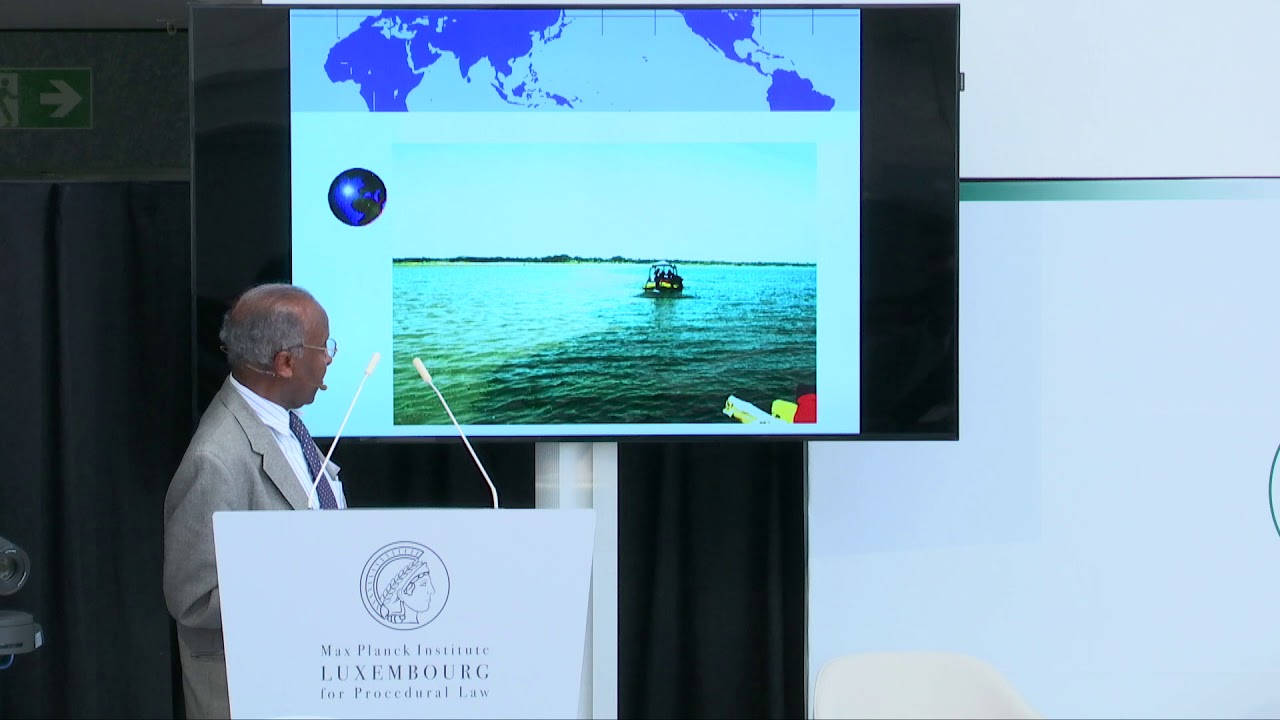
Panel IV: Current Transboundary Freshwater Disputes - North Africa, South Asia, and Southeast Asia
Keywords
Summary
133 words
Critical Evaluation
Value of the Information & Strength of the Argument
The panel provides valuable insights into the complexities of transboundary water disputes, combining legal analysis with political and social perspectives. The speakers effectively argue that historical treaties and power asymmetries often hinder cooperation, but recent agreements and international legal principles offer pathways forward. The argumentation is solid, drawing on specific examples and treaties, though it relies heavily on expert opinion rather than empirical data.
Scientific Rigor, Source Quality, Title Accuracy
The presentation demonstrates scientific rigor through the use of specific treaties, agreements, and institutional frameworks. The speakers cite key documents such as the 1959 Nile Waters Agreement, the Indus Water Treaty, and the UN Watercourses Convention. The title accurately reflects the content, and the panel’s structure ensures a comprehensive coverage of the selected regions. No comments were provided for analysis.
139 words
Title / Content Match
The title accurately reflects the panel's focus on current transboundary freshwater disputes in North Africa, South Asia, and Southeast Asia, with each speaker addressing a specific case.
Quality & Reliability
8/10
The panel features recognized experts in international water law and conflict resolution, providing a high-level overview of transboundary water disputes. The content is well-structured and grounded in legal and political analysis, though it lacks detailed citations and is based on expert opinion rather than original research.
Key Moments
Markers derived by PSI from the transcript: the creator did not define chapters.
- Introduction of the panel and speakers by the chair.
- Dr. Salman begins his presentation on the Nile River, outlining its unique characteristics.
- Discussion of historical treaties and the Cooperative Framework Agreement.
- Analysis of the Grand Ethiopian Renaissance Dam and its implications.
- Prof. Ashok Swain introduces the Indus River dispute and the role of China.
- Discussion of the Indus Water Treaty and its challenges.
- Prof. Rieu-Clarke presents on the Mekong River and the UNECE Water Convention.
- Q&A session and concluding remarks.
Cited Sources
- International Conference: A Bridge over Troubled Waters — Conference information and panel details.
Concurring Sources
- UN Watercourses Convention — Provides legal framework for transboundary water cooperation.
Contribution & Novelties
The panel offers a comparative analysis of three major transboundary water disputes, highlighting common challenges and potential solutions. It emphasizes the need for benefit-sharing and cooperation beyond traditional water allocation, providing a nuanced perspective on the role of international law.
Pour aller plus loin :
- UN Watercourses Convention — Official text and status of the convention.
- Indus Waters Treaty — Overview of the treaty and its historical context.
- Grand Ethiopian Renaissance Dam — Details on the dam and its controversies.
- Mekong River Commission — Official site of the Mekong River Commission.
91 words
Radar Profile
The radar chart shows high scores in information quantity, quality, and reliability, with a slightly lower technical level, reflecting the expert but accessible nature of the panel. The overall profile indicates a well-rounded and credible presentation.