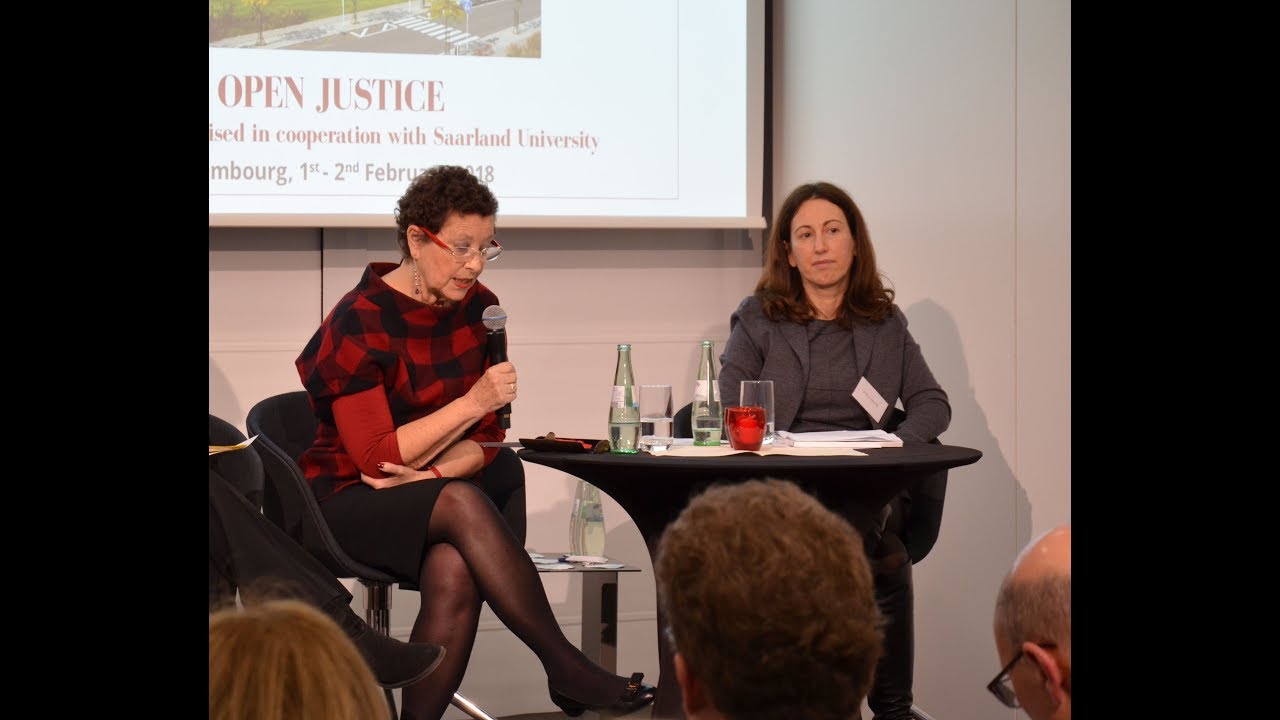
Public Hearings in Criminal Proceedings
Keywords
Summary
149 words
Critical Evaluation
Value of the Information & Strength of the Argument
The value of the information lies in its rigorous philosophical and legal analysis of the open court principle, drawing on key Enlightenment thinkers and applying it to contemporary issues like plea bargaining. The argumentation is well-structured and persuasive, with clear logical progression from foundational principles to specific critiques. The speaker effectively uses historical sources to support her claims, and the discussants add depth by considering practical implications and comparative perspectives. The panel provides a nuanced understanding of why publicity is crucial in criminal proceedings and how negotiated justice may undermine it.
Scientific Rigor, Source Quality, Title Accuracy
The scientific rigor is high, as the presentation is grounded in legal philosophy and constitutional law, with references to canonical thinkers and legal provisions. The sources cited are primarily historical philosophical works and German legal statutes, which are appropriate for the topic. The title accurately reflects the content, focusing on public hearings in criminal proceedings. The panel is well-organized, with clear roles for the speaker and discussants, and the discussion is substantive. No comments were provided for analysis, so no public reception trends can be assessed.
192 words
Title / Content Match
The title accurately reflects the content, which focuses on the principle of public hearings in criminal proceedings, including its philosophical foundations and contemporary challenges.
Quality & Reliability
8/10
The video features academic experts in criminal law discussing the principle of publicity in criminal proceedings, grounded in legal philosophy and constitutional law. The arguments are well-structured and reference historical legal thinkers. However, the content is primarily opinion/expert analysis rather than empirical research, and the video is a panel discussion without formal citations or peer review.
Key Moments
Markers derived by PSI from the transcript: the creator did not define chapters.
- Introduction of the panel and speaker by the chair.
- Speaker begins her presentation on justifying the open court principle.
- Discussion of Enlightenment foundations, including Kant and Hegel.
- Analysis of specific features of criminal proceedings and the role of the public.
- First discussant, Prof. Katalin Ligeti, begins her reaction.
- Second discussant, Prof. Ruth Herz, begins her reaction.
- Open discussion begins.
Cited Sources
- Report on the conference — Description of the video provides this link for more information on the event.
Concurring Sources
- Open court principle — Supports the general importance of public hearings in legal systems.
Dissenting Sources
- Plea bargaining efficiency — Some legal scholars argue that plea bargaining is necessary for court efficiency, which contrasts with the video's critique of negotiated justice.
Contribution & Novelties
The video provides a comprehensive philosophical and legal justification for the open court principle in criminal proceedings, synthesizing Enlightenment thought and applying it to modern challenges like plea bargaining. It offers a critical perspective on negotiated justice, arguing that it undermines the legitimacy of the criminal justice system. The panel discussion enriches the analysis with comparative and practical insights.
Pour aller plus loin :
- Open court principle — Overview of the principle in common law jurisdictions.
- Plea bargain — Background on negotiated justice in various legal systems.
- Immanuel Kant’s Perpetual Peace — Source of the publicity principle discussed.
- Hegel’s Philosophy of Right — Reference for the argument on public trust in justice.
112 words
Radar Profile
The radar profile shows high scores in quality of information and reliability, reflecting the expert nature of the content. The quantity of information and technical level are moderate, as the video is a focused panel discussion rather than a comprehensive review. Overall, the content is strong in depth and credibility.