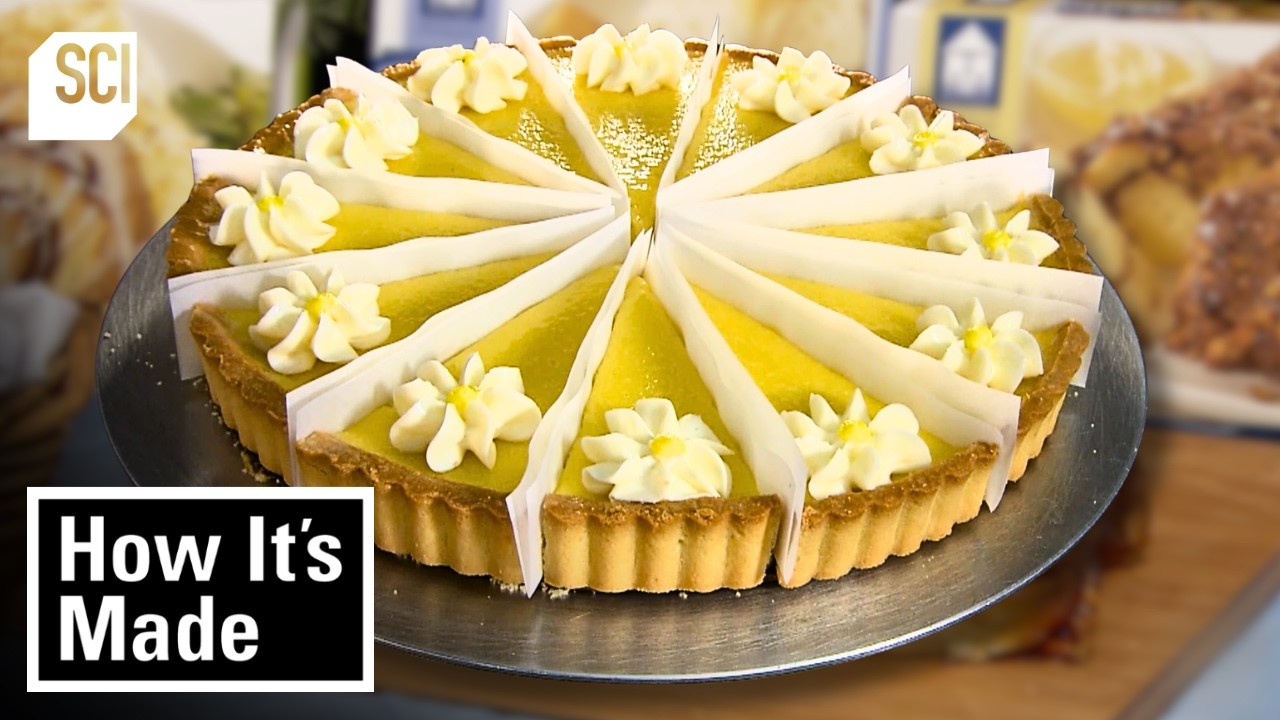
Pies, Pastries & More | How It's Made | Science Channel
Keywords
Summary
121 words
Critical Evaluation
The documentary provides a comprehensive and visually engaging overview of pastry manufacturing, effectively demonstrating the intersection of food science and engineering. The information is presented in a clear, accessible manner, with each segment following a logical sequence from raw materials to finished product. The show excels in showing the precision and automation involved in modern food production, such as the use of depositors, sheeters, and laminating equipment. It also touches on important aspects like quality assurance, food safety, and ingredient functionality. However, the content is primarily descriptive and lacks in-depth scientific explanation. For instance, while it mentions the role of cold water in creating flaky crusts, it does not delve into the chemistry of gluten development or fat distribution. Similarly, the segment on gluten-free whoopie pies mentions alternative flours but does not explain the functional differences. The documentary also does not cite specific scientific studies or experts, relying instead on factory footage and narration. Despite these limitations, the information is accurate and aligns with established food science principles. The title accurately reflects the content, and the production quality is high. Overall, this is a valuable educational resource for those interested in food manufacturing, though it could benefit from more technical depth.
201 words
Title / Content Match
The title accurately reflects the content, which covers the production of various pies and pastries.
Quality & Reliability
8/10
The documentary presents detailed manufacturing processes with clear step-by-step explanations. It is produced by a reputable science channel and includes quality control segments. However, it lacks citations to specific scientific sources and is primarily descriptive rather than analytical.
Chapters
Cited Sources
- How It's Made on discovery+ — Streaming platform for the full series
- Video on YouTube — Original video source
Concurring Sources
- How It's Made: The Science of Food Manufacturing — The series consistently shows similar manufacturing processes for various food items.
Contribution & Novelties
This episode provides a detailed look at the manufacturing processes of various pastries, offering insights into both traditional and modern techniques. It highlights the use of automation and quality control in food production, which is valuable for understanding industrial food science.
Pour aller plus loin :
- Lamination in pastry — Explains the technique of creating flaky layers in dough.
- Gluten-free baking — Discusses alternatives to wheat flour and their functional properties.
- Food rheology — The study of flow and deformation of food materials, relevant to viscosity testing mentioned in the video.
91 words
Radar Profile
The radar profile shows high scores in quantity and quality of information, with moderate technical depth. The documentary excels in providing detailed visual information but lacks in-depth scientific analysis, resulting in a balanced but not overly technical profile.