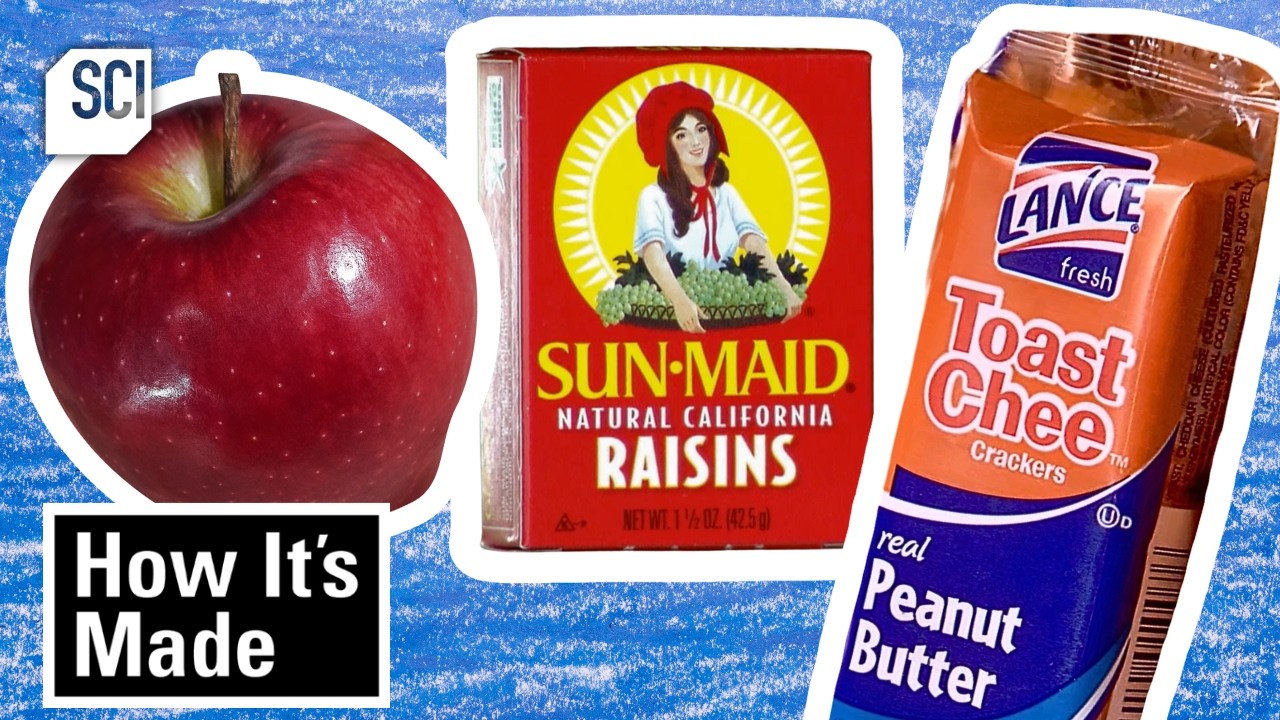
Back to School Lunch Snacks 🎒How It's Made | Science Channel
Keywords
Summary
119 words
Critical Evaluation
Value of the Information & Strength of the Argument
The documentary provides a high volume of detailed information about each manufacturing process, including specific parameters like temperatures, pressures, and durations. This technical depth adds value for viewers interested in industrial food production. The argumentation is primarily descriptive, presenting the processes as they are without critical analysis. Claims about nutritional benefits, such as the healthiness of peanut butter, are presented without supporting evidence, which weakens the scientific rigor. The show’s strength lies in its visual demonstration of complex machinery and automation, which effectively conveys the scale and precision of modern food manufacturing.
Scientific Rigor, Source Quality, Title Accuracy
The documentary does not cite external scientific sources, relying instead on visual documentation and narration. The information appears accurate based on general knowledge of food processing, but the lack of references limits its verifiability. The title accurately describes the content, which focuses on back-to-school snacks. The show is produced by Science Channel, a reputable science-oriented network, but this episode is more of an educational documentary than a rigorous scientific presentation. The absence of citations and the occasional oversimplification of complex processes (e.g., nutritional claims) prevent it from achieving a higher score in scientific rigor.
201 words
Title / Content Match
The title accurately reflects the content, which focuses on the manufacturing of popular back-to-school lunch snacks.
Quality & Reliability
7/10
The documentary provides detailed, step-by-step views of industrial food manufacturing processes, with specific technical parameters (temperatures, pressures, durations). However, it lacks citations to scientific sources, and some historical or nutritional claims are presented without supporting evidence. The content is generally accurate and consistent with known manufacturing practices, but the lack of verifiable references and the promotional nature of the channel limit its scientific rigor.
Chapters
Cited Sources
- How It's Made on discovery+ — Official streaming platform for the show, mentioned in the video description.
- Video URL — Direct link to the video, provided in the description.
Concurring Sources
- How It's Made: The Science Behind Everyday Products — The show itself is a source of concordant information, as it is the primary content.
Contribution & Novelties
The video offers a comprehensive visual tour of multiple food manufacturing lines, providing insights into the automation and engineering behind common snacks. It demystifies industrial processes that are often hidden from consumers, making it a valuable educational resource. The novelty lies in the breadth of products covered in a single episode, allowing viewers to compare different manufacturing techniques.
Pour aller plus loin :
- Food processing — Overview of food processing methods and their history.
- Pasteurization — Explanation of the heat treatment used for apple juice and yogurt.
- Hydrogenation — Chemical process relevant to the stabilizer used in peanut butter.
- Cassava — Source of tapioca pearls, mentioned in the tapioca pudding segment.
111 words
Radar Profile
The radar profile shows strong scores in quantity of information and technical level, indicating a content-rich documentary with detailed technical insights. The quality of information and global reliability are slightly lower, reflecting the lack of citations and occasional unsupported claims. Overall, the video is informative but not deeply scientific.