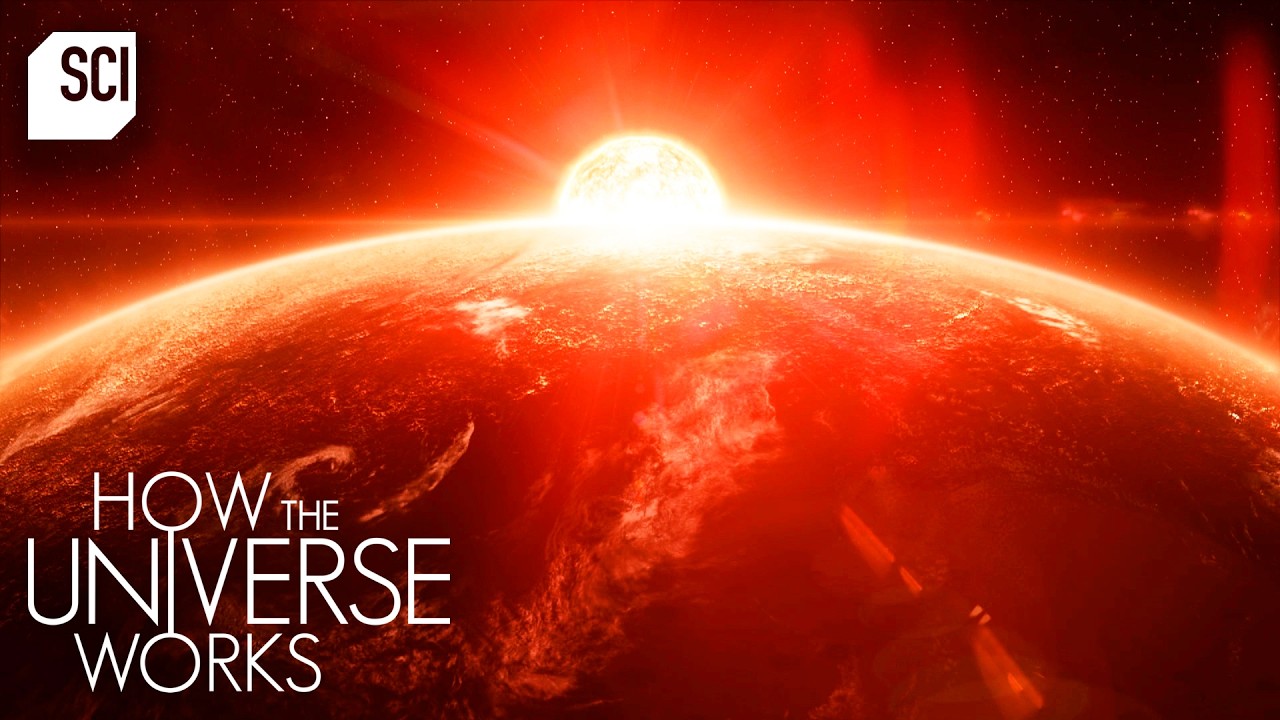
DESTRUCTION From the Cosmos! | How the Universe Works | Science Channel
Keywords
Summary
122 words
Critical Evaluation
The video provides a comprehensive and engaging overview of several destructive cosmic phenomena, grounded in current scientific understanding. The explanations are generally accurate and well-illustrated, with contributions from recognized experts such as Alex Filippenko. The segment on red dwarfs correctly explains their longevity due to efficient hydrogen fusion and convective mixing, though the concept of ‘blue dwarfs’ is a theoretical projection. The discussion of galactic extinction events is plausible, citing evidence like iron-60 deposits, but the causal link to specific extinction events remains speculative. The dark energy segment accurately describes the discovery and its implications, though it simplifies the underlying physics. The video’s strength lies in its ability to make complex topics accessible without gross oversimplification. However, some speculative elements are presented with certainty, and the lack of citations for specific claims may reduce its utility for rigorous scientific reference. The title accurately reflects the content, and the production quality is high. Overall, it serves as an excellent educational resource for a general audience, but viewers seeking in-depth scientific detail should consult primary sources.
174 words
Title / Content Match
The title accurately reflects the content, which focuses on destructive cosmic phenomena and events.
Quality & Reliability
8/10
The video features recognized experts and presents established scientific concepts (red dwarf longevity, galactic extinction events, dark energy) with accurate explanations. However, some simplifications and speculative elements (e.g., future blue dwarfs) reduce the score slightly.
Key Moments
Markers derived by PSI from the transcript: the creator did not define chapters.
- Introduction to red dwarf stars and their longevity.
- Discussion of extinction events linked to Earth's galactic orbit.
- Exploration of the end of the universe and dark energy.
- Deep space death rays and gamma-ray bursts.
- Uninhabitable planets and the conditions for life.
- Stars that kill and their destructive potential.
- Deadliest phenomena in the cosmos.
Contribution & Novelties
The video synthesizes current research on red dwarf stars, galactic extinction events, and dark energy, offering a compelling narrative about the universe’s destructive forces. It highlights the potential longevity of red dwarfs and the role of cosmic rays in extinction events, which are topics of active research.
Pour aller plus loin :
- Red dwarf star — Overview of red dwarf characteristics and habitability.
- Iron-60 — Radioactive isotope linked to nearby supernovae.
- Dark energy — Comprehensive explanation of dark energy and its discovery.
82 words
Radar Profile
The radar profile shows high scores in information quantity, quality, and technical level, with a slightly lower but still strong reliability score. This indicates a well-produced, informative, and scientifically credible video, though with minor caveats regarding speculative elements.
💬 Positive: The 30 comments analyzed are overwhelmingly positive, with viewers praising the narration by Mike Rowe, the quality of the experts, and the engaging visuals. Some comments express minor criticisms about the on-screen logo and a few scientific points, but the overall sentiment is enthusiastic.