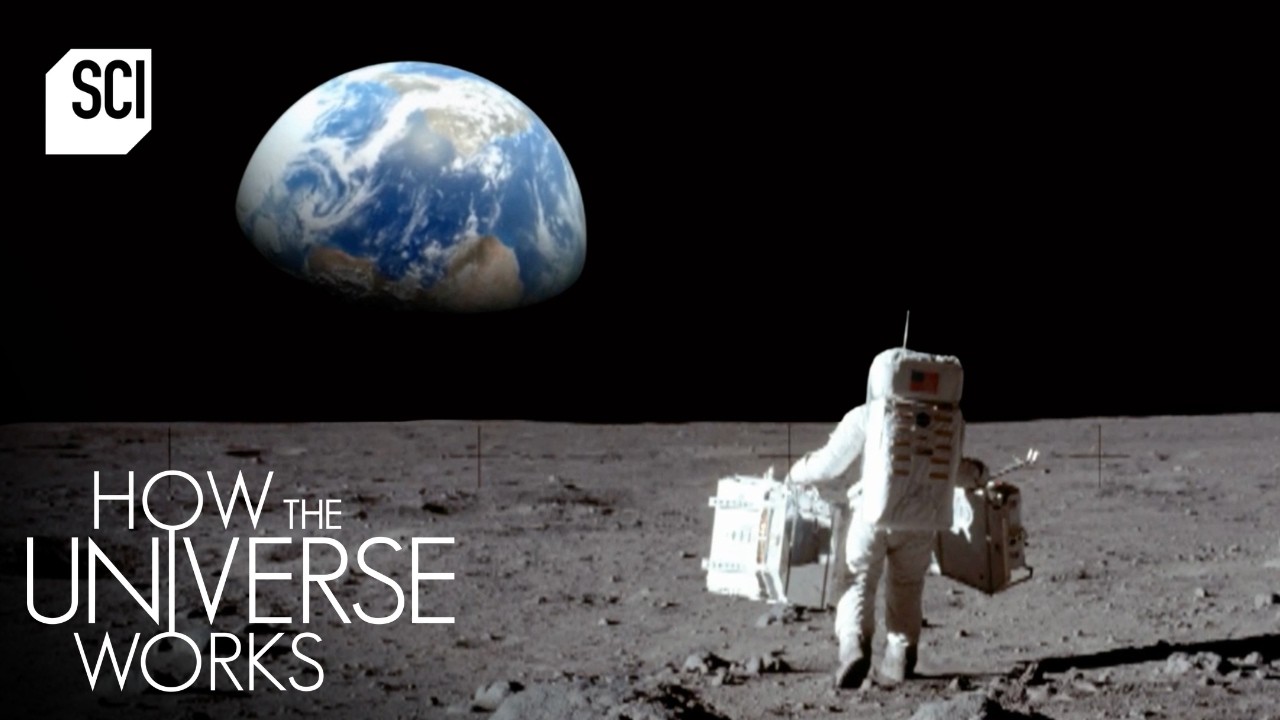
The Mysteries of Moons | How the Universe Works | Science Channel
Keywords
Summary
168 words
Critical Evaluation
The documentary provides a comprehensive and engaging overview of the moons in our solar system, effectively combining expert interviews, CGI animations, and real mission footage. The scientific content is accurate and up-to-date, reflecting current understanding of moon formation and dynamics. The explanations of complex processes like tidal heating and accretion are clear and accessible, making the material suitable for a general audience without oversimplifying. The use of experts from planetary science adds credibility, and the inclusion of recent discoveries from the Cassini mission enhances the documentary’s relevance. However, the documentary occasionally prioritizes visual spectacle over depth, and some topics, such as the potential for life on Europa, are treated briefly. The structure is somewhat episodic, jumping between different moons without a strong narrative thread, but this allows for a broad survey of the subject. The title accurately reflects the content, and the documentary succeeds in conveying the wonder and scientific importance of moons. Overall, it is a high-quality science communication piece that is both informative and entertaining.
167 words
Title / Content Match
The title accurately reflects the content, which explores the origins and characteristics of moons in our solar system, with a focus on Earth's Moon and Saturn's moons.
Quality & Reliability
8/10
The documentary features expert commentary from planetary scientists and uses CGI to illustrate concepts. It presents established scientific knowledge about moons, including formation processes, tidal heating, and ring interactions. While it is a popular science production, it accurately reflects current understanding and includes recent discoveries from missions like Cassini.
Key Moments
Markers derived by PSI from the transcript: the creator did not define chapters.
- Introduction to the diversity of moons in the solar system.
- Explanation of accretion process with Don Pettit's experiment.
- Comparison of Ganymede and Callisto formation.
- Discussion of Io's volcanic activity and tidal heating.
- Europa's subsurface ocean and potential for life.
- Captured moons: Phobos, Deimos, and Cruithne.
- Triton's retrograde orbit and capture origin.
- Saturn's rings and shepherding moons, including Cassini discoveries.
- Iapetus's two-toned appearance and Phoebe's influence.
Cited Sources
- The Mysteries of Moons | How the Universe Works | Science Channel — The video itself, which is the primary source for the content.
Concurring Sources
- NASA Solar System Exploration: Moons — NASA's official overview of moons, consistent with the documentary's content.
Contribution & Novelties
The documentary provides a comprehensive overview of moons, synthesizing current scientific knowledge from various missions. It highlights recent discoveries, such as the seven shepherding moons of Saturn’s rings, and explains complex processes like tidal heating in an accessible manner. The program emphasizes the diversity of moons and their importance in understanding the solar system’s history.
Pour aller plus loin :
- NASA Solar System Exploration: Moons — Official NASA page with detailed information on moons.
- Cassini Mission — NASA’s Cassini mission page, which provided key data on Saturn’s moons.
- Tidal Heating — Wikipedia article explaining the mechanism of tidal heating, central to the documentary’s discussion of Io and Europa.
- Europa Clipper — NASA’s upcoming mission to study Europa’s habitability, directly relevant to the documentary’s mention of Europa’s ocean.
127 words
Radar Profile
The radar profile shows high scores in quantity and quality of information, with a moderate technical level. This indicates a well-balanced documentary that is informative and reliable, suitable for a general audience interested in astronomy.