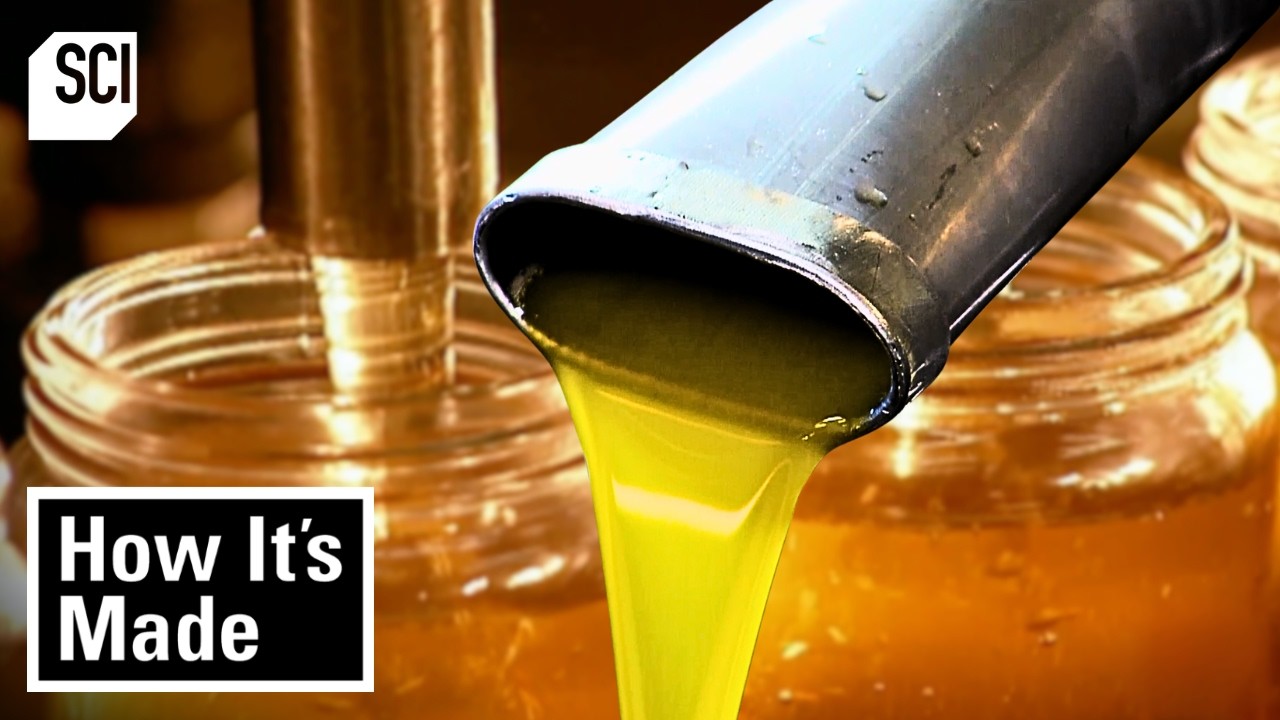
Gooey Goopy Goods | How It’s Made | Science Channel
Keywords
Summary
137 words
Critical Evaluation
The documentary provides a comprehensive overview of the manufacturing processes for five distinct gooey products, offering viewers a clear understanding of the steps involved. The information is presented in a structured manner, with each segment following a logical sequence from raw materials to finished product. The explanations are accessible, making complex industrial processes understandable to a general audience. However, the content lacks depth in terms of scientific principles; for instance, the chemistry behind honey’s sugar conversion or the polymerization of caulking is only briefly mentioned. The documentary relies on visual demonstrations and narration rather than expert interviews or detailed technical data, which limits its scientific rigor. The sources cited are limited to the show’s own platform and the video itself, with no external references to academic or industry publications. This reduces the verifiability of the claims made. The title accurately reflects the content, and the pacing is appropriate, with each segment given sufficient time. The documentary’s strength lies in its clarity and visual appeal, making it an excellent educational resource for those interested in how everyday products are made. However, for viewers seeking deeper scientific or engineering insights, the content may feel superficial. The inclusion of quality control measures, such as metal detection and pH testing, adds credibility, but the lack of quantitative data and expert commentary prevents it from being a highly rigorous scientific source. Overall, the documentary is informative and engaging, but it prioritizes entertainment and general knowledge over technical depth.
243 words
Title / Content Match
The title accurately reflects the content, focusing on gooey products and their manufacturing processes.
Quality & Reliability
8/10
The documentary presents manufacturing processes with clear step-by-step explanations, but lacks in-depth scientific detail and citations. It is reliable for general understanding, though not for technical precision.
Chapters
Cited Sources
- How It's Made on discovery+ — Official streaming platform for the series, providing access to full episodes.
- Gooey Goopy Goods | How It’s Made | Science Channel — The video itself, serving as the primary source of the content.
Concurring Sources
- How It's Made (TV series) — General information about the series, confirming its educational nature.
Contribution & Novelties
The documentary offers a visual and step-by-step insight into the manufacturing of everyday gooey products, which is valuable for educational purposes. It highlights the blend of traditional methods (like beekeeping) with modern automation, and emphasizes quality control measures. However, it does not present new scientific findings or original research.
Pour aller plus loin :
- Honey production - Wikipedia — Overview of honey production and processing.
- Olive oil extraction - Wikipedia — Detailed explanation of olive oil extraction methods.
- Caulking - Wikipedia — Information on caulking materials and applications.
88 words
Radar Profile
The radar profile shows moderate scores across all dimensions, with slightly higher reliability and information quantity, but lower technical depth. This indicates a balanced but not highly specialized educational content.