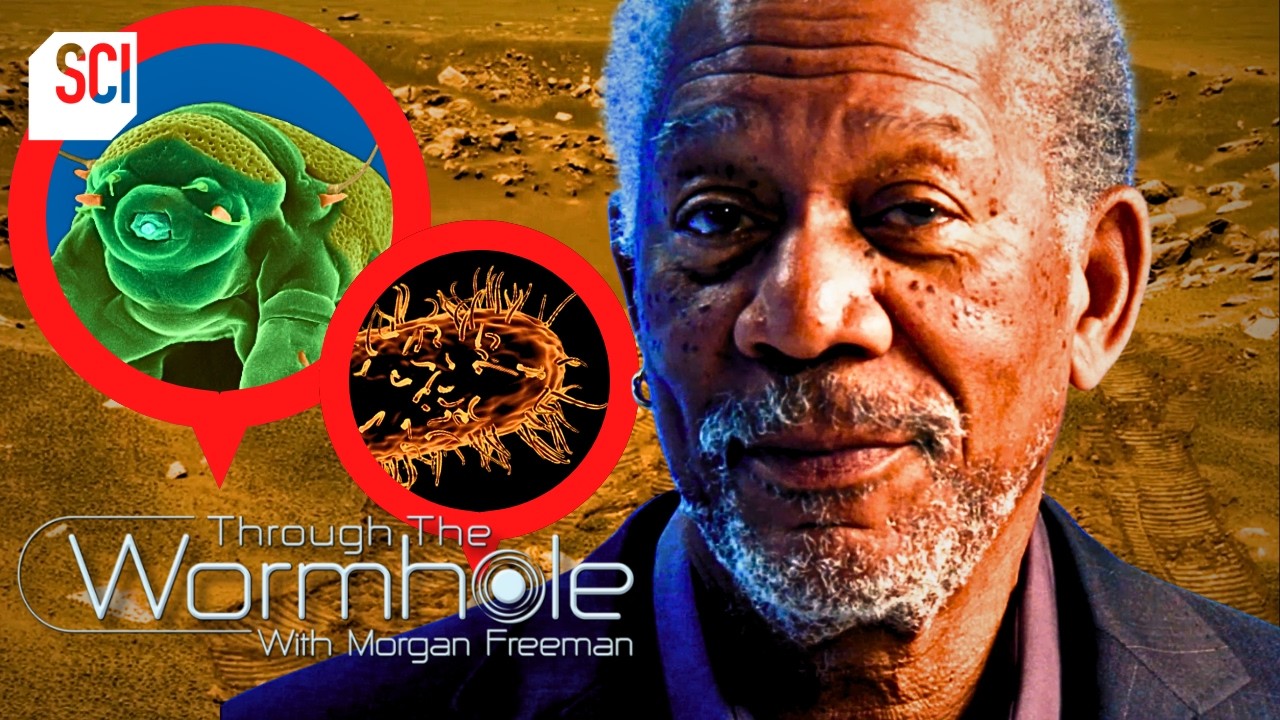
Answering Extra-Terrestrial Questions | Through the Wormhole | Science Channel
Keywords
Summary
160 words
Critical Evaluation
The documentary provides a balanced overview of the scientific search for extraterrestrial life, featuring interviews with credible scientists and explaining key concepts in an accessible manner. It effectively communicates the challenges of astrobiology and SETI, such as the difficulty of distinguishing natural from artificial signals and the immense distances involved. The inclusion of the Murchison meteorite and the discussion of extremophiles on Earth ground the speculation in real science. However, the show occasionally veers into speculative territory, such as the hypothetical appearance of aliens under different gravity, which, while interesting, is not based on empirical evidence. The narrative around the 1997 signal is presented dramatically, but the resolution (that it was from the SOHO spacecraft) is explained clearly. The documentary does not provide detailed citations for its claims, but the scientists’ credentials lend credibility. The title accurately reflects the content, and the episode succeeds in raising thought-provoking questions without overstating certainty. Overall, it is a valuable educational piece for a general audience, though it could benefit from more rigorous sourcing.
170 words
Title / Content Match
The title accurately reflects the content, which addresses various questions about extraterrestrial life.
Quality & Reliability
7/10
The documentary features credible scientists (e.g., Lynn Rothschild, Jill Tarter, Paul Davies) and presents established scientific concepts (astrobiology, SETI, Wow signal). However, it includes speculative elements and lacks detailed citations, and the 1997 signal anecdote is presented without full context.
Key Moments
Markers derived by PSI from the transcript: the creator did not define chapters.
- Introduction to the question of extraterrestrial life and the vastness of the universe.
- Lynn Rothschild discusses extremophiles and the adaptability of life.
- The Murchison meteorite and the building blocks of life in space.
- How gravity might shape alien life forms.
- Introduction to SETI and the search for alien signals.
- The Wow signal and its mystery.
- Jill Tarter describes the 1997 signal and its resolution.
- Paul Davies critiques traditional SETI and discusses the vast distances.
- The Allen Telescope Array and the future of SETI.
Cited Sources
- Through the Wormhole with Morgan Freeman - Discovery+ — Official streaming page for the series.
- Video on YouTube — The video itself.
Concurring Sources
- NASA Astrobiology — NASA's astrobiology program, aligning with the documentary's themes.
Contribution & Novelties
The documentary synthesizes current astrobiological research and SETI efforts, offering a comprehensive overview for a general audience. It highlights the Murchison meteorite’s significance and the challenges of signal detection.
Pour aller plus loin :
- Astrobiology - Wikipedia — Overview of the field.
- SETI - Wikipedia — History and methods.
- Wow! signal - Wikipedia — Details on the famous signal.
59 words
Radar Profile
The radar profile shows high scores in quantity of information and fiabilite, with moderate technical level, indicating a well-rounded documentary that is informative and credible but not overly technical.
💬 No comments provided.