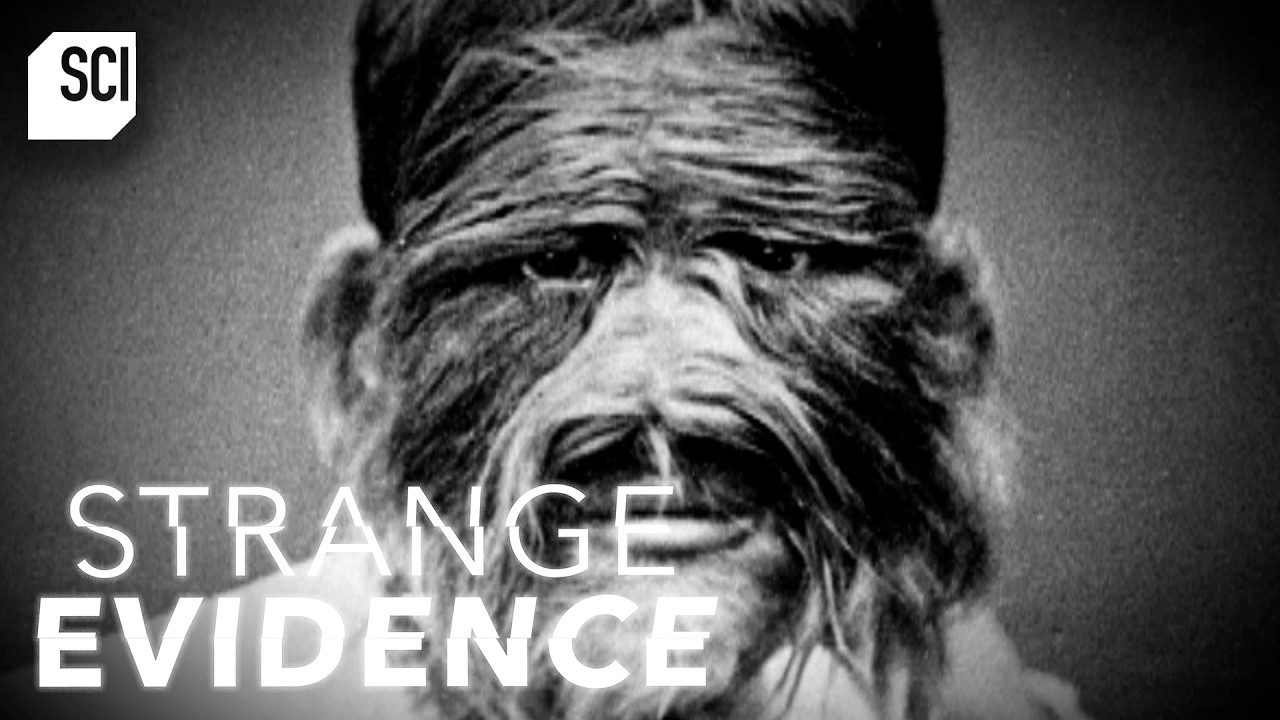
Do These Monstrous Land Creatures Exist?! | Strange Evidence | Science Channel
Keywords
Summary
198 words
Critical Evaluation
The documentary ‘Do These Monstrous Land Creatures Exist?!’ is a typical example of the ‘Strange Evidence’ series, which aims to investigate unexplained phenomena through a mix of eyewitness testimony, expert analysis, and scientific scrutiny. The value of the information presented is moderate: it offers a variety of case studies and perspectives, but the evidence is largely anecdotal and lacks rigorous scientific validation. The argumentation is structured around each segment, presenting the initial sighting, then bringing in experts to propose and evaluate possible explanations. This approach is balanced, as it includes both believers and skeptics, and often concludes with a rational explanation, such as a bear or a human in a costume. However, the scientific rigor is limited by the nature of the subject; cryptozoology is not a recognized scientific discipline, and the evidence is often inconclusive. The sources cited are primarily the experts interviewed, whose credentials are not always clearly established, and the show does not reference peer-reviewed studies. The adéquation between the title and content is good, as the title accurately reflects the exploration of monstrous creatures. The production quality is high, with dramatic reenactments and suspenseful music, which may appeal to a general audience but can also sensationalize the content. Overall, the documentary is entertaining and thought-provoking, but it does not provide definitive answers, and viewers should approach the claims with a critical mind.
226 words
Title / Content Match
The title accurately reflects the content, which investigates the existence of monstrous land creatures through various case studies.
Quality & Reliability
6/10
The documentary presents a mix of eyewitness accounts, expert speculation, and some scientific analysis, but lacks rigorous peer-reviewed evidence and often relies on anecdotal reports. The show does include critical perspectives and alternative explanations, but the overall reliability is moderate due to the speculative nature of the subject.
Key Moments
Markers derived by PSI from the transcript: the creator did not define chapters.
- Night Walker: Dash cam footage from Georgia shows a creature crossing the road; experts debate if it's a bear, gorilla, or Bigfoot.
- Backyard Werewolf: Surveillance video from Brazil captures a wolf-like creature; discussion of hypertrichosis and lycanthropy.
- Bigfoot in the Mist: Construction workers in Alberta film a figure throwing a log; theories include bear and human prank.
- Vampire Beast: Another case of a mysterious creature, possibly a vampire-like entity.
- Russian Bigfoot: A segment on a Bigfoot sighting in Russia.
- Direwolf: Final segment about a direwolf-like creature sighting.
Cited Sources
- Science Channel - Strange Evidence — The video itself is the primary source, presenting the cases and expert opinions.
Concurring Sources
- Bigfoot - Wikipedia — Provides a general overview of Bigfoot sightings and cultural significance, consistent with the documentary's portrayal.
- Hypertrichosis - Wikipedia — Supports the discussion of the werewolf syndrome as a possible explanation for hairy human sightings.
Dissenting Sources
Contribution & Novelties
The documentary contributes to the popular discourse on cryptids by presenting multiple recent sightings and applying some scientific analysis, such as anatomical measurements and behavioral comparisons. It also highlights the cultural and psychological aspects of belief in such creatures. However, it does not offer new scientific evidence or original research.
Pour aller plus loin :
- Bigfoot - Wikipedia — Provides background on the legend and reported evidence.
- Hypertrichosis - Wikipedia — Explains the medical condition known as ‘werewolf syndrome’.
- Clinical lycanthropy - Wikipedia — Discusses the psychological delusion of transforming into a wolf.
93 words
Radar Profile
The radar profile shows moderate scores across all dimensions, with slightly higher scores in quantity of information and lower in technical level. This indicates a balanced but not deeply scientific presentation, suitable for a general audience interested in cryptozoology.
💬 No comments were provided for analysis.