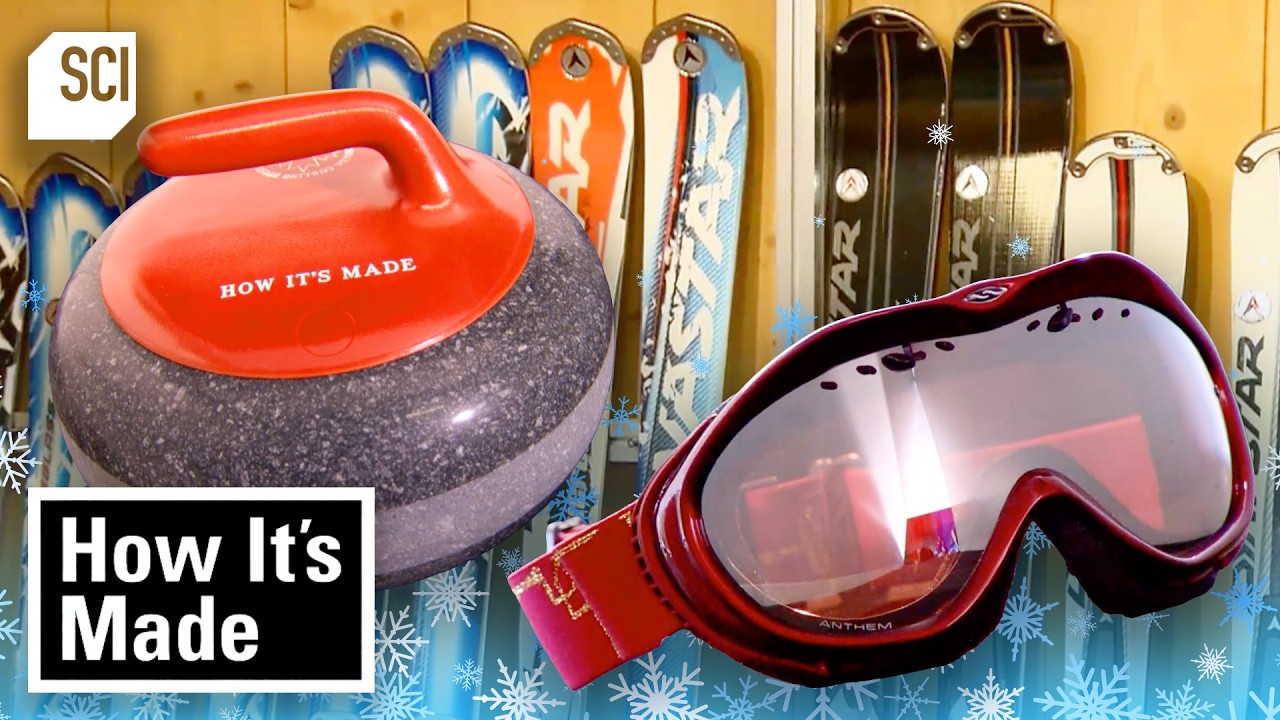
Winter Sports Gear: Skiing, Skating, Curling & More! 🥌 | How It's Made | Science Channel
Keywords
Summary
126 words
Critical Evaluation
The video provides a fascinating and detailed look at the manufacturing processes of winter sports equipment, offering valuable insights into materials and techniques. The information is presented in a clear and engaging manner, suitable for a general audience. The production quality is high, with close-up shots and clear explanations. However, the scientific depth is limited; it focuses more on the ‘how’ than the ‘why’, and does not delve into the engineering principles or materials science behind the choices. The sources are not cited within the video, and the only references are links to the show’s streaming page and the video itself, which limits the ability to verify the claims. The title accurately reflects the content, and the video delivers on its promise. The main strength is its educational value in showcasing complex manufacturing in an accessible way. The main weakness is the lack of critical analysis and scientific rigor, as it does not discuss potential alternatives, trade-offs, or the environmental impact of these processes. Overall, it is a well-produced and informative documentary, but it is not a scientific study or a critical review.
183 words
Title / Content Match
The title accurately reflects the content, which covers the manufacturing of various winter sports equipment.
Quality & Reliability
7/10
The video is a documentary from a reputable science channel, showcasing manufacturing processes with detailed steps and materials. It is informative and generally accurate, though it lacks citations and in-depth scientific analysis.
Key Moments
Markers derived by PSI from the transcript: the creator did not define chapters.
- Introduction to ski manufacturing with ash wood core.
- Molding process for skis with fiberglass and epoxy.
- Production of ski goggles, including hydrographics.
- Assembly of winter jackets with insulation and windbreaker.
- Snowboard manufacturing, including wood core and silk-screening.
- Curling stone production from granite.
Cited Sources
- How It's Made on discovery+ — Streaming platform for the show.
- Video URL — Direct link to the video.
Concurring Sources
- How It's Made on discovery+ — The show is known for its accurate depiction of manufacturing processes.
Contribution & Novelties
The video offers a comprehensive overview of winter sports equipment manufacturing, providing a unique behind-the-scenes look that is not commonly available. It highlights the complexity and precision involved in producing items like skis, goggles, jackets, snowboards, and curling stones. The main novelty is the detailed step-by-step visualization of these processes, which can be valuable for educational purposes.
Pour aller plus loin :
- Ski construction — Overview of ski manufacturing techniques.
- Hydrographics — Explanation of the water transfer printing process.
- Curling stone — Details on the granite and manufacturing of curling stones.
91 words
Radar Profile
The radar profile shows high scores in quantity of information and fiabilité, reflecting the detailed and reliable content. The technical level is moderate, making it accessible to a broad audience. The overall quality is good, but there is room for more in-depth scientific analysis.