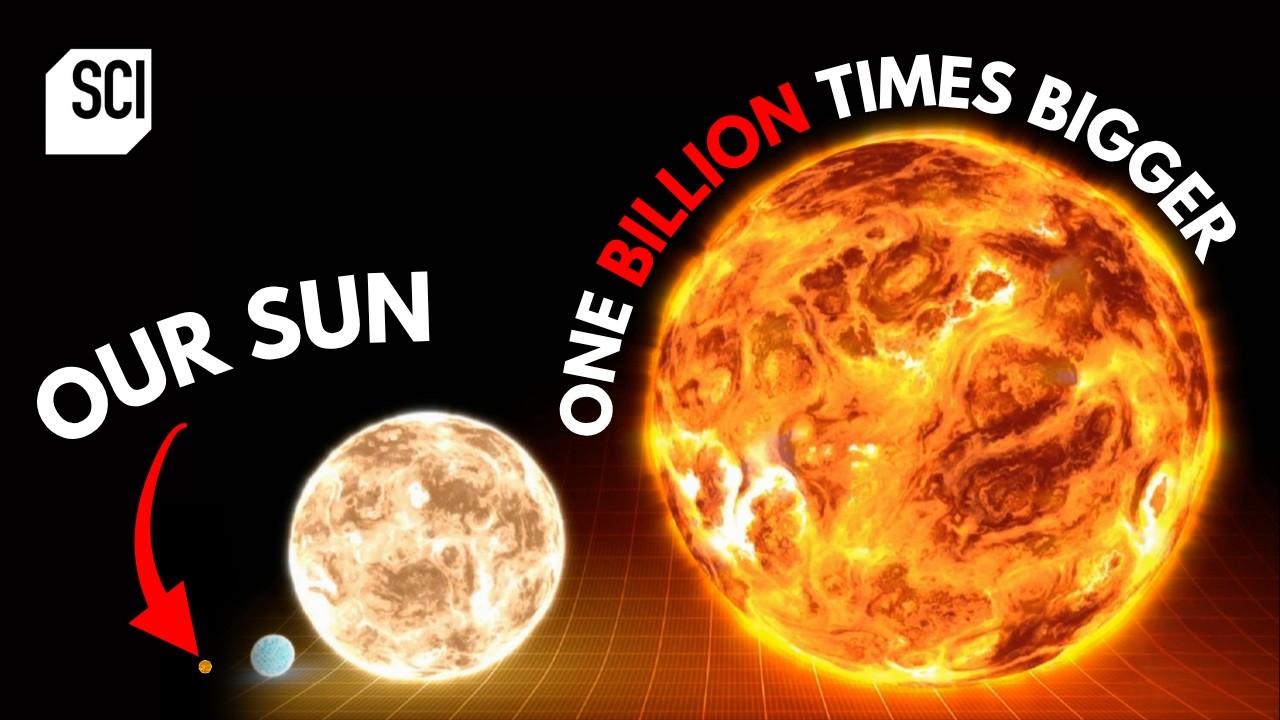
The Universe's Biggest Stars ☀️⭐️ How the Universe Works | Science Channel
Keywords
Summary
152 words
Critical Evaluation
The documentary provides a visually stunning and engaging overview of stellar phenomena, suitable for a general audience. Its strength lies in the use of expert interviews and clear analogies to explain complex concepts like nuclear fusion and stellar evolution. The segment on the JET tokamak effectively illustrates how scientists attempt to replicate stellar conditions on Earth, grounding the science in current research. However, the documentary lacks rigorous scientific depth; it glosses over the nuances of stellar classification and the precise mechanisms of supernova triggers. The discussion of the solar system’s formation presents competing hypotheses (supernova vs. Wolf-Rayet star) but does not delve into the evidence’s uncertainties. The sources cited are primarily the experts themselves, with no direct references to specific papers or studies, which limits the viewer’s ability to verify claims. The title accurately reflects the content, though the focus is broader than just the biggest stars, covering stellar life cycles generally. Overall, the documentary is informative and reliable for a lay audience but would benefit from more detailed citations and a more critical examination of the scientific debates. The production quality is high, and the pacing keeps the viewer engaged, but the scientific rigor is moderate, earning a solid four-star rating.
202 words
Title / Content Match
The title accurately reflects the content, which focuses on the largest stars and stellar phenomena.
Quality & Reliability
7/10
The documentary presents established scientific concepts (stellar evolution, nuclear fusion, planetary nebulae) with expert commentary, but lacks detailed citations and simplifies some complex topics. The content is generally accurate but not deeply rigorous.
Key Moments
Markers derived by PSI from the transcript: the creator did not define chapters.
- Introduction to stars and the Sun as a star.
- Comparison of the Sun with larger stars like VY Canis Majoris.
- Explanation of star formation in nebulae and the role of the Spitzer Space Telescope.
- Discussion of nuclear fusion and Einstein's E=mc².
- Segment on the JET tokamak and fusion research.
- Evidence from meteorites about the solar system's formation.
- The role of Wolf-Rayet stars and the Bubble Nebula.
- The death of stars and planetary nebulae.
- The Sun's future as a red giant and its impact on Earth.
Cited Sources
- The Universe's Biggest Stars ☀️⭐️ How the Universe Works | Science Channel — The video itself, which is the primary source of information.
Concurring Sources
- Stellar evolution — General consensus on the life cycle of stars.
- Nuclear fusion — Confirms the process described in the video.
Dissenting Sources
- Solar System formation — The video presents competing hypotheses for the trigger of solar system formation; the scientific community has not reached a definitive consensus.
Contribution & Novelties
The documentary synthesizes current astrophysical knowledge in an accessible format, highlighting recent findings on stellar formation and the solar system’s origins. It effectively uses visualizations and expert commentary to convey complex ideas.
Pour aller plus loin :
- Stellar evolution — Provides a comprehensive overview of the life cycle of stars.
- Nuclear fusion — Explains the process that powers stars and the challenges of replicating it on Earth.
- Planetary nebula — Details the formation and diversity of these objects.
- Wolf–Rayet star — Discusses these massive stars and their role in stellar nucleosynthesis.
91 words
Radar Profile
The radar profile shows high scores in quantity and quality of information, with moderate technical depth and reliability. This indicates a well-produced documentary that is informative but not deeply technical, suitable for a general audience.
💬 Sur les 0 commentaires analysés, aucune tendance n'est disponible.