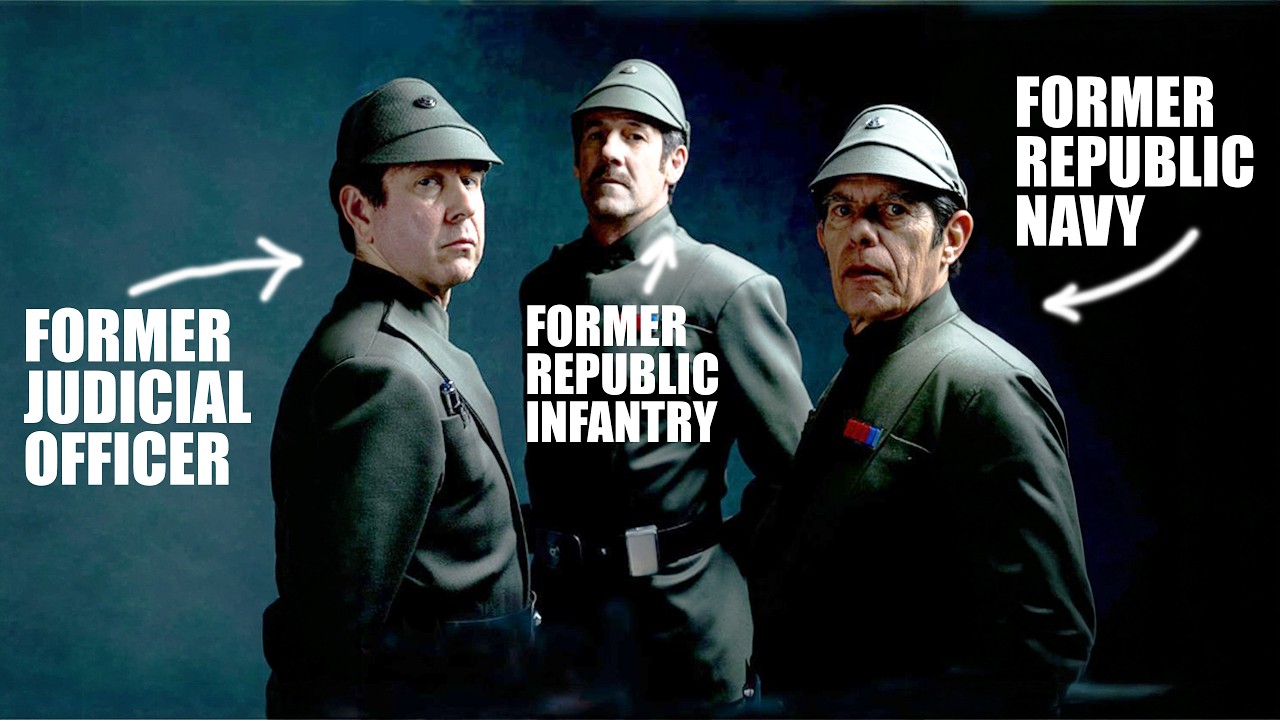
Why the Republic Military Didn’t Resist the Empire
Keywords
Summary
174 words
Critical Evaluation
Value of the Information & Strength of the Argument
The video provides valuable insights into military psychology and institutional culture, using Star Wars as a lens to explore real-world concepts like resocialization, unit cohesion, and apoliticism in armed forces. The argumentation is coherent and well-structured, building from the specific case of the clone army to broader principles of military training. The host effectively uses examples from Star Wars lore and real-world military practices to support his points. However, the argument relies heavily on personal opinion and anecdotal evidence, lacking empirical data or citations. The reasoning is persuasive but not rigorously scientific, and some claims, such as the prevalence of certain political leanings among veterans, are presented without supporting evidence.
Scientific Rigor, Source Quality, Title Accuracy
The video does not cite specific academic sources or provide references, relying instead on the host’s interpretation of Star Wars canon and general knowledge of military culture. The title accurately reflects the content, which directly addresses the question of why the Republic military did not resist the Empire. The analysis is internally consistent with Star Wars lore, but the lack of external sources limits its scientific rigor. The video’s strength lies in its thoughtful synthesis of in-universe events with real-world sociological concepts, but it would benefit from citing relevant literature on military sociology and psychology.
220 words
Title / Content Match
The title accurately reflects the content, which explores the reasons behind the Republic military's acceptance of the Empire.
Quality & Reliability
7/10
The video offers a well-structured, thoughtful analysis grounded in military sociology and psychology, but relies on anecdotal evidence and personal interpretation rather than systematic research or citations.
Key Moments
Markers derived by PSI from the transcript: the creator did not define chapters.
- Introduction to the question of why the Republic military accepted the Empire.
- Discussion of the apolitical nature of most citizens and soldiers.
- Explanation of the clone army's engineered docility and loyalty.
- Introduction of the concept of resocialization in military training.
- Analysis of the Outer Rim Sieges and soldiers' focus on survival.
- Discussion of Palpatine's messaging and its appeal to the military.
- Comparison to real-world military culture and the National Guard deployment.
- Examples of defections and the breaking points that led to them.
- Conclusion on how soldiers are shaped by training and culture, not politics.
Cited Sources
- Generation Tech 2nd Channel — Mentioned in the video description as a secondary channel.
- Generation Tech Instagram — Social media link provided in the description.
- Generation Tech Facebook — Social media link provided in the description.
- Latest Videos — Link to the channel's latest videos.
- Popular Videos — Link to the channel's popular videos.
- Patreon — Link to support the channel.
- Allen Xie YouTube — Host's personal YouTube channel.
- Allen Xie Instagram — Host's Instagram account.
- Allen Xie Facebook — Host's Facebook page.
Concurring Sources
- Star Wars: The Clone Wars (TV series) — The video references events and characters from this series, which depicts the Clone Wars and the transition to the Empire.
- Star Wars: Rebels (TV series) — The video mentions characters like Agent Kallus and events like the destruction of Alderaan, which are depicted in this series.
Dissenting Sources
- Comment by user 'I’ll take a crack at it' — A commenter suggests that the military's loyalty was due to the Empire's ability to fix the Republic's problems, which contrasts with the video's emphasis on apolitical training and institutional culture.
Contribution & Novelties
The video offers a fresh perspective on a common Star Wars question by applying real-world military sociology and psychology concepts, such as resocialization and unit cohesion, to explain the behavior of the Republic military. It goes beyond simple explanations of Palpatine’s manipulation to examine the institutional and psychological factors that made soldiers compliant. The host’s personal insights as a veteran add authenticity, though the lack of formal citations limits its academic value.
Pour aller plus loin :
- Military sociology — Provides academic context on how military institutions shape individual behavior.
- Resocialization — Explains the psychological process of breaking down and rebuilding identity, central to the video’s argument.
- Civil-military relations — Discusses the apolitical nature of professional militaries and their relationship with civilian governance.
123 words
Radar Profile
The radar profile shows high scores in quantity of information and quality of information, reflecting the video's rich content and thoughtful analysis. The technical level is moderate, as it uses accessible language but introduces psychological concepts. The overall reliability is good, though limited by the lack of formal citations.
💬 Très positif. Sur les 30 commentaires analysés, la grande majorité exprime une appréciation pour l'analyse nuancée et la perspective unique, avec plusieurs commentaires soulignant la qualité du contenu et la pertinence des parallèles avec le monde réel.