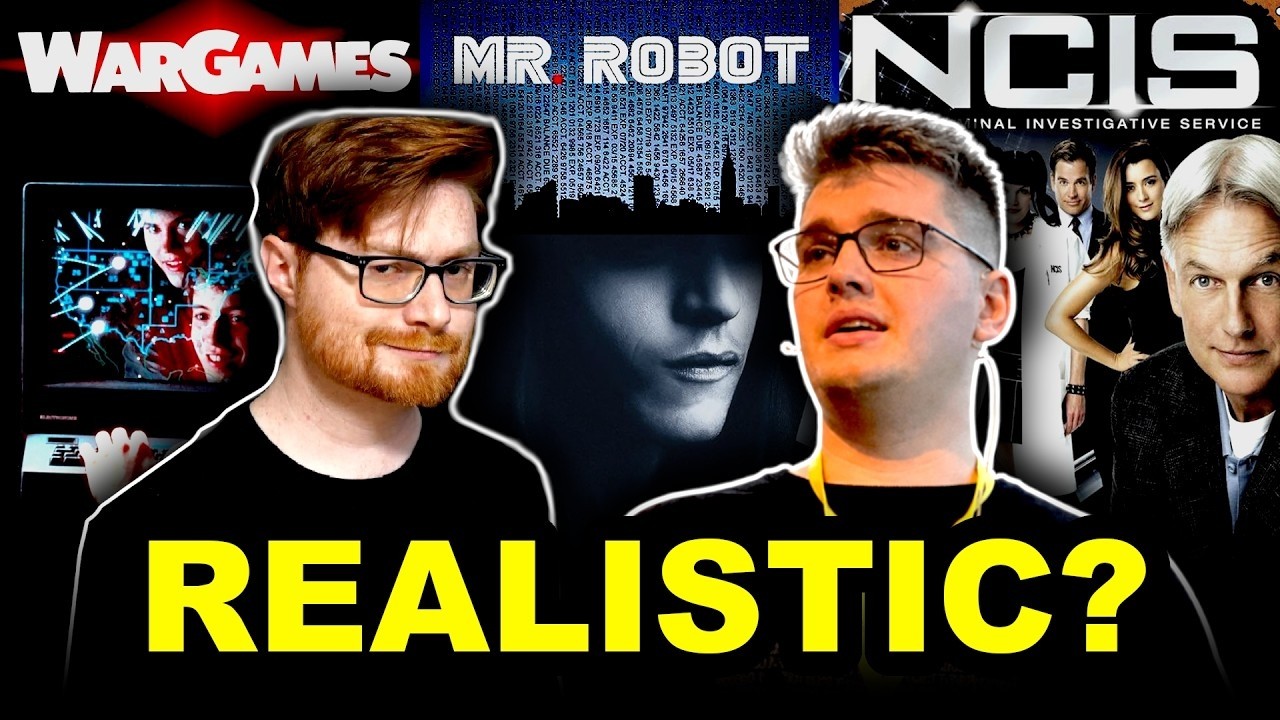
Are ANY hacking scenes actually good?
Keywords
Summary
125 words
Critical Evaluation
Value of the Information & Strength of the Argument
The video provides valuable insights into the realism of hacking scenes, with the hosts offering expert opinions based on their professional experience. They effectively argue that while most scenes are unrealistic, some elements are surprisingly accurate, such as social engineering and the use of real tools. The argumentation is solid, as they support their claims with specific examples and technical details, making the content both educational and entertaining.
Scientific Rigor, Source Quality, Title Accuracy
The video demonstrates scientific rigor by referencing real tools and techniques, such as the Social Engineer Toolkit and SSH exploits. The hosts also mention historical figures like Steve Wozniak and the Captain Crunch whistle, adding credibility. However, they do not provide formal citations, and some historical details are uncertain. The title accurately reflects the content, and the video’s informal style is appropriate for the subject matter.
149 words
Title / Content Match
The title accurately reflects the content, which evaluates the realism of hacking scenes in various media.
Quality & Reliability
8/10
The video features two cybersecurity professionals providing expert commentary on the realism of hacking scenes in movies and TV shows. They reference real tools and techniques, and their assessments are grounded in practical experience. However, the discussion is informal and lacks formal citations, and some historical details are uncertain.
Key Moments
Markers derived by PSI from the transcript: the creator did not define chapters.
- Discussion on NCIS hacking scene, highlighting unrealistic elements like two people on one keyboard.
- Analysis of Sneakers scene, focusing on social engineering and voice cloning, which is deemed realistic.
- Review of Transformers scene, discussing steganography and data exfiltration via audio files.
- Discussion on The Core, covering phone phreaking and its historical context.
- Analysis of The Matrix scene, noting the realistic SSH exploit and Nmap usage.
- Review of Mr. Robot scene, praising the use of the Social Engineer Toolkit and its accuracy.
Cited Sources
- CodeCrafters — Mentioned as a resource for learning to code.
- CyberDefenders — Mentioned for blue team training and SOC analyst certifications.
- Infosec Map — Mentioned as a resource for cybersecurity events.
- Newsletter — Mentioned for updates on John Hammond's activities.
- OpenVPN — Mentioned for hosting your own VPN.
- Just Hacking Training — Mentioned for cybersecurity training.
Concurring Sources
- Social Engineer Toolkit (SET) — The tool mentioned in the Mr. Robot scene, developed by Dave Kennedy.
Contribution & Novelties
The video offers a unique perspective by having cybersecurity professionals react to hacking scenes, providing both entertainment and education. It highlights the gap between Hollywood’s portrayal and reality, while also acknowledging when scenes get it right. The discussion on social engineering as a form of hacking is particularly insightful, as it challenges common misconceptions.
Pour aller plus loin :
- Social engineering (security) — Relevant to the discussion on social engineering as a hacking technique.
- Phone phreaking — Provides historical context for the phone phreaking scene.
- Steganography — Relevant to the Transformers scene and data hiding techniques.
- SSH — Relevant to the Matrix scene and SSH exploits.
106 words
Radar Profile
The radar chart shows high scores in quality of information and technical level, indicating a well-informed and technically detailed discussion. The lower score in quantity of information suggests the video could have covered more scenes or provided more depth, but overall it is a balanced and credible analysis.
💬 The comments are predominantly positive, with viewers appreciating the analysis and sharing additional insights. Some comments point out missing scenes or express nostalgia for classic hacking movies, but overall the sentiment is enthusiastic and supportive.