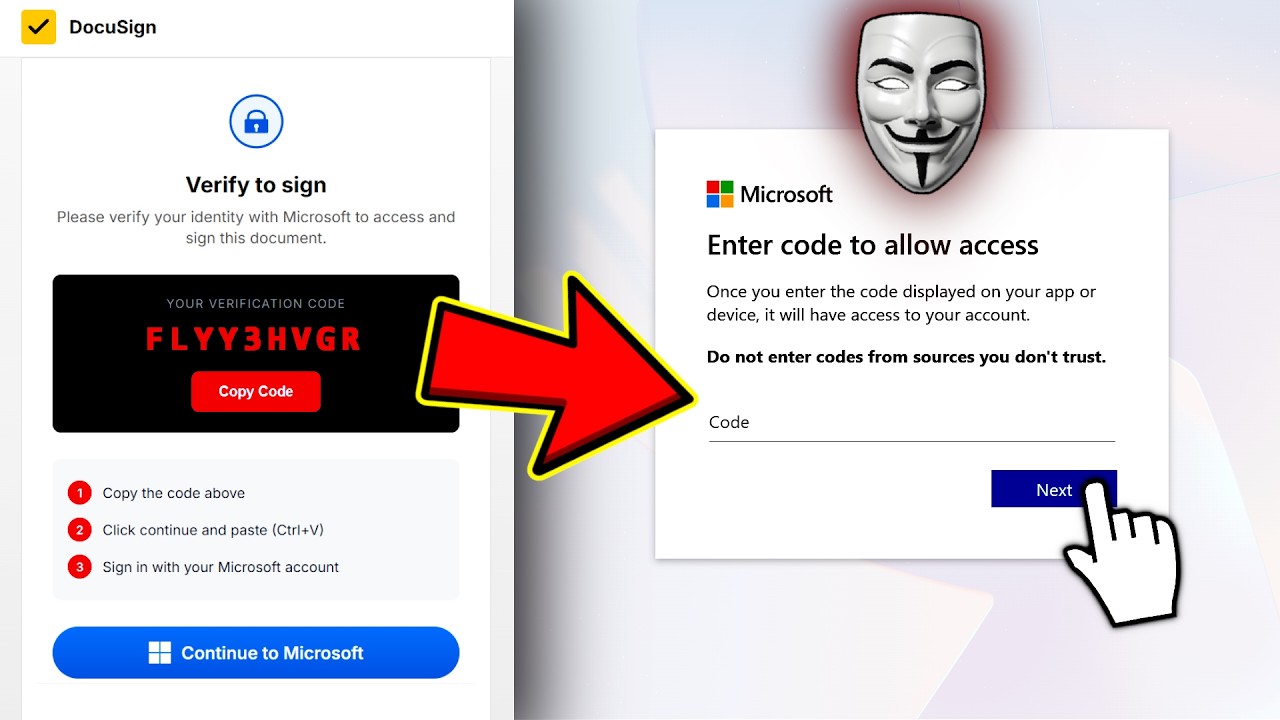
HUGE AI-powered Microsoft Account phishing campaign
Keywords
Summary
118 words
Critical Evaluation
Value of the Information & Strength of the Argument
The video provides valuable insights into a real, ongoing phishing campaign, with concrete examples and technical details. The argumentation is solid, supported by evidence from live phishing pages, the Evil Tokens Telegram channel, and collaboration with Flare. The presenter effectively demonstrates how AI and PaaS are abused for phishing, making a compelling case for the threat’s severity. However, the argumentation relies heavily on anecdotal evidence and the presenter’s own analysis, which may not be fully generalizable.
Scientific Rigor, Source Quality, Title Accuracy
The video demonstrates strong scientific rigor by referencing a detailed blog post from Huntress and collaborating with Flare for threat intelligence. The sources are credible and directly relevant. The title accurately reflects the content, and the video stays on topic. The presenter also mentions that the campaign was covered by The Hacker News, adding external validation. However, the video is primarily an expert opinion and lacks peer-reviewed sources, which slightly reduces its scientific rigor.
165 words
Title / Content Match
The title accurately reflects the content, which details a large-scale AI-powered phishing campaign targeting Microsoft accounts.
Quality & Reliability
8/10
The video is based on real incident analysis by Huntress, with collaboration from Flare, and includes direct evidence from live phishing pages and Telegram channels. The information is technical and specific, but relies heavily on the presenter's expertise and may lack peer-reviewed sources.
Key Moments
Markers derived by PSI from the transcript: the creator did not define chapters.
- Introduction to device code phishing and the campaign overview.
- Demonstration of a live phishing page and the device code flow.
- Explanation of Railway PaaS and how it's abused for phishing infrastructure.
- Casey's demo of creating a reverse proxy with Railway.
- Discussion of redirect services and lure variety.
- Attribution to Evil Tokens and collaboration with Flare.
- Tour of Evil Tokens Telegram channel and AI features.
- Wrap-up, mitigation advice, and thanks.
Cited Sources
- Huntress Blog: Railway PaaS M365 Token Replay Campaign — Detailed analysis of the campaign, including indicators of compromise and detection rules.
- Flare - Threat Exposure Management — Sponsor and collaborator providing threat intelligence and data on the campaign.
- Just Hacking Training — Training platform by John Hammond for cybersecurity education.
- CodeCrafters — Affiliate link for coding education.
- OpenVPN — Affiliate link for VPN services.
- CyberDefenders — Affiliate link for blue team training and SOC certifications.
- Newsletter — John Hammond's newsletter for updates.
Concurring Sources
- The Hacker News — Mentioned in the video as covering the campaign, providing external validation.
Contribution & Novelties
The video provides a timely and detailed analysis of a real AI-powered phishing campaign, highlighting the abuse of legitimate services like Railway and Cloudflare Workers. It offers unique insights into the operational aspects of phishing-as-a-service platforms and the role of AI in generating personalized lures. The collaboration with Flare adds valuable threat intelligence data.
Pour aller plus loin :
- Device Code Authentication — Official documentation on the device code flow, which is the target of this phishing technique.
- Phishing — Overview of phishing attacks and their evolution.
- Platform as a Service — Explanation of PaaS and its potential for abuse.
100 words
Radar Profile
The radar profile shows high scores in information quantity, quality, and reliability, with a slightly lower technical level. This indicates a well-researched and informative video that is accessible to a broad audience, though it may not delve into the most advanced technical details.
💬 No comments were provided for analysis.