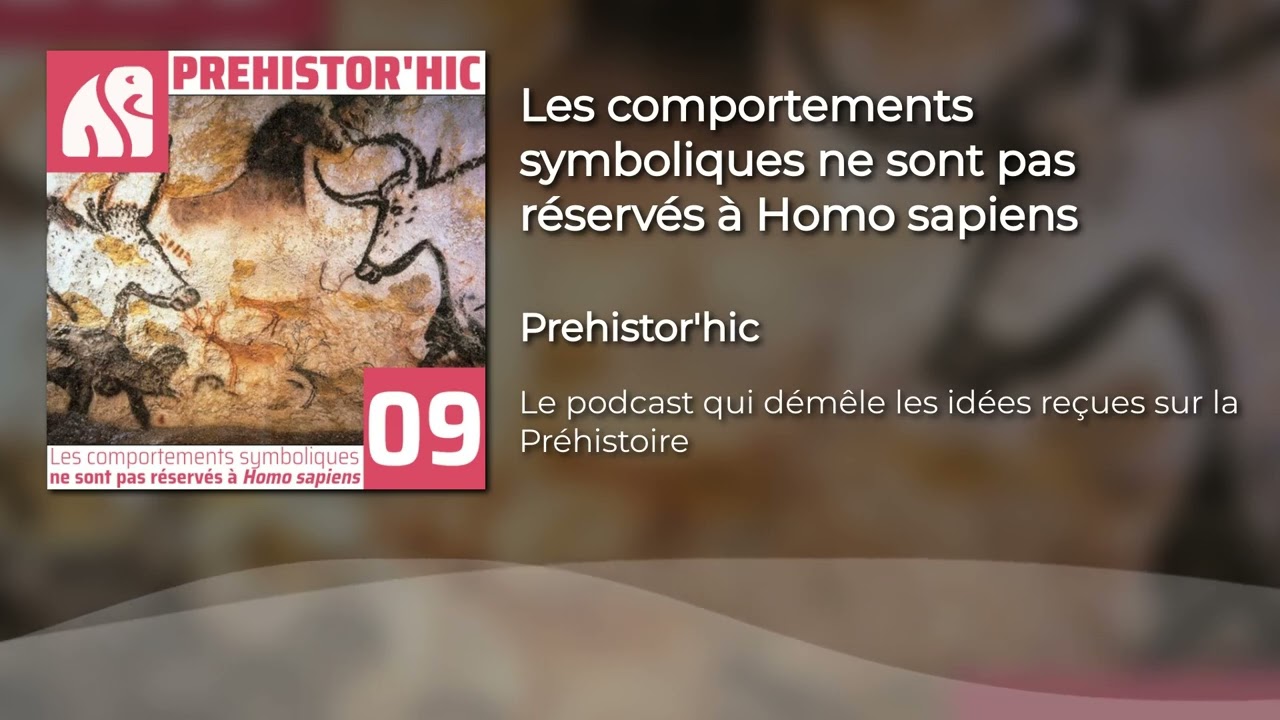
Les comportements symboliques ne sont pas réservés à Homo sapiens
Symbolic behaviors are not reserved for Homo sapiens
Keywords
Summary
176 words
Critical Evaluation
Value of the Information & Strength of the Argument
The value of the information is high, as the podcast synthesizes a wide range of archaeological evidence and current debates. The hosts present multiple perspectives, such as the three main theories on the origin of symbolic behavior, and critically evaluate the evidence for Neanderthal and Homo naledi symbolic practices. The argumentation is solid, with hosts consistently emphasizing the need for caution in interpretation, acknowledging cognitive biases, and explaining the methodological challenges in archaeology. They effectively debunk the idea of human exceptionalism by presenting concrete examples and referencing peer-reviewed studies, though the conversational format sometimes lacks depth in explaining the nuances of the evidence.
Scientific Rigor, Source Quality, Title Accuracy
The podcast demonstrates scientific rigor by referencing specific archaeological sites and studies, such as the La Roche-Cotard engravings and the Shanidar burials. The hosts show awareness of the importance of context and stratigraphy in interpreting findings. The title accurately reflects the content, which is a critical examination of the notion that symbolic behavior is unique to Homo sapiens. The sources cited in the description are relevant and credible, including publications in PLOS ONE and PNAS. The hosts also discuss the controversy surrounding Homo naledi, presenting both sides of the debate. Overall, the content is well-researched and aligns with the title’s promise.
219 words
Title / Content Match
The title accurately reflects the content, which focuses on debunking the idea that symbolic behavior is exclusive to Homo sapiens, with a strong emphasis on Neanderthals and Homo naledi.
Quality & Reliability
8/10
The podcast presents a well-structured discussion of symbolic behaviors in hominins, supported by references to specific archaeological sites and studies. The hosts demonstrate methodological awareness and caution in interpreting evidence, though the format is conversational and lacks detailed citation within the audio.
Key Moments
Markers derived by PSI from the transcript: the creator did not define chapters.
- Definition of symbolic behaviors in archaeology
- Importance of discussing symbolic behaviors
- Methods for detecting symbolic behaviors during excavations
- Good excavation practices and preservation
- Funerary practices in Homo neanderthalensis
- Other symbolic behaviors in Neanderthals
- The case of Homo naledi and controversial claims
- Symbolic behaviors in non-human species
- Why it's difficult to accept that Homo sapiens is not unique
Cited Sources
- YouPod — Tool used to generate the video (mentioned in description)
Concurring Sources
- Marquet et al., 2023, PLOS ONE — Cited in description as evidence of Neanderthal engravings.
- Rendu et al., 2013, PNAS — Cited in description as evidence for intentional Neanderthal burial.
- Peresani et al., 2011, PNAS — Cited in description as evidence of feather removal by Neanderthals.
Dissenting Sources
- Debate on Homo naledi burials — The podcast mentions that claims of symbolic behavior in Homo naledi are controversial, with some researchers questioning the evidence.
Contribution & Novelties
The podcast provides an accessible synthesis of current archaeological evidence challenging human exceptionalism in symbolic behavior. It highlights recent discoveries and debates, particularly the controversial Homo naledi burials, and emphasizes the importance of methodological rigor in archaeology.
Pour aller plus loin :
- Neanderthal behavior — Overview of Neanderthal cultural practices.
- Homo naledi — Context on the species and the burial debate.
- Symbolic behavior in archaeology — General concept and its archaeological significance.
72 words
Radar Profile
The radar profile shows high scores across all dimensions, indicating a well-balanced and informative content. The podcast excels in providing substantial information and maintaining scientific rigor, while also being technically accessible to a general audience.