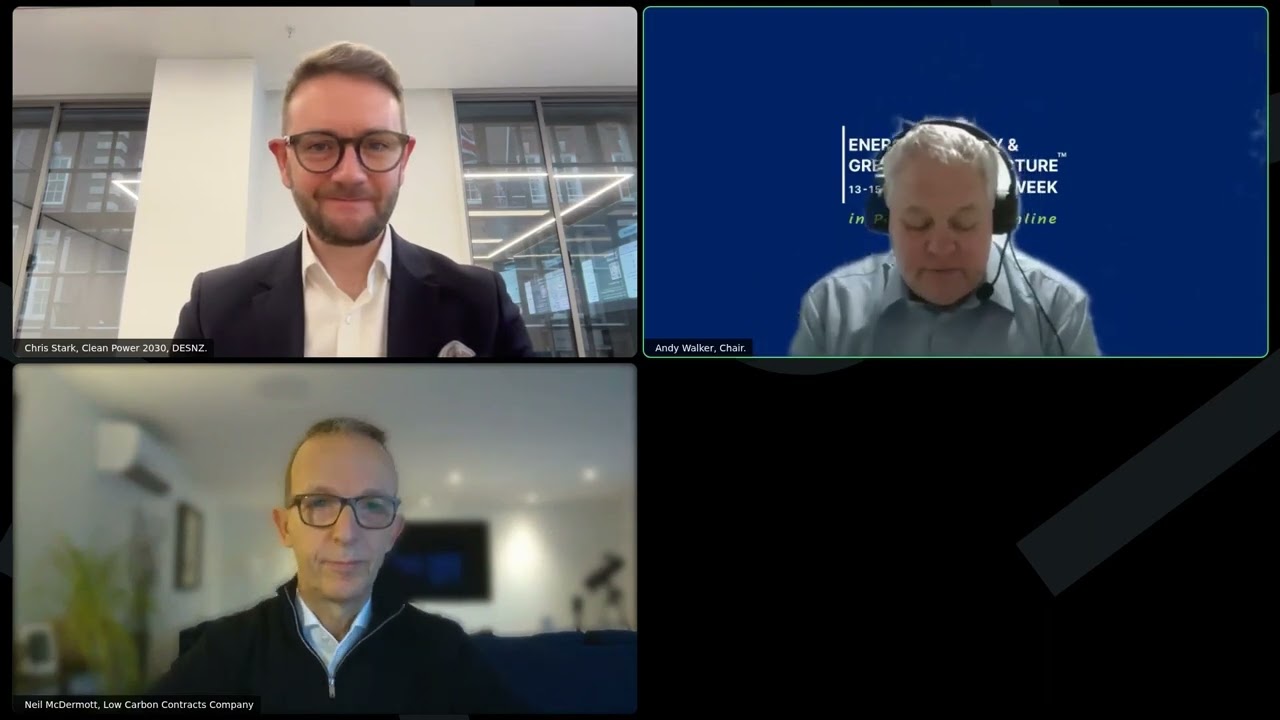
Opening Addresses by Neil McDermott and Chris Stark
Keywords
Summary
204 words
Critical Evaluation
Value of the Information & Strength of the Argument
The video provides valuable insights into the UK’s energy policy and the practical implementation of Contracts for Difference. Neil McDermott offers specific data on the CfD portfolio, including the number of contracts, capacity, and investment figures, which adds credibility. Chris Stark provides a detailed account of the AR7 auction results and the policy changes that led to their success, arguing that the results demonstrate the effectiveness of the government’s approach. The argumentation is coherent and supported by concrete examples, such as the comparison of offshore wind costs to new gas generation. However, the content is largely promotional, with both speakers highlighting successes without addressing potential challenges or criticisms. The lack of independent sources and the focus on positive outcomes limit the critical depth of the argumentation.
Scientific Rigor, Source Quality, Title Accuracy
The scientific rigor is moderate. The speakers are authoritative figures directly involved in the topics discussed, which lends credibility. However, no external sources are cited, and the data presented is not independently verified. The title accurately reflects the content, as it is indeed two opening addresses. The video does not include any advertising or sponsored content. The content is presented as expert opinion, which is appropriate for a conference opening. The lack of citations and the promotional tone reduce the overall rigor.
223 words
Title / Content Match
The title accurately reflects the content: two opening addresses by the named speakers.
Quality & Reliability
7/10
Speakers are senior officials directly involved in UK energy policy and contract management. They provide specific data and results from recent auctions, but the content is largely promotional and lacks independent verification. No external sources are cited.
Key Moments
Markers derived by PSI from the transcript: the creator did not define chapters.
- Introduction by host Andy Walker, setting the stage for the conference.
- Neil McDermott begins his address, introducing the Low Carbon Contracts Company and its role.
- McDermott discusses AR7 results for offshore wind, adding 8.4 GW and 22 new contracts.
- McDermott highlights the expansion of CfDs to carbon capture, hydrogen, and sustainable aviation fuels.
- McDermott concludes with a look ahead to 2026, including AR7A and AR8.
- Chris Stark begins his address, focusing on the significance of the AR7 offshore wind results.
- Stark explains the policy changes that contributed to the auction's success, including extended contract lengths and budget flexibility.
- Stark discusses the price of offshore wind at just over £90/MWh and compares it to new gas generation.
- Stark highlights the broader clean power mission, including grid reforms and the need for increased electricity generation.
- Stark concludes by stating that the results put the UK on track to achieve 36 GW of offshore wind by 2030.
Contribution & Novelties
The video provides an insider perspective on the UK’s Contracts for Difference scheme and the recent AR7 auction results, offering specific data and policy insights not commonly available in public discourse. It highlights the expansion of CfDs to new technologies and the government’s strategic approach to achieving clean power by 2030.
Pour aller plus loin :
- Contracts for Difference — Background on the CfD mechanism.
- Offshore wind power in the United Kingdom — Context on the UK’s offshore wind industry.
- Clean Power 2030 — Official government plan for clean power by 2030.
92 words
Radar Profile
The radar profile shows high scores in quantity and quality of information, reflecting the detailed data and expert insights provided. The technical level is moderate, suitable for a general audience. The overall reliability is good but not excellent due to the lack of independent sources and promotional tone.