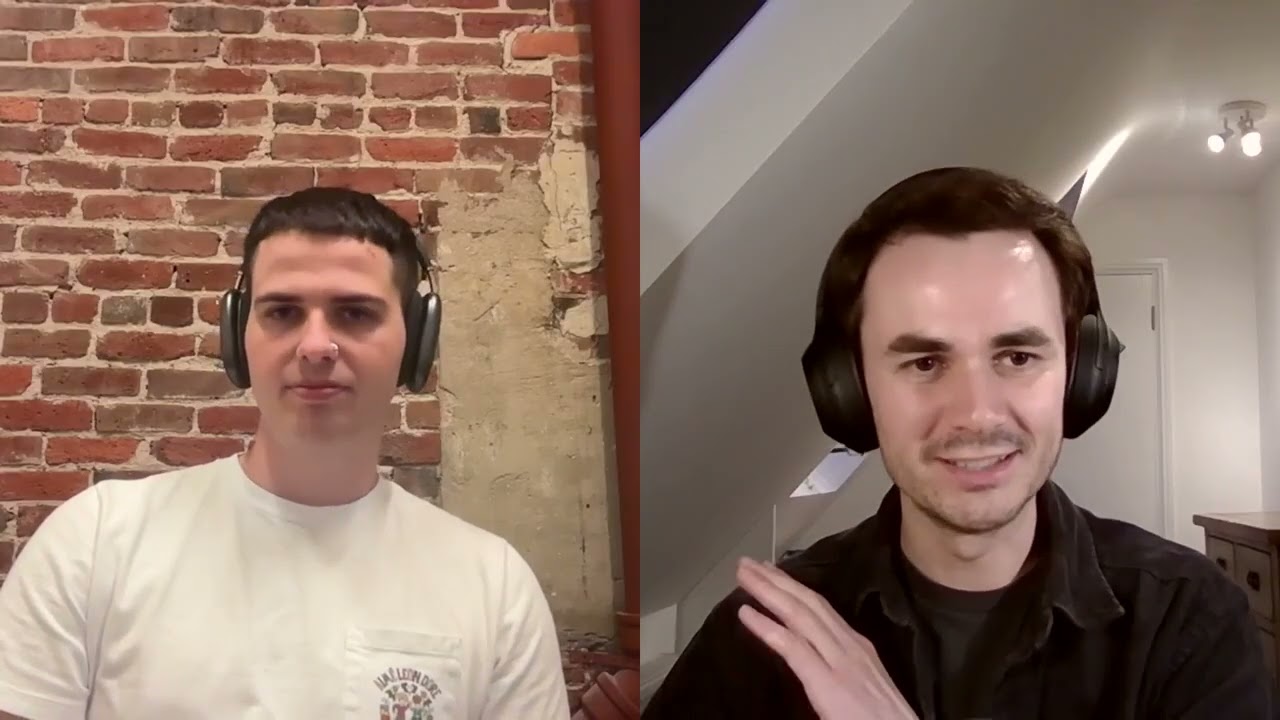
Augustine Mavor Parker on the noisy tv problem | FAI CDT
Keywords
Summary
200 words
Critical Evaluation
Value of the Information & Strength of the Argument
The interview provides valuable insights into the noisy TV problem and a novel solution based on aleatoric uncertainty estimation. Mavor-Parker clearly explains the intuition behind curiosity-driven exploration and the failure mode of noisy TVs. He argues convincingly that subtracting aleatoric uncertainty from the intrinsic reward can prevent agents from being distracted by unpredictable elements. The discussion of his internships adds practical context, showing how RL techniques are applied in industry and safety research. The argumentation is coherent and well-supported by his own research and experiments, though the informal format limits the depth of technical detail.
Scientific Rigor, Source Quality, Title Accuracy
The speaker is a credible researcher with a PhD from UCL, and his work is published in a paper titled ‘How to Stay Curious While Avoiding Noisy TVs Using Aleatoric Uncertainty Estimation’. He references relevant prior work, such as DeepMind’s Deep Q-Learning and curiosity-driven approaches, and discusses collaborations with established researchers like Claire Lyle. The title accurately reflects the content, focusing on the noisy TV problem and his other projects. The interview is scientifically rigorous, though it lacks formal citations or references to specific papers beyond his own work.
199 words
Title / Content Match
The title accurately reflects the main topic discussed, which is the noisy TV problem in reinforcement learning, along with the speaker's other PhD projects.
Quality & Reliability
8/10
The speaker is a PhD graduate in reinforcement learning, and the content is based on his own research and internships at reputable institutions. The explanations are technically accurate and well-articulated, though the format is an informal interview rather than a peer-reviewed presentation.
Key Moments
Markers derived by PSI from the transcript: the creator did not define chapters.
- Introduction and overview of PhD research on sample-efficient RL
- Discussion of Montezuma's Revenge and sparse rewards
- Explanation of curiosity-based intrinsic rewards
- Introduction to the noisy TV problem
- Existing solutions and their limitations
- Mavor-Parker's approach using aleatoric uncertainty
- Experiments with random images and results
- Discussion of internships: Capernic AI and VR depth perception
- Oxford project on sinusoidal activation functions
- Redwood Research and automated circuit discovery in LLMs
Cited Sources
- How to Stay Curious While Avoiding Noisy TVs Using Aleatoric Uncertainty Estimation — Mavor-Parker's paper on the noisy TV problem, mentioned in the description.
Concurring Sources
- Curiosity-driven Exploration by Self-Supervised Prediction — This paper by Pathak et al. introduces curiosity-driven exploration, which is the basis for the discussed approach.
Contribution & Novelties
The interview highlights Mavor-Parker’s original contribution of using aleatoric uncertainty estimation to mitigate the noisy TV problem in curiosity-driven RL. This is a novel approach that distinguishes between irreducible randomness and epistemic uncertainty, allowing agents to avoid being trapped by unpredictable elements. The discussion also touches on his work in AI safety and interpretability, providing a broader perspective on RL research.
Pour aller plus loin :
- Curiosity-driven exploration in deep reinforcement learning — Foundational paper on curiosity as intrinsic reward.
- Montezuma’s Revenge and sparse rewards — Background on the game that motivated this research.
- Aleatoric and epistemic uncertainty in machine learning — Overview of uncertainty types relevant to the approach.
110 words
Radar Profile
The radar profile shows high scores in quality of information and technical level, indicating a technically sound and informative interview. The quantity of information is moderate, and the global reliability is high, reflecting the speaker's expertise. The overall assessment is positive, with a note of 4 out of 5.
💬 No comments were provided for analysis.