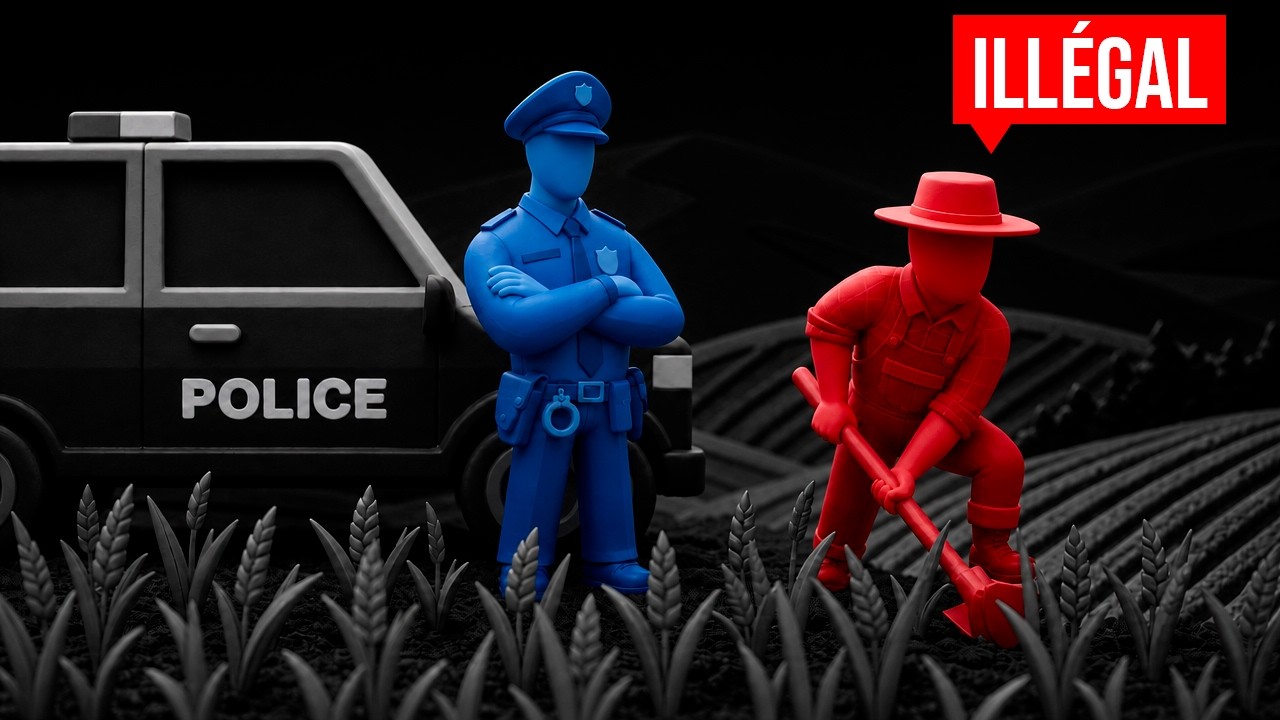
Pourquoi les agriculteurs n'ont pas le droit de replanter leurs graines ?
Why farmers aren't allowed to replant their seeds
Keywords
Summary
135 words
Critical Evaluation
Value of the Information & Strength of the Argument
The video provides a valuable overview of the seed industry’s business model, explaining complex concepts like hybrid F1 and licensing agreements in an accessible manner. The argumentation is structured and persuasive, using historical examples and market data to support the claim that seed companies have created a system of dependency. However, the argumentation is one-sided, emphasizing the negative aspects without adequately addressing counterarguments or nuances, such as the benefits of high-yield varieties or the legal exceptions that exist in some countries.
Scientific Rigor, Source Quality, Title Accuracy
The video demonstrates moderate scientific rigor. It references historical events and companies accurately, but it does not provide direct citations for many claims, relying on general knowledge. The title accurately reflects the content, which is a critical analysis of seed saving restrictions. The video includes a promotional segment for a brokerage platform, which is clearly disclosed but may affect the perceived objectivity. The comments show a mix of agreement and critical nuance, with some viewers pointing out simplifications and legal inaccuracies.
177 words
Title / Content Match
The title accurately reflects the core topic of the video, which explores the legal and commercial restrictions on seed saving.
Quality & Reliability
6/10
The video presents a coherent narrative supported by historical facts and market data, but it simplifies complex legal and agronomic issues and includes promotional content. Some claims lack nuance and are presented without direct citations.
Chapters
Cited Sources
- Freedom24 - Brokerage platform — Promotional link for the sponsor of the video, used to invest in agribusiness companies.
- Invvest - Investment tracking tool — Creator's free tool for tracking investments, mentioned in the description.
Concurring Sources
- Wikipedia - Plant Patent Act — Confirms the historical fact of the 1930 law allowing plant patents.
- Wikipedia - Svalbard Global Seed Vault — Confirms the existence and purpose of the seed vault.
Dissenting Sources
- Comment by agronomist — A commenter with agronomic expertise notes that in Switzerland, farmers can legally produce their own seeds, and that the situation is more nuanced than presented.
- Comment on legal nuances — Another commenter points out that in France, farmers are free to resow their harvest for many crops, and that the video oversimplifies the legal restrictions.
Contribution & Novelties
The video offers a compelling synthesis of the seed industry’s business model, connecting historical developments to current market dynamics. It highlights the concept of ‘Seed as a Service’ and the economic trap for farmers. The video also touches on geopolitical risks and the existence of the Svalbard Global Seed Vault as a safeguard.
Pour aller plus loin :
- Plant Patent Act of 1930 — Historical context on the first legislation allowing patents on plants.
- Hybrid (biology) — Explanation of hybrid vigor and F1 generation.
- Svalbard Global Seed Vault — Details on the global seed bank mentioned in the video.
- Monsanto legal cases — Overview of lawsuits against farmers for seed saving.
- Green Revolution — Background on the agricultural transformation that led to high-yield varieties.
124 words
Radar Profile
The radar profile shows moderate scores across all dimensions, with quantity of information and reliability being relatively higher. The video provides a substantial amount of information but with some gaps in precision and technical depth, resulting in a balanced but not exceptional profile.
💬 Équilibré. Sur les 30 commentaires analysés, les avis sont partagés entre ceux qui approuvent la dénonciation du système et ceux qui apportent des nuances techniques ou juridiques, certains critiquant aussi la qualité du son et la promotion commerciale.