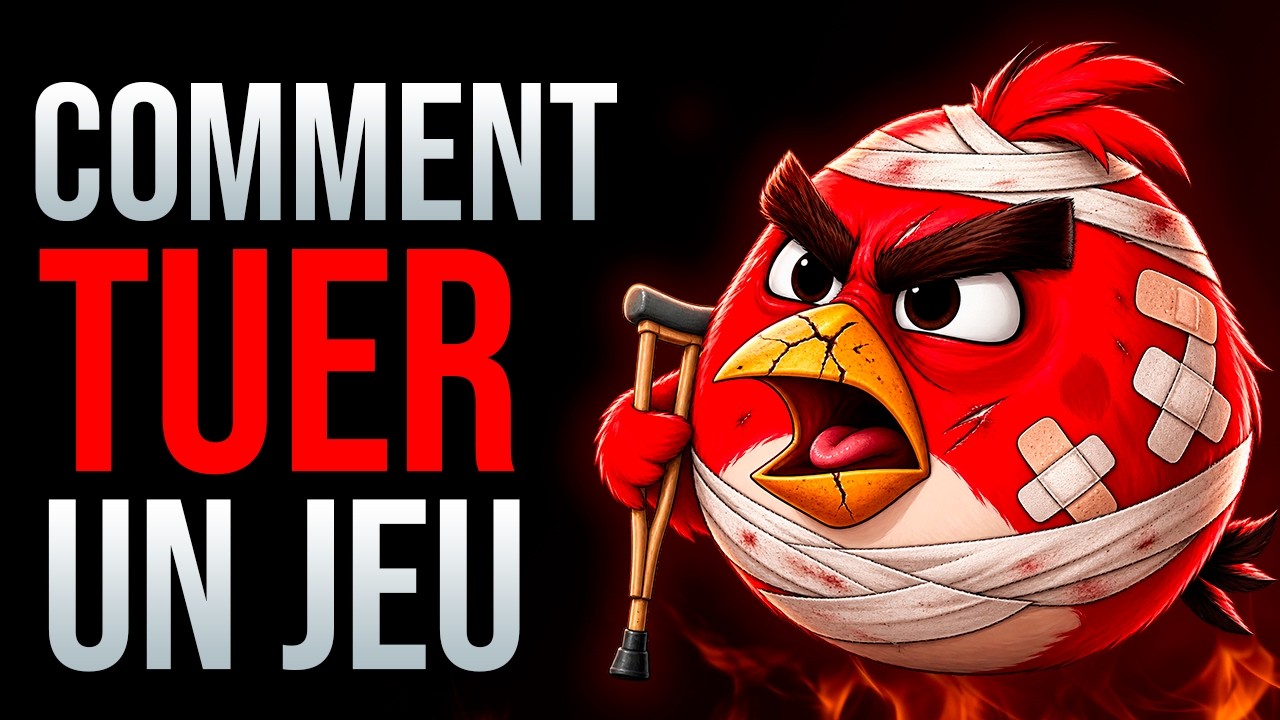
L'erreur stupide qui a tué Angry Birds
The stupid mistake that killed Angry Birds
Keywords
Summary
153 words
Critical Evaluation
Value of the Information & Strength of the Argument
The video provides a detailed and engaging narrative of Rovio’s business history, highlighting key strategic missteps. However, the argumentation is largely anecdotal and lacks rigorous analysis. The presenter’s investment advice is subjective and not supported by in-depth financial data. The promotional segments for Freedom24 and the personal recommendation of Tencent and NetEase are based on general market trends rather than specific, verifiable evidence. The comparison with Supercell is illustrative but not thoroughly analyzed.
Scientific Rigor, Source Quality, Title Accuracy
The video does not cite specific sources for its claims, relying on widely known facts about Rovio’s history. The title accurately reflects the content, focusing on the ‘stupid mistake’ that led to Angry Birds’ decline. The promotional content for Freedom24 is clearly marked as an integration, but it is not separated from the main narrative, which may confuse viewers about the video’s purpose. The video’s credibility is moderate, as it presents a compelling story but lacks the rigor of a well-researched documentary.
170 words
Title / Content Match
The title accurately reflects the content, which focuses on the strategic errors that led to Angry Birds' decline.
Quality & Reliability
5/10
The video is a narrative retelling of Rovio's rise and fall, based on publicly known events but lacking citations to primary sources. It contains promotional segments for a broker and personal investment opinions, reducing its reliability as a factual account.
Key Moments
Markers derived by PSI from the transcript: the creator did not define chapters.
- Introduction: The rise of Angry Birds and the promise of its downfall.
- Early history of Rovio: from student project to near bankruptcy.
- Creation of Angry Birds: copying Crush the Castle and the initial flop.
- Marketing strategy with Chillingo and the game's rise to number one.
- Expansion into merchandise and films, and the beginning of financial troubles.
- The shift to free-to-play and the failure of Angry Birds 2.
- The IPO and the stock's collapse due to investor pressure.
- The removal of the original game and the backlash.
- Sega acquisition and the subsequent write-down.
Cited Sources
- Freedom24 — Promotional link for the broker mentioned in the video.
- Invvest.co — The presenter's free investment tracking tool.
Concurring Sources
- Rovio Entertainment — Provides a factual overview of Rovio's history, including financial figures and strategic decisions.
Dissenting Sources
- Sega's acquisition of Rovio — Reuters article reports the acquisition price and Sega's expectations, which contrast with the video's portrayal of the deal as a 'nightmare'.
Contribution & Novelties
The video offers a concise case study of Rovio’s business failures, emphasizing the dangers of over-reliance on a single intellectual property and the pitfalls of going public. It provides a narrative that is accessible to a general audience, but it does not introduce new information or analysis beyond what is publicly known. The comparison with Supercell is a useful perspective, but it is not deeply explored.
Pour aller plus loin :
- Rovio Entertainment — Wikipedia article on the company’s history.
- Free-to-play — Wikipedia article on the business model that disrupted Rovio.
- Angry Birds (video game) — Wikipedia article on the original game.
102 words
Radar Profile
The radar profile shows moderate scores across all dimensions, with a slight peak in quantity of information. This indicates a video that provides a substantial amount of narrative content but lacks depth in technical analysis and source reliability.