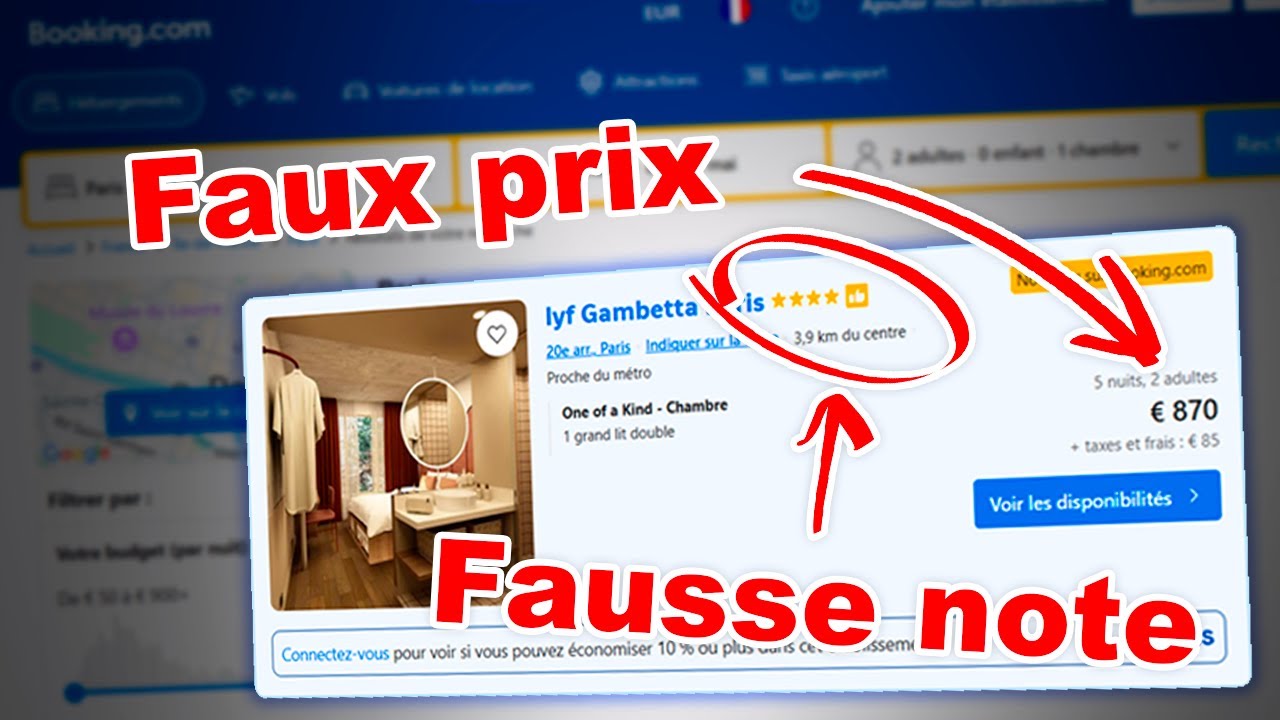
Comment Booking vous manipule
How Booking manipulates you
Keywords
Summary
102 words
Critical Evaluation
Value of the Information & Strength of the Argument
The video provides valuable insights into Booking’s business practices, particularly the use of dark patterns and algorithmic manipulation. The argumentation is persuasive, using a mix of historical narrative, industry examples, and psychological concepts like FOMO. However, the evidence is largely anecdotal and lacks rigorous sourcing, making it more of an opinion piece than a factual investigation.
Scientific Rigor, Source Quality, Title Accuracy
The video references real events and reports, such as the Norwegian Consumer Council’s 2019 report and UK competition authority findings, but does not provide direct links or detailed citations. The title accurately reflects the content, which is a critical analysis of Booking’s manipulative tactics. The creator’s background in finance and investment adds credibility, but the lack of verifiable sources weakens the overall scientific rigor.
135 words
Title / Content Match
The title accurately reflects the content, which focuses on Booking's manipulative tactics and business model.
Quality & Reliability
6/10
The video presents a compelling narrative about Booking's business practices, but relies heavily on anecdotal evidence and general claims without providing specific citations or verifiable data. While it references real events (e.g., the 2019 Norwegian Consumer Council report, UK competition authority findings), these are mentioned without detailed sourcing. The analysis is largely opinion-based, with a clear persuasive angle.
Chapters
Cited Sources
- Invvest - Free investment tracking tool — Mentioned as the creator's free tool for tracking investments, likely a promotional link.
Concurring Sources
- Norwegian Consumer Council report on dark patterns — Referenced in the video as a 2019 report denouncing Booking's manipulative practices.
- UK Competition and Markets Authority investigation into hotel booking sites — Mentioned in the video regarding misleading promotions and pricing practices.
Dissenting Sources
- Booking.com response to CMA investigation — Booking's official response defending its practices, which contrasts with the video's critical portrayal.
Contribution & Novelties
The video offers a comprehensive overview of Booking’s manipulative strategies, synthesizing known criticisms into a compelling narrative. It highlights the psychological tactics used on consumers and the economic pressure on hotels, providing a clear explanation of the power dynamics. While not entirely novel, it serves as an accessible introduction to these issues.
Pour aller plus loin :
- Dark patterns — Overview of deceptive design practices.
- Norwegian Consumer Council report on dark patterns — Original report referenced in the video.
- FOMO (Fear of missing out) — Psychological concept used in marketing.
90 words
Radar Profile
The radar profile shows moderate scores across all dimensions, indicating a balanced but not deeply rigorous analysis. The video excels in providing information but lacks in technical depth and source reliability.
💬 Positif. Sur les 30 commentaires analysés, la majorité exprime une approbation du contenu et partage des expériences personnelles avec Booking, souvent en écho aux critiques de la vidéo.