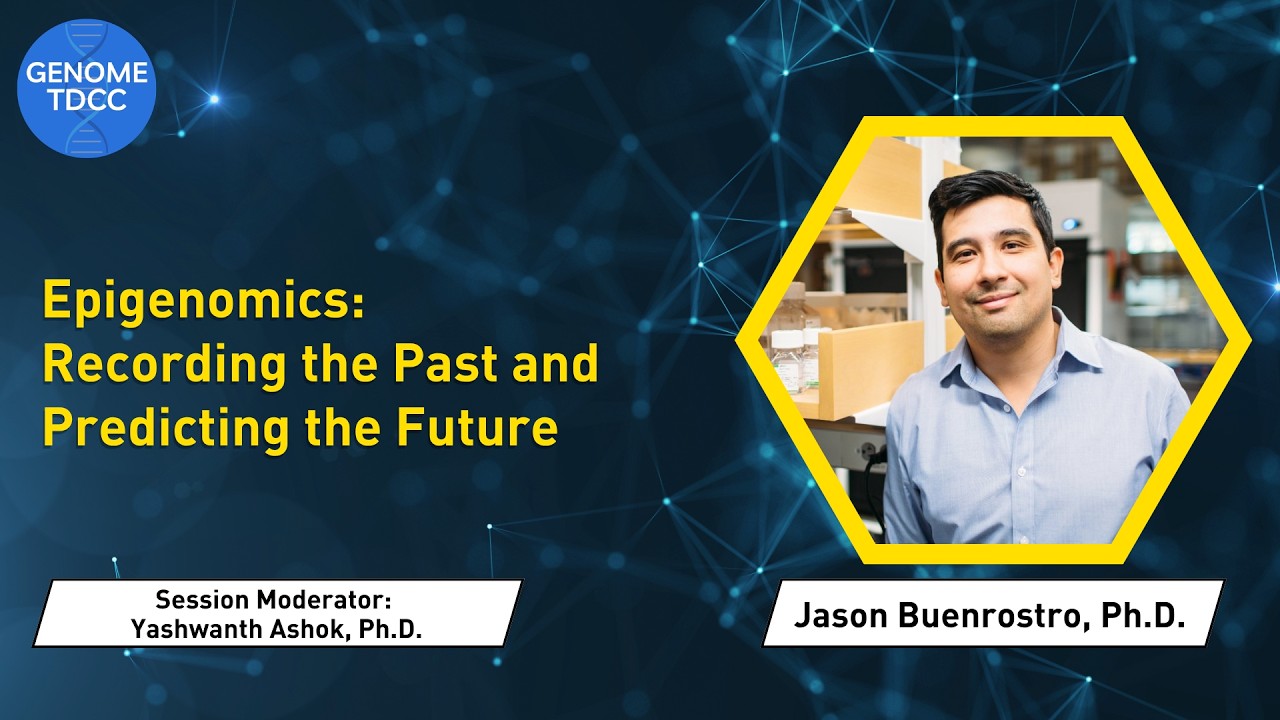
Epigenomics: Recording the Past and Predicting the Future
Keywords
Summary
118 words
Critical Evaluation
Value of the Information & Strength of the Argument
The talk provides high-value information: it presents novel methods (single-cell ATAC-seq, deep learning for footprinting) and original findings (TF cooperativity, inflammatory memory). The argumentation is solid, based on rigorous experimental validation (biochemical assays, AlphaFold predictions) and published in top journals. The speaker clearly explains the logic from observation to hypothesis to validation, making the scientific reasoning transparent.
Scientific Rigor, Source Quality, Title Accuracy
The scientific rigor is high: the speaker is a leading expert, and the research is published in reputable journals (Nature, Science). The talk includes specific citations to the literature (e.g., NEJM 1990 on colitis and cancer risk) and mentions collaborations with other labs. The title accurately reflects the content, focusing on the dual role of the epigenome in recording past events and predicting future outcomes. The talk is well-structured with clear sections, and the speaker acknowledges limitations and future directions.
152 words
Title / Content Match
The title accurately reflects the content: the talk focuses on how epigenomic information records past environmental exposures and can predict future health outcomes, with a strong emphasis on the speaker's own research.
Quality & Reliability
9/10
Presentation by a leading expert (inventor of ATAC-seq) at a reputable institution (Broad Institute, Harvard). The talk covers original research published in high-impact journals (Nature, Science) and includes detailed methodological descriptions. The content is technical and precise, with clear explanations of experimental approaches and findings. The speaker is transparent about limitations and future directions.
Chapters
- Introduction by Yashwanth Ashok
- Introduction to Epigenetic Regulation
- Chromatin Accessibility and Single-Cell ATAC-seq
- Decoding Transcription Factor Interactions with AI
- Inflammatory Memory and Lasting Epigenetic Changes
- Implications for Disease and Precision Medicine
- Q&A with Yashwanth Ashok and Jason Buenrostro
Cited Sources
- Buenrostro Lab — Official lab website providing further information on the research and publications.
Concurring Sources
- Buenrostro Lab — The lab's website likely lists publications that support the talk's claims.
Contribution & Novelties
The talk presents several novel contributions: the development of single-cell ATAC-seq and its application to study chromatin accessibility at unprecedented resolution; the use of deep learning to predict TF binding and discover new TF complexes; and the identification of a mechanism for inflammatory memory in colonic stem cells that links transient inflammation to lasting epigenetic changes and increased cancer risk. These findings advance our understanding of gene regulation and its role in disease.
Pour aller plus loin :
- ATAC-seq on Wikipedia — Overview of the method.
- Single-cell sequencing on Wikipedia — Context for single-cell technologies.
- AlphaFold on DeepMind’s site — Explanation of AlphaFold’s capabilities.
- Epigenetics on Wikipedia — General background.
110 words
Radar Profile
The radar profile shows high scores across all dimensions, indicating a well-balanced and reliable presentation. The talk excels in technical depth and scientific rigor, with strong information content and reliability.