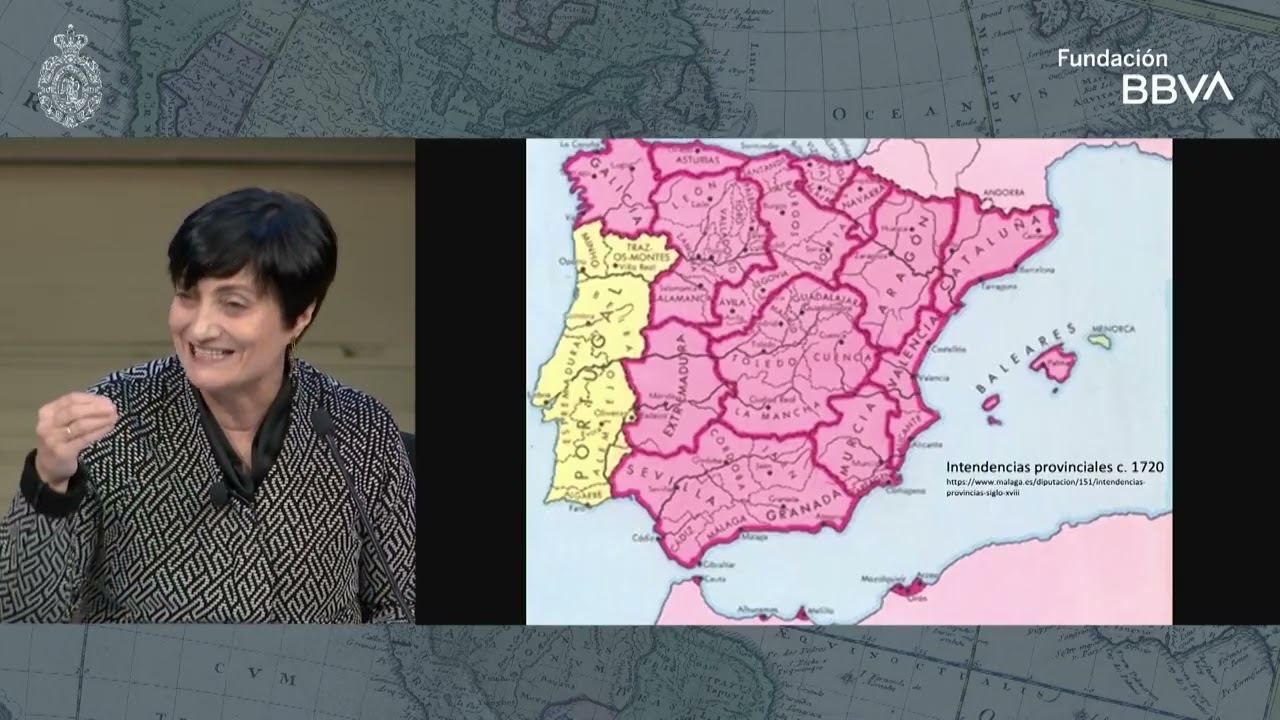
Carmen Sanz Ayán: "Del Barroco a la Ilustración: transiciones e innovaciones"
Keywords
Summary
189 words
Critical Evaluation
The lecture offers a nuanced and well-argued perspective on the transition from Baroque to Enlightenment in Spain, challenging the traditional periodization that emphasizes rupture. Sanz Ayán effectively uses the example of José Patiño to illustrate how individuals formed under the Habsburgs played crucial roles in the Bourbon reforms, demonstrating continuity in administrative practices and clientelar networks. Her argument that historical periods are constructions is methodologically sound and aligns with current historiographical trends. The lecture is based on her expertise and uses primary sources, such as Jovellanos’ discourse, to support her points. However, it is an opinion piece rather than a systematic review, and it lacks explicit citations for many claims. The focus on Patiño is detailed but may be too specific for a general audience. The title is accurate, and the content is coherent. Overall, the lecture provides valuable insights for understanding the complexities of the period, but it would benefit from more explicit references to scholarly literature. The absence of a Q&A session or discussion limits the opportunity to address potential counterarguments. Despite these minor limitations, the lecture is a solid contribution to the historiography of the Spanish Enlightenment.
190 words
Title / Content Match
The title accurately reflects the content: the lecture focuses on the transition between Baroque and Enlightenment in Spain, emphasizing continuities and innovations.
Quality & Reliability
8/10
The speaker is a recognized historian (Professor of Modern History at the Complutense University of Madrid, member of the Royal Academy of History), and the content is based on her research and expertise. The lecture is well-structured, uses primary sources (e.g., Jovellanos' discourse), and provides specific historical examples. However, it is an opinion/expert lecture without formal citations or peer review.
Key Moments
Markers derived by PSI from the transcript: the creator did not define chapters.
- Introduction: title and purpose of the lecture, focusing on the transition between Baroque and Enlightenment.
- Reading of Jovellanos' negative judgment on the Baroque, illustrating Enlightenment criticism.
- Discussion of arbitristas and their influence on the negative perception of the Baroque.
- Definition of Enlightenment and its intellectual roots.
- Concept of 'epoch' as a theoretical construction; proposal to focus on continuities.
- Introduction of José Patiño as an example of continuity between Habsburg and Bourbon periods.
- Patiño's career: from Milan to Spain, service under Felipe V, and reforms in Catalonia.
- Patiño's mentorship of Zenón de Somodevilla (Ensenada) and the clientelar system.
- Conclusion: importance of studying the period 1665-1746 as a whole.
Cited Sources
- Event page: Del Barroco a la Ilustración — Official event page for the lecture, providing context and possibly additional materials.
Concurring Sources
- Event page: Del Barroco a la Ilustración — Official event page, likely containing a summary or related materials that align with the lecture's content.
Contribution & Novelties
The lecture offers a fresh perspective on the transition from Baroque to Enlightenment in Spain, emphasizing continuities and the role of individuals formed under the Habsburgs in the Bourbon reforms. It challenges the traditional periodization and highlights the importance of studying the period 1665-1746 as a whole.
Pour aller plus loin :
- Jovellanos and the Enlightenment — Relevant for understanding the Enlightenment critique of the Baroque.
- José Patiño — Biography of the key figure discussed in the lecture.
- Marquis of Ensenada — Another key figure, illustrating continuity.
- Arbitristas — Concept of arbitristas, relevant to the negative perception of the Baroque.
100 words
Radar Profile
The radar profile shows high scores in quantity and quality of information, reflecting the lecture's depth and expertise. The technical level is moderate, suitable for an informed audience. The overall reliability is high, given the speaker's credentials, though the lack of formal citations slightly reduces the score.