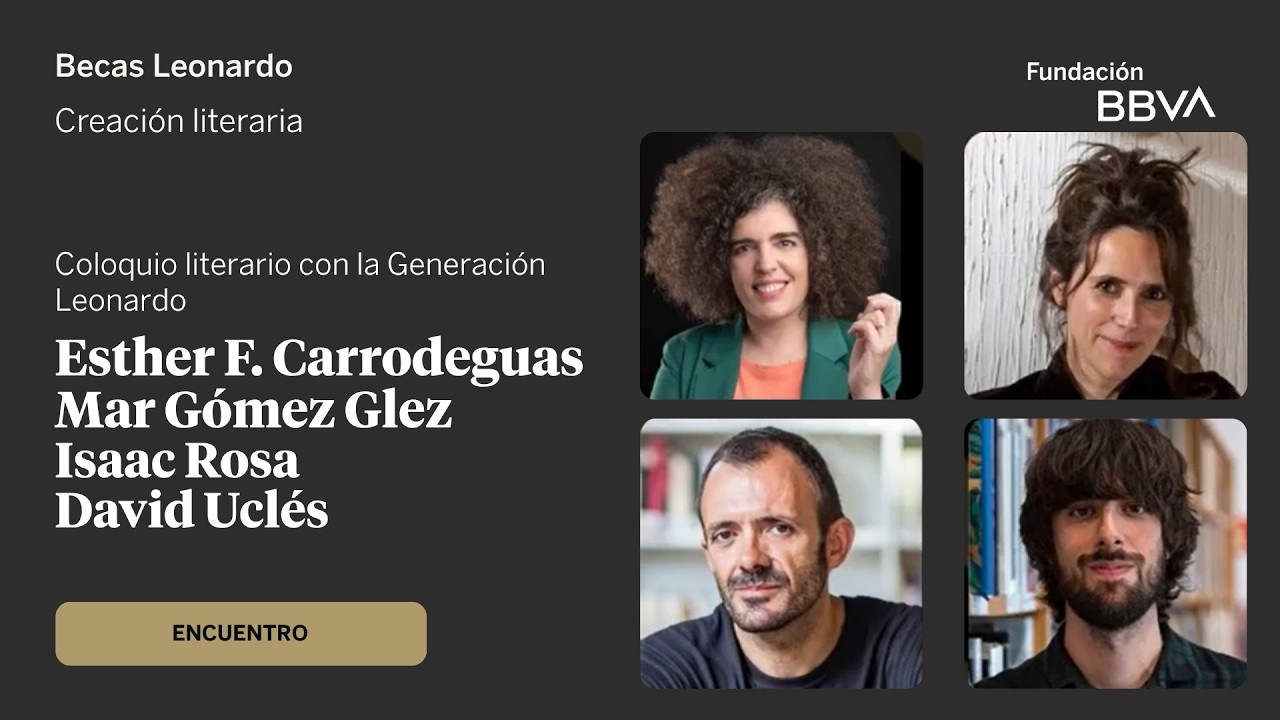
Generación Leonardo: “Nuestra literatura nace tras una ardua labor de investigación no académica”
Keywords
Summary
194 words
Critical Evaluation
The video offers a thoughtful and nuanced exploration of the relationship between literary creation and social science research. The participants, all accomplished writers, provide personal insights into their methodologies, emphasizing the importance of non-academic research in grounding their narratives. The discussion is well-moderated, allowing each author to articulate their unique perspective while maintaining a coherent thematic thread. The argumentation is solid, as the writers draw on concrete examples from their own projects, such as Carrodeguas’s investigation into the mothers of drug addicts and Uclés’s fieldwork for his Civil War novel. The quality of information is high, though it is primarily anecdotal and opinion-based rather than empirically rigorous. The sources cited are limited to the writers’ own works and the Leonardo grants program, which is appropriate for a discussion of this nature. The title accurately reflects the content, and the video successfully conveys the idea that literary creation often involves a deep, albeit non-academic, research process. The main weakness is the lack of external references or data to support broader claims, but this is not a significant drawback given the format. Overall, the video is a valuable resource for understanding the creative process of contemporary Spanish writers and the role of institutional support in fostering interdisciplinary work.
206 words
Title / Content Match
The title accurately reflects the core theme of the video: the writers' emphasis on non-academic research as foundational to their literary work.
Quality & Reliability
8/10
The video features four established writers discussing their creative processes and the role of research in their work, moderated by a journalist. The discussion is reflective and grounded in personal experience, with no factual claims that require verification. The institutional context (Fundación BBVA) adds credibility, but the content is primarily opinion-based, limiting its scientific reliability.
Key Moments
Markers derived by PSI from the transcript: the creator did not define chapters.
- Introduction of the panel and the Leonardo grants.
- Esther F. Carrodeguas describes her project on the mothers of drug addicts.
- Mar Gómez Glez explains her dystopian novel about a society unable to receive money.
- Isaac Rosa discusses his novel 'Feliz Final' and the need for dedicated writing time.
- David Uclés talks about his research for 'La Península de las Casas vacías'.
- Discussion on the permeable boundary between literature and social sciences.
- Reflections on the role of tradition and the need for time in creative work.
- Debate on whether excessive social science can hinder artistic expression.
- Concluding remarks on the value of the Leonardo grants.
Cited Sources
- Coloquio Generación Leonardo: literatura, investigación y ciencias sociales — Official page of the event, providing context and additional information.
- Fundación BBVA LinkedIn — Institutional profile of the organizing foundation.
Concurring Sources
- Fundación BBVA — Institutional source supporting the existence and goals of the Leonardo grants.
Contribution & Novelties
The video provides a unique insight into the creative processes of four contemporary Spanish writers, highlighting the often-overlooked role of non-academic research in literary creation. It bridges the gap between artistic practice and social science, offering a nuanced perspective on how these fields inform each other. The discussion also sheds light on the impact of the Leonardo grants in supporting mid-career creators, which is a valuable contribution to understanding arts funding.
Pour aller plus loin :
- Adorno’s aesthetic theory — Relevant to the discussion of art’s relationship to society.
- Mothers of Plaza de Mayo — Referenced by Carrodeguas as an example of grassroots social movements.
- Spanish Civil War literature — Context for Uclés’s novel and the broader literary tradition.
119 words
Radar Profile
The radar profile shows high scores in quality of information and reliability, reflecting the credibility of the speakers and the institutional backing. The quantity of information is moderate, as the discussion is focused and not exhaustive. The technical level is lower, indicating that the content is accessible to a general audience interested in literature and culture.