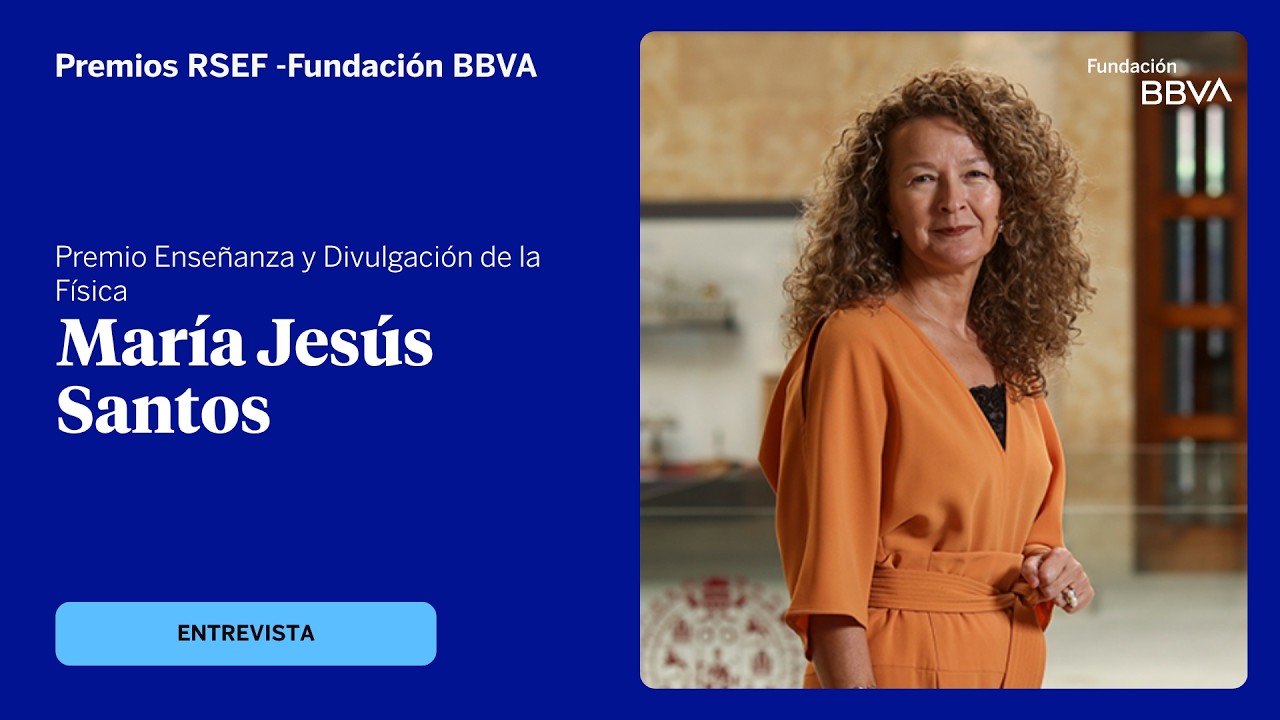
María Jesús Santos: “Vivimos en una sociedad tecnológica y esto no es posible sin la física”
Keywords
Summary
177 words
Critical Evaluation
The interview provides a valuable perspective on physics education from an experienced and award-winning educator. Santos’s emphasis on active learning and experimentation aligns with established pedagogical research, which supports the effectiveness of hands-on approaches in science education. Her description of using videos to prepare students for labs and involving students in designing experiments reflects innovative practices that can enhance engagement and understanding. The discussion of European projects demonstrates a commitment to continuous improvement and international collaboration in education. However, the interview is largely anecdotal, and while Santos mentions various projects and materials, she does not provide specific data or references to studies that validate the effectiveness of these methods. The lack of concrete evidence weakens the scientific rigor of the claims, though they are plausible and consistent with educational theory. The title is appropriate, as the conversation indeed highlights the societal importance of physics. The content is well-structured and informative, but it could benefit from more detailed examples and references to research. Overall, the interview offers credible insights into physics education, but its reliance on personal experience rather than empirical evidence limits its scientific depth.
185 words
Title / Content Match
The title accurately reflects the central theme of the interview, emphasizing the importance of physics in a technological society.
Quality & Reliability
8/10
The interview features a recognized physics educator and award winner, providing credible insights into physics education and outreach. The content is based on personal experience and established educational practices, with no evident misinformation. However, it is largely anecdotal and lacks detailed scientific references.
Key Moments
Markers derived by PSI from the transcript: the creator did not define chapters.
- Introduction and main contributions to university physics teaching.
- Discussion of open laboratory courses and materials developed.
- Impact of activities like Ciencia en Acción on scientific culture.
- Santos talks about her vocation for physics and influential teachers.
- Motivating and challenging aspects of teaching physics.
- Her recipe for science communication: interactive sessions and experiments.
- Views on the state of physics education in Spain.
- Public interest in physics and quality of outreach.
- Defending the importance of physics for 21st-century society.
- Meaning of receiving the award.
Cited Sources
- Premios de Física Real Sociedad Española de Física-Fundación BBVA 2025 — Official page for the physics awards, confirming Santos's recognition.
- Fundación BBVA LinkedIn — LinkedIn profile of the foundation, providing additional context on their initiatives.
Concurring Sources
- Active learning increases student performance in science, engineering, and mathematics — Meta-analysis showing active learning improves student outcomes, supporting Santos's approach.
Contribution & Novelties
The interview offers insights into innovative physics teaching methods, including the use of videos for lab preparation, student-designed experiments, and interactive outreach sessions. It highlights the importance of active learning and adapting to diverse audiences. The discussion of European projects illustrates a collaborative approach to educational innovation.
Pour aller plus loin :
- Active learning in physics education — Overview of active learning methods and their benefits.
- Science communication — General principles and practices in science communication.
- Inquiry-based learning — Educational approach that emphasizes student-led investigation, relevant to Santos’s methods.
89 words
Radar Profile
The radar profile shows high scores in quality of information and reliability, reflecting the credible and well-structured content. The quantity of information is moderate, and the technical level is adequate for a general audience. The overall balance indicates a reliable and informative interview.
💬 No comments were provided for analysis.