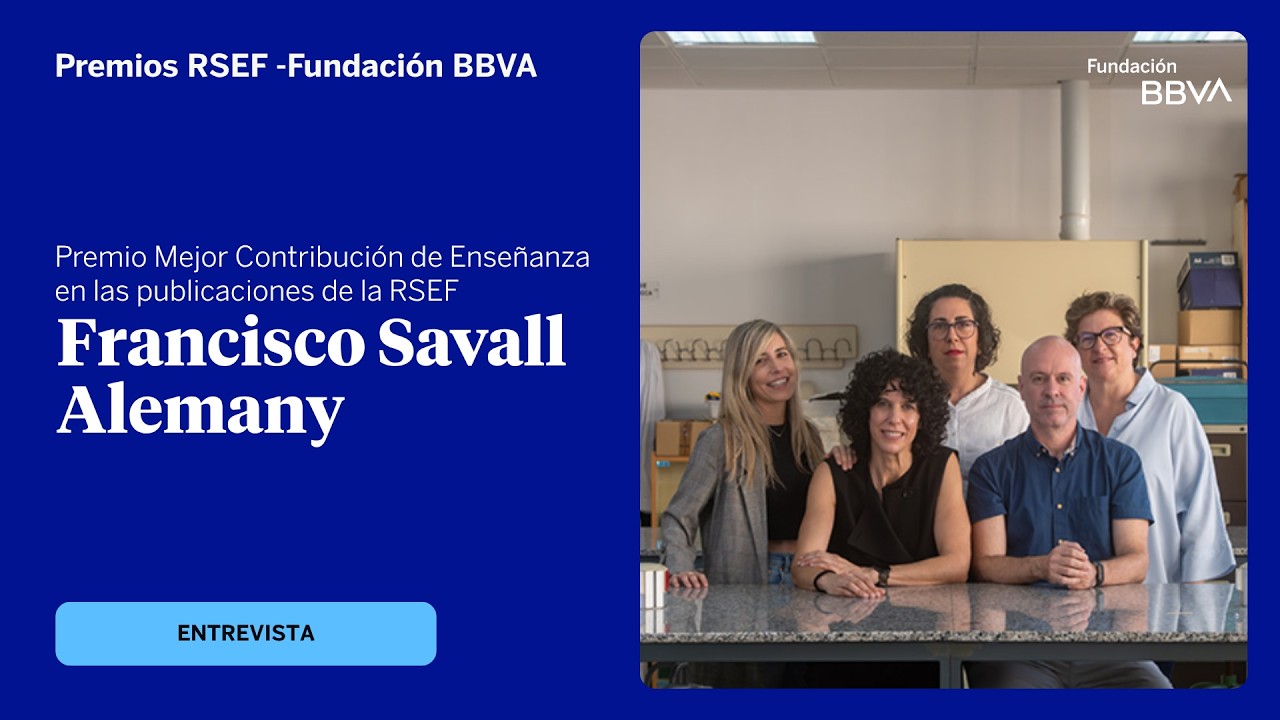
Francisco Savall: “La física es fundamental para la sociedad”
Keywords
Summary
156 words
Critical Evaluation
The video provides a clear and insightful explanation of an innovative educational tool that integrates physics principles with hands-on learning. The mechanical calculator is a creative way to teach Archimedes’ principle and the lever law, and the pedagogical approach emphasizes student inquiry and hypothesis testing, which aligns with modern educational research. The explanation of the device’s operation is detailed and accessible, making it easy to understand the underlying physics. The collaboration between secondary and university educators is a strength, as it combines practical classroom experience with academic rigor. However, the video lacks empirical evidence of the device’s effectiveness in improving student learning outcomes; it relies on anecdotal success, such as the student competition win. The discussion on the state of physics in Spain is brief and general, without specific data. The defense of physics’ societal importance is compelling but not novel. Overall, the content is valuable for educators and those interested in physics education, but it could be strengthened by including more rigorous evaluation data. The title accurately reflects the content, and the interview is well-structured. The sources cited are limited to the award page and social media, but the project itself is based on a published article, which is not directly referenced. The video does not contain any advertising or sponsored content.
213 words
Title / Content Match
The title accurately reflects the content, as the interview focuses on the importance of physics for society, with the calculator serving as an example.
Quality & Reliability
8/10
The video presents a well-structured interview with a physics educator who describes a novel mechanical calculator for teaching fluid physics, based on Archimedes' principle and the lever law. The methodology is clearly explained, and the project has received a recognized award. However, the content is largely anecdotal and lacks detailed experimental data or peer-reviewed evidence beyond the award.
Key Moments
Markers derived by PSI from the transcript: the creator did not define chapters.
- Savall explains the main conclusions of the awarded article, describing the mechanical calculator and its construction.
- He discusses the contribution of the article to experimental and research work in the classroom in the field of fluid physics.
- He explains the benefits of the collaboration between university and secondary school teachers.
- He gives his view on the situation of physics in Spain.
- He defends the importance of physics for 21st century society.
- He shares what the award means to him and his team.
Cited Sources
- Premios de Física Real Sociedad Española de Física-Fundación BBVA 2025 — Official page of the awards, where the project received the Prize for Best Teaching Contribution.
- Fundación BBVA LinkedIn — Social media profile of the organization, providing additional context about their initiatives.
Concurring Sources
- Premios de Física Real Sociedad Española de Física-Fundación BBVA 2025 — The award recognizes the originality and educational utility of the work, supporting the claims made in the video.
Contribution & Novelties
The video presents a novel educational tool that combines classical physics principles with hands-on experimentation, offering a concrete example of inquiry-based learning. The mechanical calculator is an original invention that has been successfully implemented in classrooms, as evidenced by the student competition win. This approach contributes to the field of physics education by providing a tangible way to teach abstract concepts.
Pour aller plus loin :
- Archimedes’ principle — Fundamental principle underlying the calculator’s operation.
- Lever — The mechanical advantage principle used in the device.
- Inquiry-based learning — The pedagogical approach emphasized in the project.
95 words
Radar Profile
The radar profile shows high scores in information quantity, quality, and reliability, with a moderate technical level. This indicates a well-balanced and credible presentation, though the technical depth is not extremely advanced, making it accessible to a broad audience.