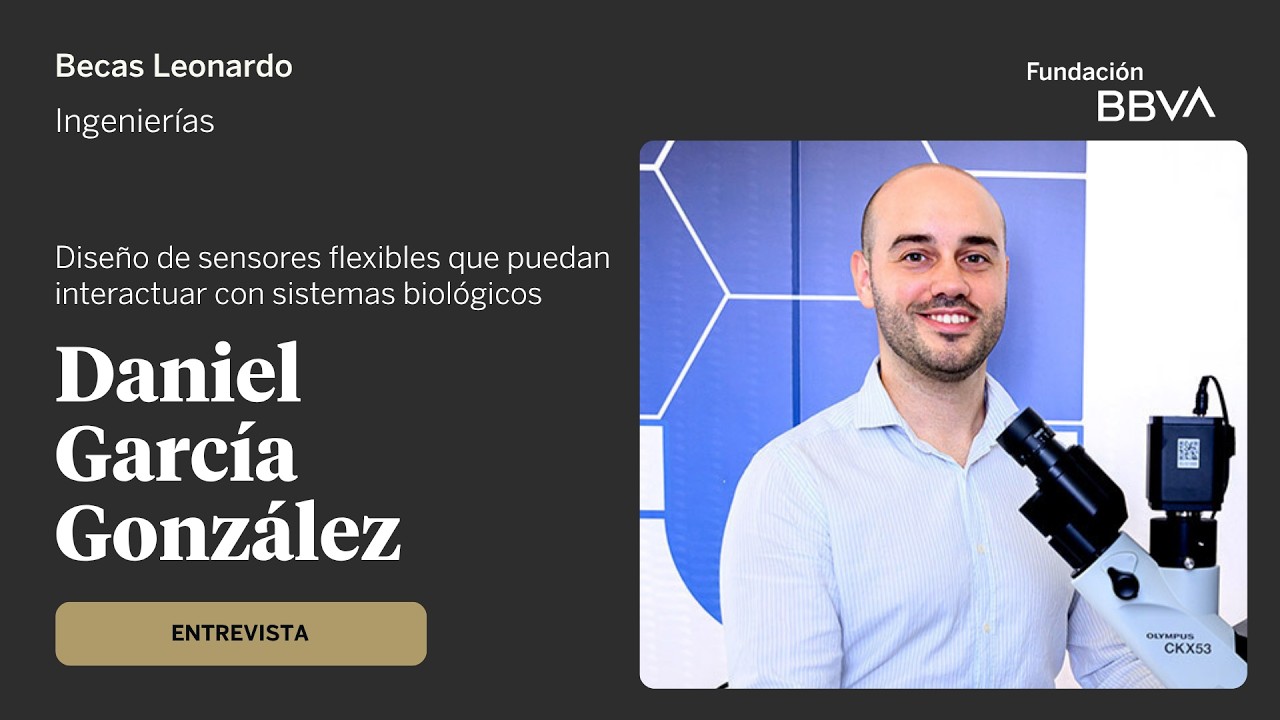
Estamos usando materiales inteligentes para ver qué les sucede a las células en varias patologías
Keywords
Summary
170 words
Critical Evaluation
The interview provides a valuable insight into the emerging field of smart materials for biomedical applications. Daniel García González demonstrates a clear and articulate explanation of his research, bridging complex concepts in materials science, mechanics, and biology. The technical depth is appropriate for a general audience, yet it conveys the core principles without oversimplification. The argumentation is solid, grounded in his own research experience and collaborations with industry and hospitals. However, the content is primarily descriptive and forward-looking, lacking specific data or peer-reviewed results. The absence of citations to external sources within the video limits the ability to verify claims independently. The title accurately reflects the content, focusing on using smart materials to observe cellular behavior in pathologies. The interview also touches on the importance of basic research funding, which is a relevant point for science policy. Overall, the information is reliable given the speaker’s credentials, but it should be considered as an expert opinion rather than a comprehensive review. The discussion of potential applications, such as reducing animal testing and developing diagnostic tools, is promising but remains at an early stage. The video could benefit from including more concrete examples or references to published work. Nevertheless, it serves as an engaging introduction to the field and highlights the potential of interdisciplinary research.
213 words
Title / Content Match
The title accurately reflects the core theme: using smart materials to study cellular mechanics in pathologies, as discussed throughout the interview.
Quality & Reliability
8/10
The interview features a researcher with a strong track record (ERC grants, Leonardo Fellowship) discussing his ongoing work. The content is based on his expertise and current projects, with references to collaborations and funding. However, it is an opinion piece without peer-reviewed data presented, and no external sources are cited in the video or description.
Chapters
- Introducción
- ¿En qué consisten los sensores flexibles y capaces de adherirse a tejidos biológicos que estás tratando de desarrollar?
- ¿Qué dificultades técnicas te has encontrado a la hora de construir estos sensores?
- ¿En qué aplicaciones de estos sensores estás trabajando?
- ¿Cuál sería la hoja de ruta ideal para que estos avances se lleguen a utilizar en la realidad?
- ¿Qué ha supuesto hasta ahora la Beca Leonardo para tu carrera?
- ¿Qué distingue a esas ayudas de otras fuentes de financiación de la investigación?
- ¿Qué vas a investigar con la ayuda ERC Proof of Concept más reciente que has obtenido?
- ¿Cómo te interesaste por la intersección entre la ingeniería y la biología?
- ¿Esta intersección es un campo muy explorado en España?
- ¿Qué retos te gustaría abordar en el futuro en el campo de la robótica blanda?
- ¿Cómo te gustaría contribuir con tu investigación a mejorar la salud humana?
Contribution & Novelties
The interview offers a unique perspective on integrating smart materials with biological systems to study mechanobiology, a relatively novel approach. It highlights the potential of using flexible sensors to recreate pathological mechanical environments, which could lead to new therapeutic targets and reduce animal testing. The discussion of soft robotics for ocean exploration also showcases innovative applications.
Pour aller plus loin :
- Mechanobiology — Provides background on how mechanical forces influence cellular behavior, relevant to the video’s core theme.
- Soft robotics — Explores the field of robots made from compliant materials, which is central to the researcher’s work.
- Organ-on-a-chip — Related to recreating physiological environments for drug testing, similar to the spin-off’s goal.
- Magnetorheological fluid — Relevant to the magnetoactive materials mentioned in the interview.
124 words
Radar Profile
The radar profile shows high scores in quality and reliability, reflecting the expert's credibility and clear communication. The quantity of information is moderate, as the interview covers several topics but lacks depth in each. The technical level is balanced, making it accessible yet informative.