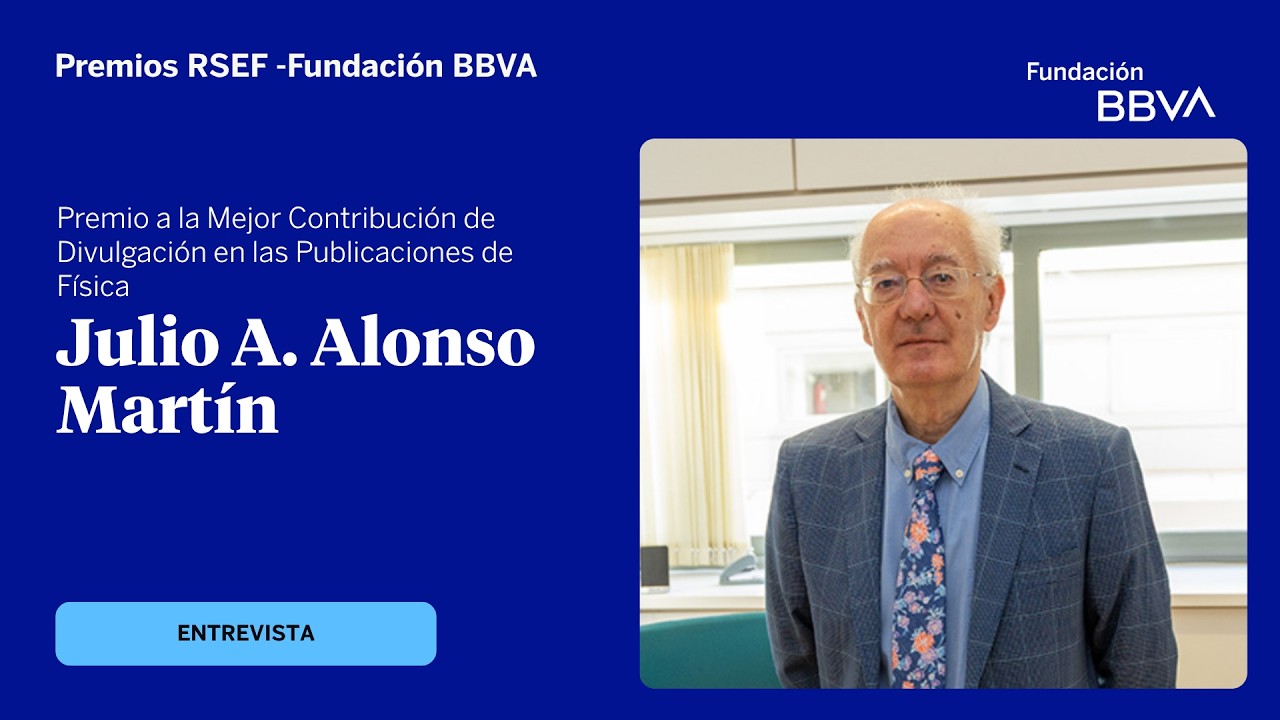
Julio A. Alonso: “La física continuará ayudando al avance de la humanidad”
Keywords
Summary
116 words
Critical Evaluation
The interview provides a clear and accessible overview of hydrogen as a potential fuel, grounded in the expertise of a physicist who has published a peer-reviewed article on the topic. Alonso’s explanations are scientifically sound, and he appropriately highlights both the promise and the challenges of hydrogen technology. He correctly identifies electrolysis as a common production method and mentions other emerging techniques, such as photobiological and catalytic methods, showing a broad understanding of the field. However, the discussion remains at a relatively high level, without delving into quantitative details or comparing hydrogen’s efficiency with other renewable options. The interview also touches on the need for infrastructure, which is a critical practical barrier. While Alonso’s credentials lend credibility, the video is an opinion piece rather than a systematic review, and it does not cite specific studies or data. The title suggests a broader discussion on physics’s role in society, but the content focuses primarily on hydrogen, with only brief reflections on science communication and the value of physics. This slight mismatch is minor and does not detract significantly from the content’s value. Overall, the interview is informative and reliable for a general audience, but it lacks depth for those seeking a technical or critical analysis.
204 words
Title / Content Match
The title reflects the interview's broader theme of physics's role in society, but the main focus is on hydrogen as a fuel, which is a specific application.
Quality & Reliability
8/10
The interview features a recognized physicist, winner of a national award for science communication, discussing hydrogen as a fuel. The content is scientifically accurate, well-structured, and based on his published article. However, it is an expert opinion with limited depth on technical details and lacks external references in the video itself.
Key Moments
Markers derived by PSI from the transcript: the creator did not define chapters.
- Alonso explains the main conclusions of his article on hydrogen as a fuel.
- Discussion on the implications of hydrogen for climate change mitigation.
- Alonso recounts how his vocation for physics began.
- He discusses the motivating and challenging aspects of physics outreach.
- Assessment of the state of physics communication in Spain.
- His recipe for effective science communication.
- He defends the importance of physics for 21st-century society.
- He shares what receiving the award means to him.
Cited Sources
- Premios de Física Real Sociedad Española de Física-Fundación BBVA 2025 — Official page of the awards, where the prize for best outreach contribution is described.
- Fundación BBVA LinkedIn — LinkedIn profile of the foundation, mentioned in the video description.
Concurring Sources
- Hydrogen production — Wikipedia article confirming the methods mentioned by Alonso.
- Fuel cell — Wikipedia article explaining the electrochemical reaction producing water.
Dissenting Sources
Contribution & Novelties
The interview provides a concise and accessible summary of hydrogen as a fuel, highlighting its potential and challenges. It is valuable for a general audience seeking to understand the basics of hydrogen energy. The discussion of various production methods and storage issues is informative, but it does not offer novel technical insights beyond what is commonly known in the field.
Pour aller plus loin :
- Hydrogen production — Overview of methods including electrolysis and thermolysis.
- Fuel cell — Explanation of how hydrogen fuel cells work.
- Hydrogen economy — Discussion of the broader concept and infrastructure challenges.
96 words
Radar Profile
The radar chart shows a balanced profile with high scores in information quality and reliability, reflecting the expert's credibility. The quantity of information is moderate, and the technical level is accessible, making it suitable for a general audience.