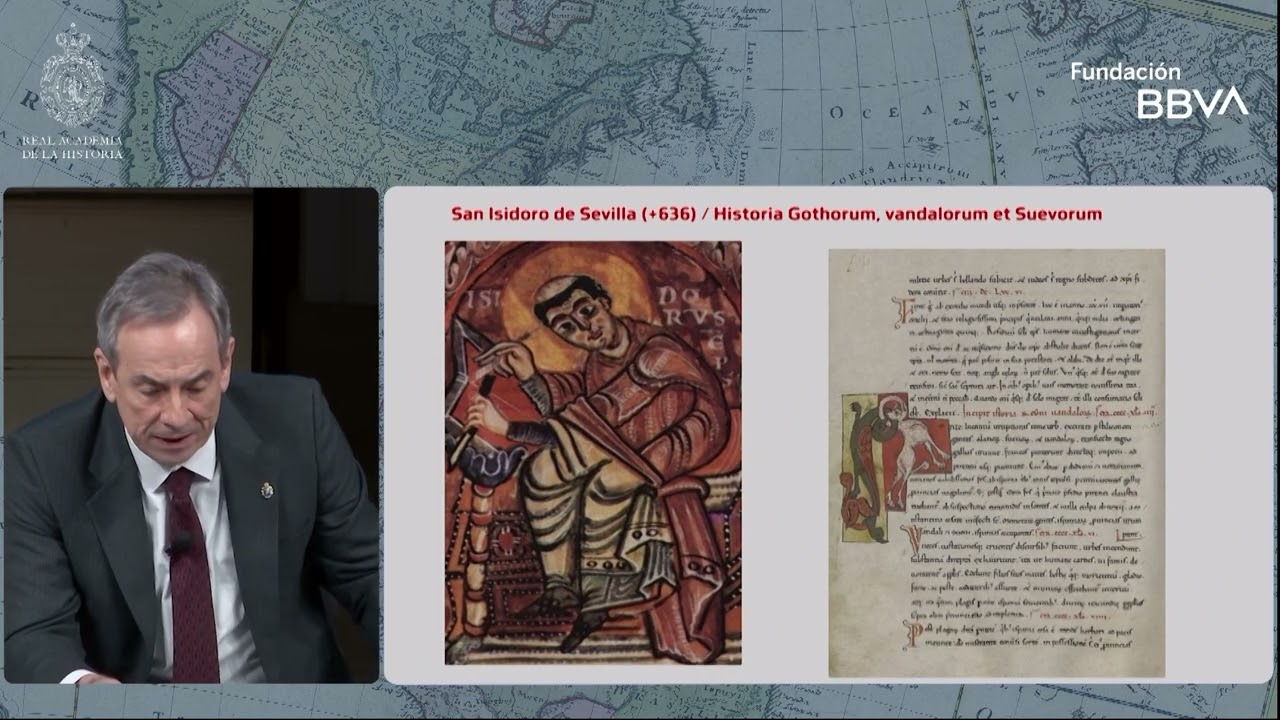
José Manuel Nieto Soria: "La idea de España desde el Medievo a los orígenes de la modernidad"
Keywords
Summary
237 words
Critical Evaluation
The lecture provides a comprehensive and well-documented overview of the evolution of the idea of Spain, drawing on a wide range of primary sources and modern historiography. The argumentation is solid, with careful attention to the nuances of political and cultural contexts. The speaker’s expertise is evident, and the lecture is accessible to an academic audience. The sources cited are authoritative, though the lack of a written bibliography in the description is a minor drawback. The title accurately reflects the content, and the lecture offers valuable insights into the construction of national identity.
93 words
Title / Content Match
The title accurately reflects the content, which traces the evolution of the idea of Spain from the Middle Ages to the early modern period.
Quality & Reliability
8/10
The lecture is delivered by a recognized medievalist, José Manuel Nieto Soria, and is based on a thorough review of primary sources and historiographical works. The arguments are well-structured and supported by numerous references to chronicles, legal texts, and modern scholarship. However, as a conference presentation, it lacks peer review and detailed citations in the video description, which slightly reduces the score.
Key Moments
Markers derived by PSI from the transcript: the creator did not define chapters.
- Introduction: reference to Claudio Sánchez Albornoz and the concept of Spain as a product of historical mestizaje.
- Discussion of Isidore of Seville's 'Laus Hispaniae' and its role in linking Spanish identity to the Visigothic monarchy.
- Analysis of the neogothic ideal in Asturian-Leonese chronicles and the concept of restoration.
- Examination of the works of Lucas of Tuy, Jiménez de Rada, and Alfonso X, and their contributions to a unified history of Spain.
- Discussion of non-Castilian historiographical contributions, including those from Aragon and Navarre.
- The Catholic Monarchs and the political use of the title 'Reyes de España' in international diplomacy.
- Conclusion: the legacy of the medieval idea of Spain in the Enlightenment and 19th-century political thought.
Cited Sources
- España, un enigma histórico — Referenced at the beginning for the idea of Spain as a product of historical mestizaje.
- El concepto de España en la Edad Media — Cited for the medieval origins of the sentiment of Hispanic community.
- Laus Hispaniae — Isidore of Seville's text discussed as foundational for the concept of Spain.
- De rebus Hispaniae — Jiménez de Rada's chronicle analyzed for its role in unifying Spanish history.
- Estoria de España — Alfonso X's chronicle discussed as a key work in constructing a common Spanish history.
Concurring Sources
- El concepto de España en la Edad Media — Maravall's work supports the idea of medieval origins of Spanish identity.
- La España medieval — Ladero Quesada's work on the transformation of medieval Spain into modern political Spain.
Contribution & Novelties
The lecture offers a comprehensive synthesis of the evolution of the idea of Spain from the Middle Ages to the early modern period, emphasizing the continuity and adaptability of the concept. It highlights the contributions of non-Castilian authors, challenging the notion of a purely Castilian-centric narrative. The discussion of the Catholic Monarchs’ use of the title ‘Reyes de España’ provides insight into the political dimensions of the concept.
Pour aller plus loin :
- Historiography of medieval Spain — Overview of the development of historical writing in medieval Spain.
- Neogoticism — Concept of the revival of Gothic identity in medieval Spain.
- Alfonso X of Castile — Biography and contributions to historiography and law.
112 words
Radar Profile
The radar profile shows high scores in quantity and quality of information, with a strong technical level, indicating a well-researched and detailed lecture. The reliability is also high, reflecting the speaker's expertise and use of authoritative sources.