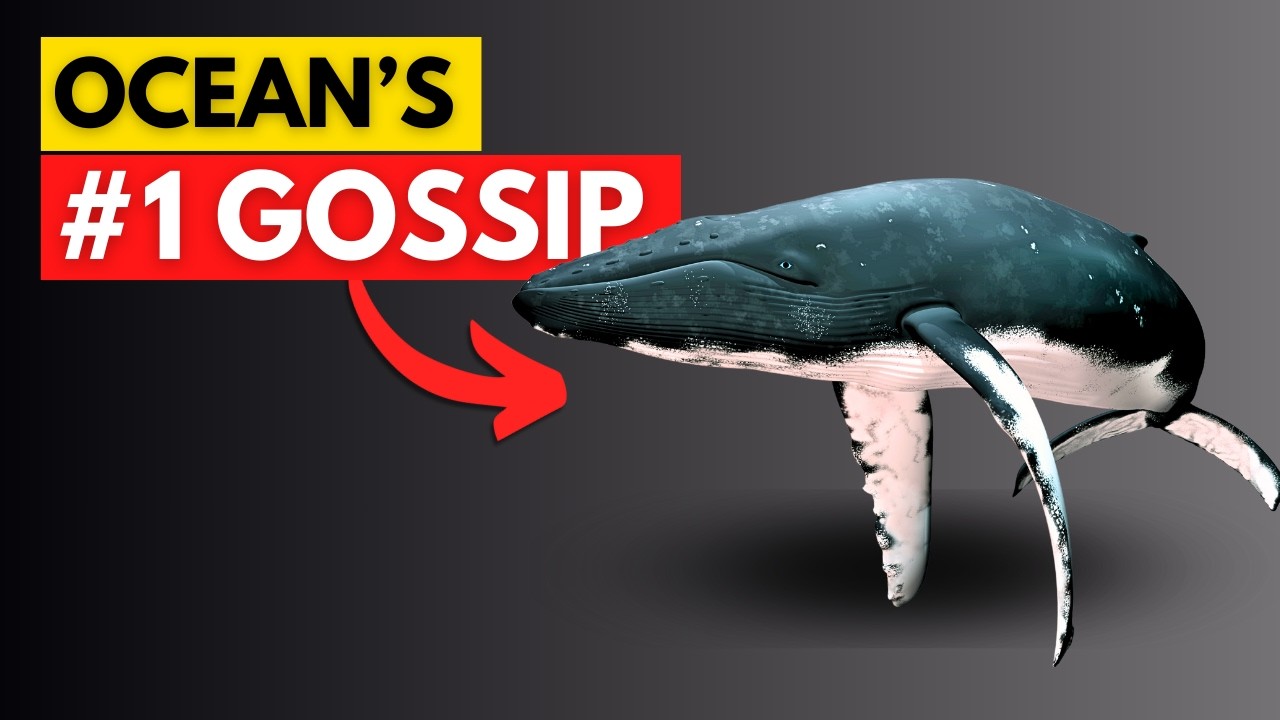
We Just Discovered Whales Speak Like Humans
Keywords
Summary
181 words
Critical Evaluation
Value of the Information & Strength of the Argument
The video provides substantial value by synthesizing recent scientific research on whale communication, making complex linguistic and statistical concepts accessible to a general audience. The argumentation is generally solid, building a case from historical context to specific studies. The presenter clearly explains the significance of Zipf’s law and transition probabilities as evidence of language-like structure. However, the argumentation occasionally overreaches, such as when suggesting that the structural similarities are ‘compelling’ evidence of true language, while also acknowledging alternative explanations. The inclusion of the 2021 Twain interaction is engaging but is presented as more significant than the scientific evidence might warrant, as it is anecdotal and not peer-reviewed. Overall, the video presents a balanced view, but the enthusiasm sometimes outpaces the evidence.
Scientific Rigor, Source Quality, Title Accuracy
The video demonstrates good scientific rigor by referencing a peer-reviewed paper in Science (2025) and a 2024 study on sperm whales. The presenter accurately explains the methodology of the studies, including the use of transition probabilities and Zipf’s law. The description provides links to the relevant paper and an article about the Twain interaction, which adds credibility. However, the video also includes a sponsorship segment for BetterHelp, which is clearly disclosed but may be seen as a commercial interruption. The title is accurate and not misleading. The presenter also mentions historical experiments with LSD on dolphins, which are presented critically. Overall, the sources are of high quality, and the title aligns with the content.
250 words
Title / Content Match
The title accurately reflects the video's content, which discusses recent discoveries suggesting whale communication shares structural similarities with human language.
Quality & Reliability
7/10
The video presents recent scientific findings on whale communication, referencing a 2025 Science paper and a 2024 study on sperm whales. The presenter explains concepts like transition probabilities and Zipf's law accurately, but also includes speculative elements and a clear sponsorship segment. The overall scientific content is reliable, though the presentation is somewhat sensationalized.
Chapters
Cited Sources
- Science paper on humpback whale song structure — The main study discussed in the video, analyzing eight years of humpback whale songs and identifying language-like structures.
- Earth.com article on the 20-minute whale conversation — Describes the 2021 interaction with the humpback whale Twain, which is a key anecdote in the video.
Concurring Sources
- Science paper on humpback whale song structure — The primary source supporting the video's claims about whale language structure.
Dissenting Sources
- No direct discordant sources provided — The video does not present any sources that contradict its main claims, but it does acknowledge alternative explanations for the observed patterns.
External References
Contribution & Novelties
The video’s original contribution lies in its synthesis of recent research on whale communication, particularly the application of linguistic models to animal vocalizations. It effectively communicates the significance of the Zipfian distribution in whale song as a potential marker of language complexity, a concept that may be new to many viewers. The video also connects this research to broader questions about the nature of language and its potential universality, even extending to extraterrestrial communication.
Pour aller plus loin :
- Zipf’s law — This is the statistical distribution mentioned in the video, which is a key piece of evidence for language-like structure.
- Humpback whale — Provides background on the species and its vocalizations.
- Animal language — Discusses the broader field of animal communication and the criteria for language.
127 words
Radar Profile
The radar profile shows high scores in quantity of information and fiabilite, reflecting the video's comprehensive coverage and reliance on peer-reviewed sources. The niveau technique is moderate, indicating that the content is accessible but includes some technical concepts. The qualite_information is also high, but the overall note is slightly lower due to the presence of speculative elements and a sponsorship segment.
💬 Très positif. Sur les 30 commentaires analysés, la grande majorité exprime enthousiasme et émerveillement face aux découvertes, avec de nombreuses anecdotes personnelles et références humoristiques à la communication avec les baleines.