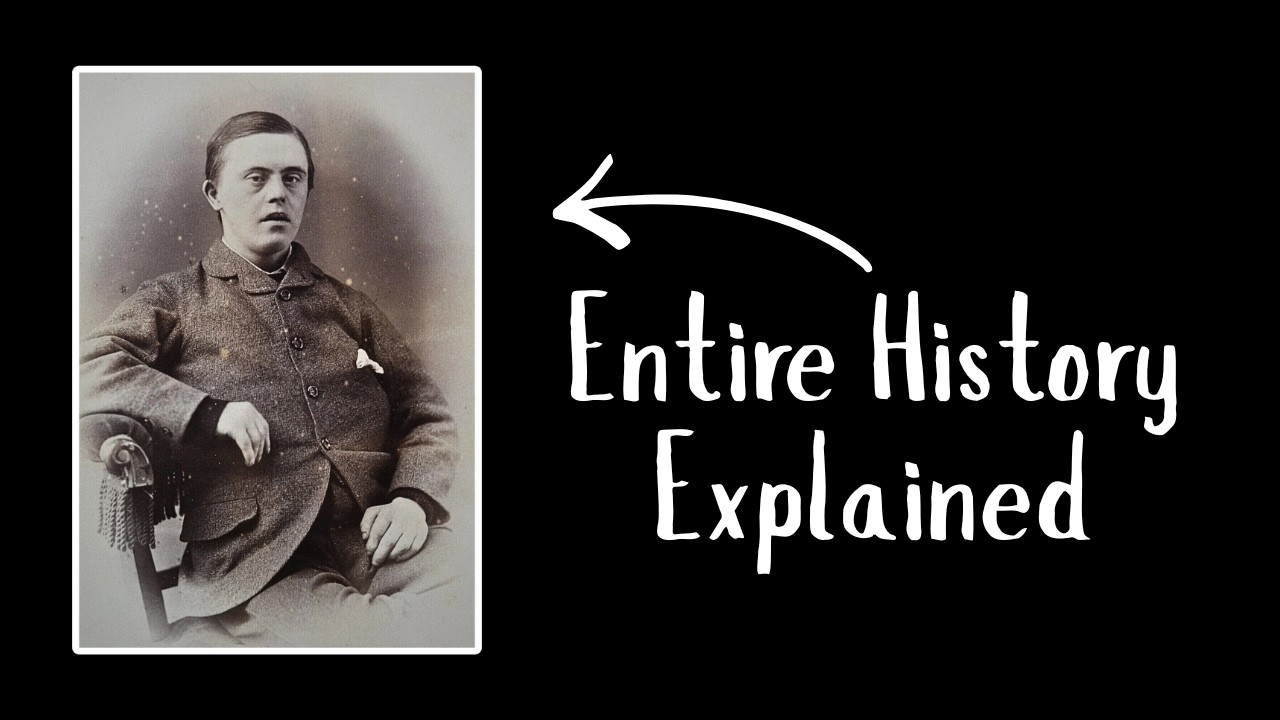
The Entire History Of Down Syndrome Explained
Keywords
Summary
159 words
Critical Evaluation
The video offers a well-structured and engaging historical narrative of Down syndrome, covering a wide range of topics from ancient times to the present. It successfully combines scientific facts with historical context, making it accessible to a general audience. The inclusion of specific archaeological findings, such as the skeletal remains in France and potential artistic depictions, adds depth and credibility to the historical claims. However, the video relies heavily on secondary sources and the creator explicitly states he is not a medical professional, which may affect the reliability of some details. For instance, the interpretation of ancient art as depicting Down syndrome is speculative and not universally accepted by researchers. The video also glosses over the ethical complexities of prenatal testing and the history of eugenics, which are important aspects of the condition’s history. The discussion of the discovery of trisomy 21 is well-presented, but the controversy over credit between Lejeune and Gautier is handled with nuance, acknowledging Gautier’s contributions. The video’s strength lies in its comprehensive scope and its respectful tone towards individuals with Down syndrome. However, it could benefit from more rigorous sourcing and a clearer distinction between established facts and hypotheses. The title accurately reflects the content, and the video fulfills its promise of covering the entire history. Overall, it is a valuable educational resource, but viewers should be aware of its limitations in scientific rigor.
229 words
Title / Content Match
The title accurately reflects the content, which covers the history from ancient times to the present, including medical and social aspects.
Quality & Reliability
7/10
The video provides a broad historical overview with some specific citations (e.g., skeletal evidence, Lejeune's discovery) but relies on secondary sources and includes some unverified claims. The creator explicitly states he is not a medical professional and may be wrong, which lowers reliability. However, the core scientific facts (trisomy 21, risk factors) are accurate.
Key Moments
Markers derived by PSI from the transcript: the creator did not define chapters.
- Introduction to the video's scope and purpose.
- Explanation of Down syndrome as trisomy 21 and risk factors.
- Discussion of ancient evidence, including skeletal remains in France.
- Examination of ancient art and potential depictions of Down syndrome.
- Analysis of Renaissance paintings, including 'The Adoration of the Christ Child'.
- Introduction to John Langdon Down and his work at Earlswood Asylum.
- Down's classification and the term 'Mongolian idiocy'.
- Discovery of the chromosomal cause by Lejeune and Gautier in 1959.
- Discussion of the harsh treatment of people with Down syndrome in the 20th century.
- Modern developments in medical care and advocacy.
Cited Sources
- John Langdon Down — Background on Down's life and work.
- Jérôme Lejeune — Details on Lejeune's discovery and career.
- Marthe Gautier — Information on Gautier's role in the discovery.
- Down syndrome — General information on the condition.
Concurring Sources
- Down syndrome — Confirms the genetic basis and historical facts.
- John Langdon Down — Corroborates Down's contributions and terminology.
Dissenting Sources
- Interpretation of ancient art — Some researchers dispute the identification of Down syndrome in ancient art, as it is speculative.
Contribution & Novelties
The video provides a comprehensive historical narrative that is not commonly found in a single source, making it a valuable educational resource. It synthesizes information from archaeology, art history, and medical history to present a holistic view of Down syndrome. The inclusion of the controversy over the discovery’s credit adds depth.
Pour aller plus loin :
- Trisomy 21 — Detailed medical information.
- History of eugenics — Context for 20th-century treatment.
- Prenatal testing for Down syndrome — Ethical considerations.
78 words
Radar Profile
The radar profile shows high scores in quantity of information and quality, with moderate technical level and reliability. This indicates a comprehensive but accessible overview, suitable for a general audience, though not deeply technical.
💬 No comments were provided for analysis.