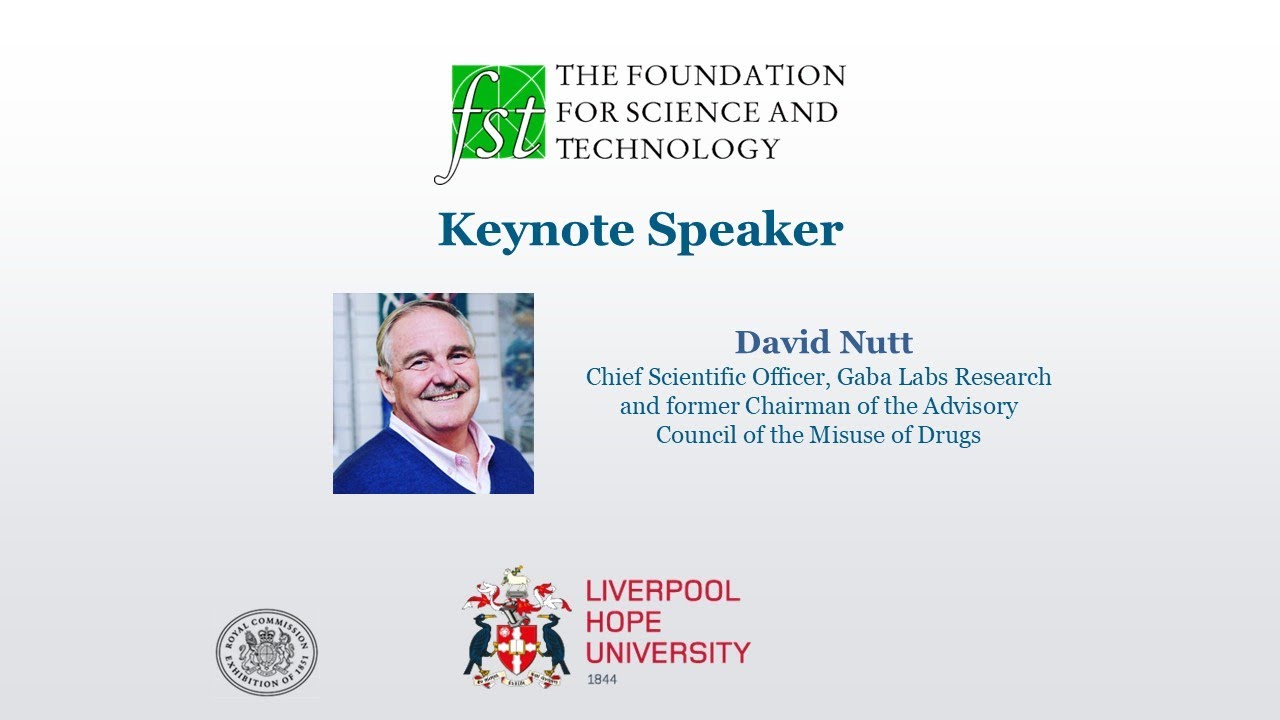
Keynote Speaker - Professor David Nutt
Keywords
Summary
139 words
Critical Evaluation
Value of the Information & Strength of the Argument
The talk provides valuable insights into the neuropharmacology of alcohol and the potential for developing safer alternatives. Nutt’s argument is well-structured, drawing on his research and personal experience. He effectively uses data from the Lancet study to support his claims about alcohol’s harm. However, the argumentation is somewhat one-sided, as he promotes his own company’s products without discussing potential limitations or alternative approaches. The historical and anthropological claims, while interesting, are presented with less rigor.
Scientific Rigor, Source Quality, Title Accuracy
Nutt references several credible sources, including the Lancet study and his own publications. He also mentions the Foresight report and the work of Edward Slingerland. However, the talk is primarily an expert opinion, and some claims lack detailed citations. The title is accurate but generic. The content aligns well with the title, as it is a keynote address on science and policy.
152 words
Title / Content Match
The title is generic but accurately reflects the speaker and format; the content is a keynote address on alcohol harm and GABA-based alternatives.
Quality & Reliability
8/10
The speaker is a renowned neuropsychopharmacologist with extensive research and policy experience. The content is based on published research (e.g., Lancet MCDA study) and his own work at GABA Labs. However, the talk is largely an advocacy for his company's products, and some claims (e.g., historical role of alcohol) are presented with limited nuance.
Key Moments
Markers derived by PSI from the transcript: the creator did not define chapters.
- Introduction of Professor David Nutt by the host.
- Nutt discusses his dismissal from the Advisory Council on the Misuse of Drugs and the lack of evidence-based drug policy.
- Presentation of the Lancet study using multi-criteria decision analysis to rank drug harms, with alcohol as the most harmful.
- Explanation of alcohol's effects on GABA and glutamate, and the role of GABA in social bonding.
- Introduction of GABA Labs and the concept of developing safer alcohol alternatives.
- Discussion of GABA receptor subtypes and the potential for targeted modulation.
- Presentation of botanical drinks and small molecules developed by GABA Labs.
- Evidence from gut bath studies and oocyte voltage clamping showing GABAergic effects of the products.
- Conclusion and call for evidence-based policy and further research.
Cited Sources
- Lancet study on drug harms — Nutt references a study published in the Lancet using multi-criteria decision analysis to rank drug harms.
- Foresight report on neuroscience and drugs — Nutt mentions a 2004 Foresight report on the impact of neuroscience on drugs.
- GABA Labs research paper — Nutt mentions a paper outlining the thinking behind GABA Labs' approach.
- Edward Slingerland's book on alcohol — Nutt references Slingerland's argument that alcohol played a role in human civilization.
Concurring Sources
- Lancet study on drug harms — The study supports the claim that alcohol is the most harmful drug.
- GABA Labs research — The company's research supports the feasibility of GABAergic alternatives.
Dissenting Sources
- Critiques of MCDA methodology — Some researchers have questioned the subjective weighting in MCDA, which could affect the ranking of drug harms.
Contribution & Novelties
The talk presents a novel perspective on alcohol harm reduction by proposing GABAergic alternatives. Nutt’s work with GABA Labs is innovative, combining botanical and synthetic approaches to target specific GABA receptor subtypes. The use of MCDA to rank drug harms is a valuable methodological contribution.
Pour aller plus loin :
- GABA receptor — Overview of GABA receptors and their subtypes.
- Multi-criteria decision analysis — Explanation of MCDA methodology.
- Alcohol and health — WHO fact sheet on alcohol-related harm.
78 words
Radar Profile
The radar profile shows high scores in information quantity and quality, reflecting the depth of content. The technical level is moderately high, suitable for a professional audience. The overall reliability is strong due to the speaker's expertise, though the promotional aspect slightly reduces the score.
💬 No comments were provided for analysis.