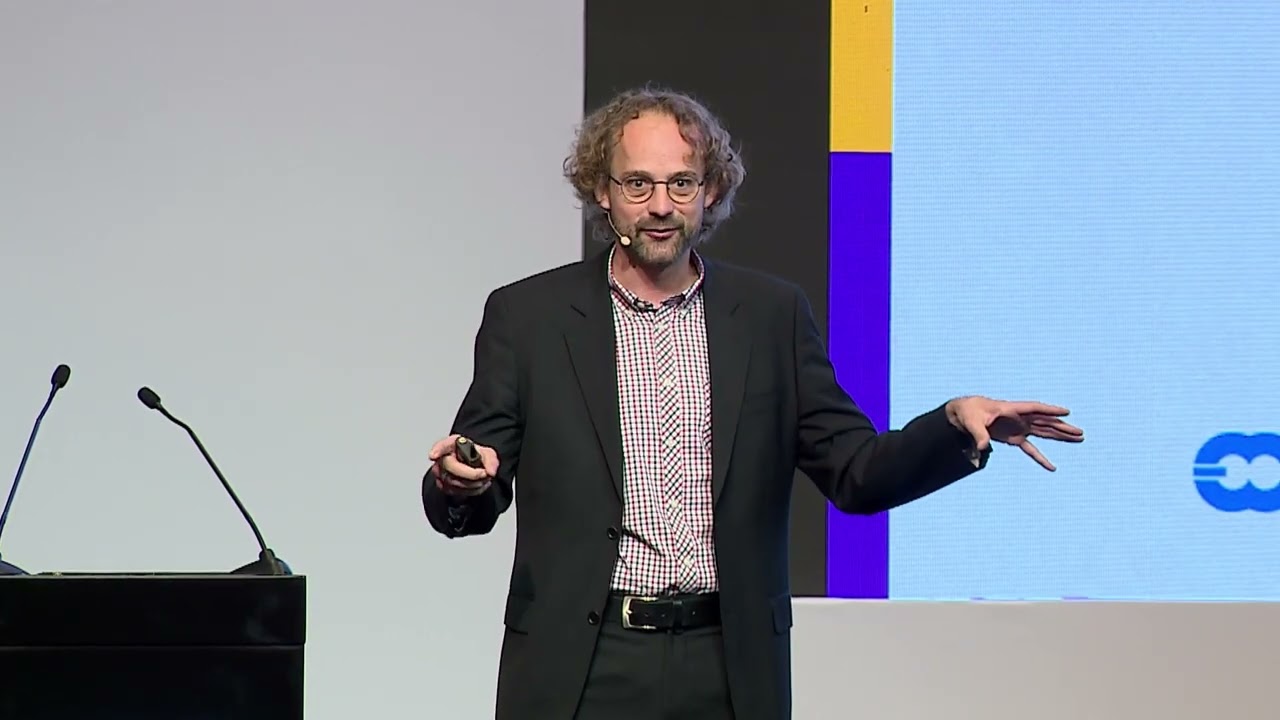
Day 1: Peter Dueben - Machine Learning and Earth System Modelling | ADIA Lab Symposium 2025
Keywords
Summary
151 words
Critical Evaluation
Value of the Information & Strength of the Argument
The talk provides valuable insights into the current state and future direction of machine learning in Earth system modelling. Dueben’s argumentation is solid, grounded in his experience at ECMWF and ongoing projects. He effectively contrasts the quiet revolution with the ML revolution, using concrete examples like the Dubai flood event to illustrate ML’s capability. He also presents a balanced view, acknowledging the limitations and risks of ML, such as data scarcity for climate and the difficulty of verifying ML predictions. The argumentation is persuasive and well-structured, though some points are speculative and based on personal projections rather than empirical evidence.
Scientific Rigor, Source Quality, Title Accuracy
The talk demonstrates scientific rigour through the speaker’s expertise and the use of real-world examples. However, specific sources are not cited within the talk; the only external reference is the ADIA Lab symposium link in the description. The title accurately reflects the content, and the talk is well-organized. The speaker’s credibility as a leading expert adds to the reliability, but the lack of formal citations limits the verifiability of some claims.
186 words
Title / Content Match
The title accurately reflects the content: a talk on machine learning in Earth system modelling, delivered at the ADIA Lab Symposium 2025.
Quality & Reliability
8/10
The speaker is a leading expert from ECMWF, providing a credible overview of the field. The talk is based on his professional experience and ongoing projects, but it is not a peer-reviewed study. The content is well-structured and technically accurate, though some claims are forward-looking and not yet fully validated.
Key Moments
Markers derived by PSI from the transcript: the creator did not define chapters.
- Introduction: Peter Dueben begins his talk on machine learning and Earth system modelling.
- Shows a video of high-resolution Earth system model output, highlighting the success of physical models.
- Discusses the improvement in weather forecast skill over decades, the 'quiet revolution'.
- Introduces the machine learning revolution and its impact on forecast skill, with a sudden jump in scores.
- Explains the use of machine learning in operational weather forecasting, including the AIFS model and hybrid approaches like nudging.
- Discusses the need for foundation models and introduces the WeatherGenerator project.
- Addresses the question of data availability for different Earth system components, highlighting limitations for climate.
- Emphasizes the continued importance of physical models for generating training data and ensuring physical realism.
- Outlines the future of Earth system modelling, with a shift towards ML and the need for critical evaluation of ML outputs.
- Concludes with a vision of future user interactions with weather and climate information through ML tools.
Cited Sources
- ADIA Lab Symposium — Event page for the symposium where this talk was presented.
Concurring Sources
- WeatherGenerator — Project website for the foundation model initiative discussed in the talk.
- ECMWF AIFS — ECMWF's operational machine learning model for weather forecasting.
Contribution & Novelties
The talk provides an expert perspective on the integration of machine learning into Earth system modelling, highlighting the shift from traditional physical models to hybrid and foundation models. It offers insights into ongoing projects at ECMWF, such as WeatherGenerator, and discusses the challenges and opportunities in this rapidly evolving field.
Pour aller plus loin :
- WeatherGenerator — Official project page for the foundation model initiative mentioned in the talk.
- ECMWF’s AIFS — Information on ECMWF’s AIFS operational ML weather model.
- GraphCast — DeepMind’s GraphCast, a key ML model for weather prediction, referenced indirectly.
- Destination Earth — European initiative for digital twins of the Earth, mentioned in the talk.
108 words
Radar Profile
The radar profile shows high scores in information quantity, quality, and reliability, with a slightly lower technical level, indicating a talk that is informative and credible but not overly technical. The overall balance suggests a well-rounded presentation suitable for a professional audience.
💬 No comments were provided for analysis.