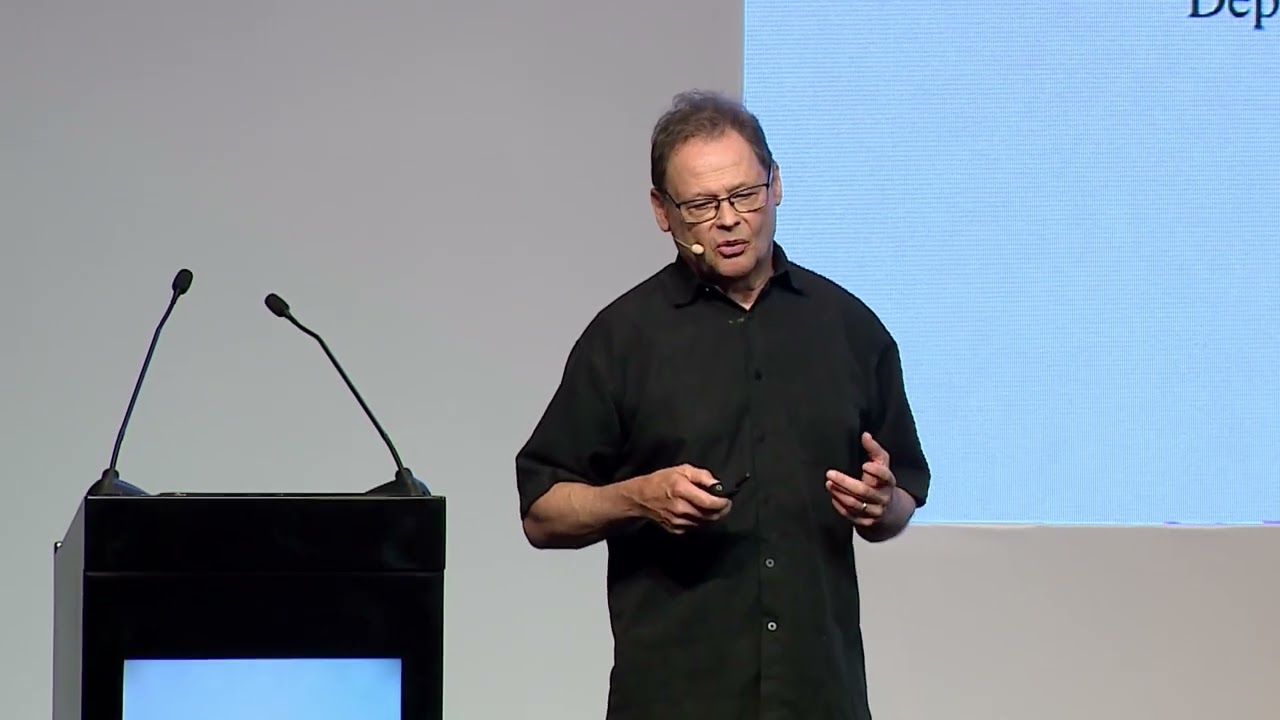
Day 1: Stan Posey - Directions in Physics-AI Models for Driving Earth System Digital Twins
Keywords
Summary
182 words
Critical Evaluation
Value of the Information & Strength of the Argument
The talk provides valuable insights into the current state and future directions of physics-AI hybrid models for Earth system digital twins. The speaker, Stan Posey, is an HPC program manager at NVIDIA with direct involvement in the field, lending credibility to his overview. He presents a clear argument for the necessity of hybrid approaches, balancing the physical fidelity of traditional NWP with the computational efficiency of AI. He supports his points with specific examples, such as the rapid operationalization of ECMWF’s AIFS in three months and the energy efficiency gains of NeuralGCM. However, the talk is primarily an expert opinion and lacks detailed technical depth, often glossing over specifics. The argumentation is coherent but relies heavily on NVIDIA’s perspective, which may introduce bias. Nonetheless, the talk effectively conveys the transformative potential of AI in climate modeling and the importance of community collaboration.
Scientific Rigor, Source Quality, Title Accuracy
The talk demonstrates scientific rigor by referencing key papers and initiatives, such as the 2018 Duben and Bauer paper, the 2021 Schultz et al. paper, and the ECMWF AIFS model. The speaker also mentions collaborations with organizations like ECMWF, NOAA, and the Central Weather Agency of Taiwan. However, the talk does not provide a systematic review of sources, and many references are mentioned in passing without full citations. The title accurately reflects the content, focusing on directions in physics-AI models for Earth system digital twins. The talk is well-structured and aligns with the title, though it could have delved deeper into technical details. Overall, the sources are credible but not exhaustively cited.
269 words
Title / Content Match
The title accurately reflects the content, which focuses on directions in physics-AI models for Earth system digital twins.
Quality & Reliability
7/10
The talk is an expert opinion from an NVIDIA HPC program manager, providing a broad overview of the field with references to key papers and initiatives. It is not a peer-reviewed study, but it is grounded in the speaker's professional experience and mentions specific projects and collaborations.
Key Moments
Markers derived by PSI from the transcript: the creator did not define chapters.
- Introduction: Stan Posey introduces the topic and his role at NVIDIA.
- Historical overview of NVIDIA's involvement in Earth system modeling on GPUs since 2011.
- Discussion of km-scale models and their importance for resolving clouds.
- Review of current operational AI weather models, including ECMWF's AIFS.
- Introduction to hybrid physics-AI approaches and four promising directions.
- Energy efficiency benefits of AI models, citing NeuralGCM's 100,000x efficiency.
- NVIDIA's infrastructure efforts, including PhysicsNeMo and 'climate in a bottle'.
Cited Sources
- ADIA Lab Symposium — Event page for the symposium where this talk was presented.
Concurring Sources
- ADIA Lab Symposium — Event page for the symposium where this talk was presented.
Contribution & Novelties
The talk provides an expert overview of the current landscape of physics-AI hybrid models for Earth system digital twins, highlighting NVIDIA’s role and perspective. It synthesizes recent developments and outlines potential future directions, emphasizing the need for hybrid approaches that balance physical fidelity and computational efficiency. The speaker’s insider perspective offers unique insights into industry collaborations and infrastructure efforts.
Pour aller plus loin :
- NeuralGCM — A hybrid model combining neural networks with a differentiable dynamical core, demonstrating high efficiency.
- FourCastNet — NVIDIA’s end-to-end emulation model, a key milestone in AI weather prediction.
- ECMWF AIFS — The AI-based Integrated Forecasting System, operational since 2024.
- Destination Earth — European initiative to create digital twins of the Earth system.
- ClimSim — A dataset and model for hybrid physics-ML climate simulation.
128 words
Radar Profile
The radar profile shows a balanced performance across all dimensions, with slightly higher scores in information quantity and quality, indicating a well-rounded talk. The technical level is moderate, suitable for a general scientific audience, while reliability is solid due to the speaker's expertise.