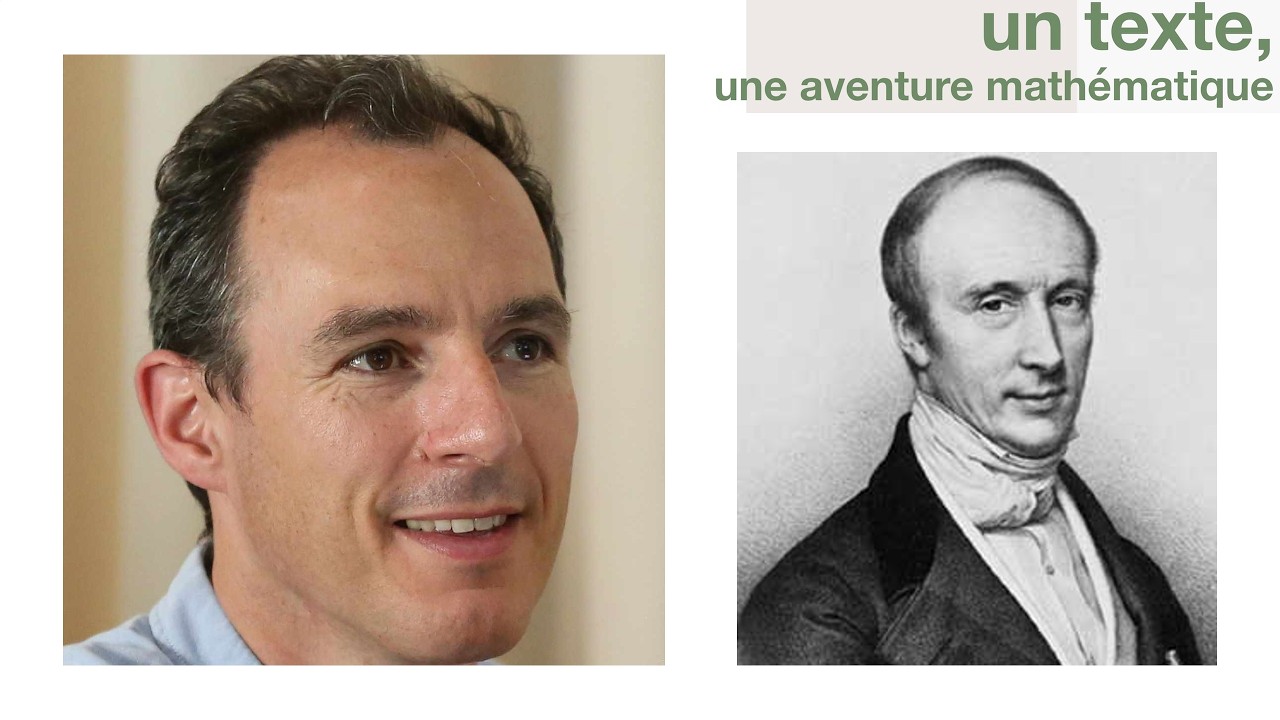
De Cauchy aux réseaux de neurones, la descente de gradient et ses variantes
Keywords
Summary
194 words
Critical Evaluation
Value of the Information & Strength of the Argument
The lecture provides a valuable historical and conceptual overview of gradient descent, connecting foundational mathematical ideas to modern applications in AI. The argumentation is solid, building from basic definitions to the algorithm and its variants, with clear explanations and illustrative examples. The speaker effectively demonstrates the importance of the method and its evolution, making a compelling case for its relevance. However, the talk is primarily expository and does not delve into deep technical proofs or comparisons of different optimization methods, which limits its depth for experts.
Scientific Rigor, Source Quality, Title Accuracy
The scientific rigor is high, as the speaker is a recognized expert and the content is based on well-established mathematical principles. The primary source cited is Cauchy’s original 1847 paper, and the lecture is part of a series organized by the Société Mathématique de France, lending credibility. The title accurately reflects the content, tracing the historical and modern aspects of gradient descent. No comments were provided for analysis.
169 words
Title / Content Match
The title accurately reflects the content, which traces the history and modern applications of gradient descent from Cauchy to neural networks.
Quality & Reliability
8/10
The lecture is given by a recognized expert (professor of mathematics, director of a research institute) and is based on historical and mathematical facts. The presentation is clear and well-structured, with references to Cauchy's original work. However, it is a popularization talk, not a peer-reviewed source, and some simplifications are made.
Key Moments
Markers derived by PSI from the transcript: the creator did not define chapters.
- Introduction to optimization and its applications
- Definition of minimum and derivative
- Introduction to gradient and its geometric interpretation
- Cauchy's method of gradient descent
- Discussion of convergence and limitations
- Modern variants: stochastic gradient descent and accelerated methods
- Applications to neural networks and AI
- Biography of Augustin-Louis Cauchy
Cited Sources
- Adhérer à la SMF — Support the Société Mathématique de France
- Conférence BNF S. Masnou 2026 — Event page for the lecture
Concurring Sources
- Cauchy, A. (1847). Méthode générale pour la résolution des systèmes d’équations simultanées. — Original paper introducing gradient descent
Contribution & Novelties
The lecture provides a clear and accessible historical narrative of gradient descent, from Cauchy’s original formulation to its modern role in AI. It bridges the gap between classical mathematics and contemporary applications, making it valuable for a general audience. The speaker’s expertise adds depth, but the content is not novel for specialists.
Pour aller plus loin :
- Gradient descent - Wikipedia — Overview of the algorithm and its variants.
- Stochastic gradient descent - Wikipedia — Key variant used in machine learning.
- Cauchy, Augustin-Louis - MacTutor History of Mathematics — Biography and contributions.
92 words
Radar Profile
The radar profile shows high scores in information quantity, quality, technical level, and reliability, indicating a well-rounded and trustworthy presentation. The lecture is both informative and technically sound, making it suitable for a broad audience.