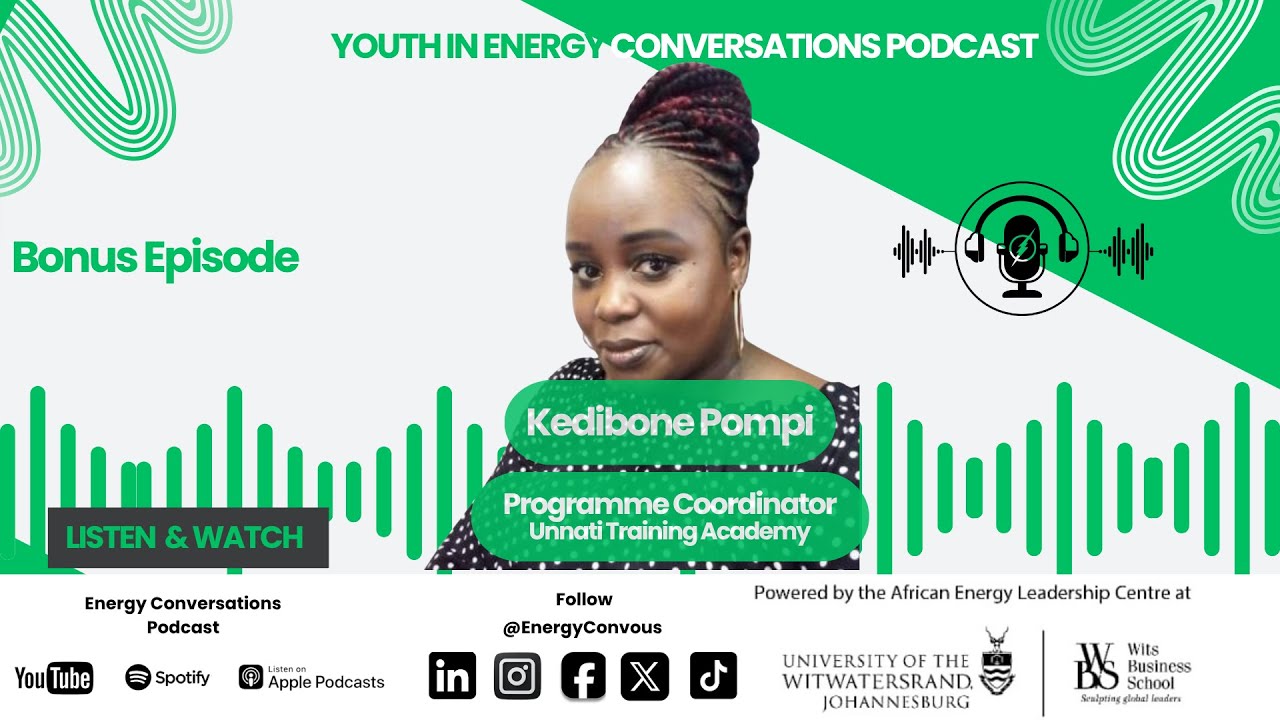
How to enter the Energy Sector Without a Formal Degree (Part 2)
Keywords
Summary
173 words
Critical Evaluation
Value of the Information & Strength of the Argument
The value of the information lies in its practical, first-hand account of entering the energy sector without a formal degree. Kedibone provides concrete examples of how she navigated the field, such as learning about energy audits and solar installations through training programs. The argumentation is based on personal experience rather than empirical data, which limits its generalizability but offers authentic insights. The hosts facilitate the discussion effectively, drawing out the guest’s story and advice. However, the episode lacks critical analysis or broader context, and the claims are not supported by external evidence.
Scientific Rigor, Source Quality, Title Accuracy
The scientific rigor is low, as the content is anecdotal and does not reference scientific literature or data. The only source cited is a link to Part 1 of the series, which is not a scientific source. The title accurately reflects the content, which is a career-focused discussion rather than a scientific exposition. The adequacy between title and content is good, but the lack of citations and reliance on personal testimony reduce the overall reliability.
182 words
Title / Content Match
The title accurately reflects the content, which focuses on entering the energy sector without a formal degree, as discussed by the guest.
Quality & Reliability
6/10
The video is an interview with a practitioner sharing personal experience and advice, not a scientific study. It provides anecdotal evidence and practical insights, but lacks rigorous data or citations. The information is credible as a personal testimony but not as a scientific source.
Key Moments
Markers derived by PSI from the transcript: the creator did not define chapters.
- Introduction of the podcast and guest Kedibone.
- Kedibone shares her background in administration and interest in energy.
- Discussion on challenges of learning without a formal qualification.
- Explanation of energy efficiency and energy audits.
- Kedibone talks about her experience visiting a wind farm.
- Discussion on the diversity of the energy sector and future goals.
- Advice for young people entering the energy sector.
- Information about Unati Training Academy's programs.
- Lightning round questions and final advice.
Cited Sources
- Part 1: How to enter the Energy Sector Without a Formal Degree — Referenced as a previous episode in the series.
External References
Contribution & Novelties
The video provides a personal narrative that highlights alternative pathways into the energy sector, emphasizing the role of short courses and on-the-job training. It offers practical advice for individuals without formal qualifications, which is a valuable perspective often underrepresented in energy discussions. The episode also touches on the importance of inclusivity in training programs, advocating for opportunities that do not require specific academic backgrounds.
Pour aller plus loin :
- Just Energy Transition — Provides context on the concept of a just transition, which is central to the discussion.
- Energy audit — Explains the technical process of energy audits, a key topic in the video.
- Renewable energy in South Africa — Offers background on the renewable energy landscape in South Africa, relevant to the guest’s experience.
125 words
Radar Profile
The radar profile shows moderate scores across all dimensions, with slightly higher scores in quantity of information and fiability, reflecting the video's strength in providing personal insights but weakness in technical depth and scientific rigor.