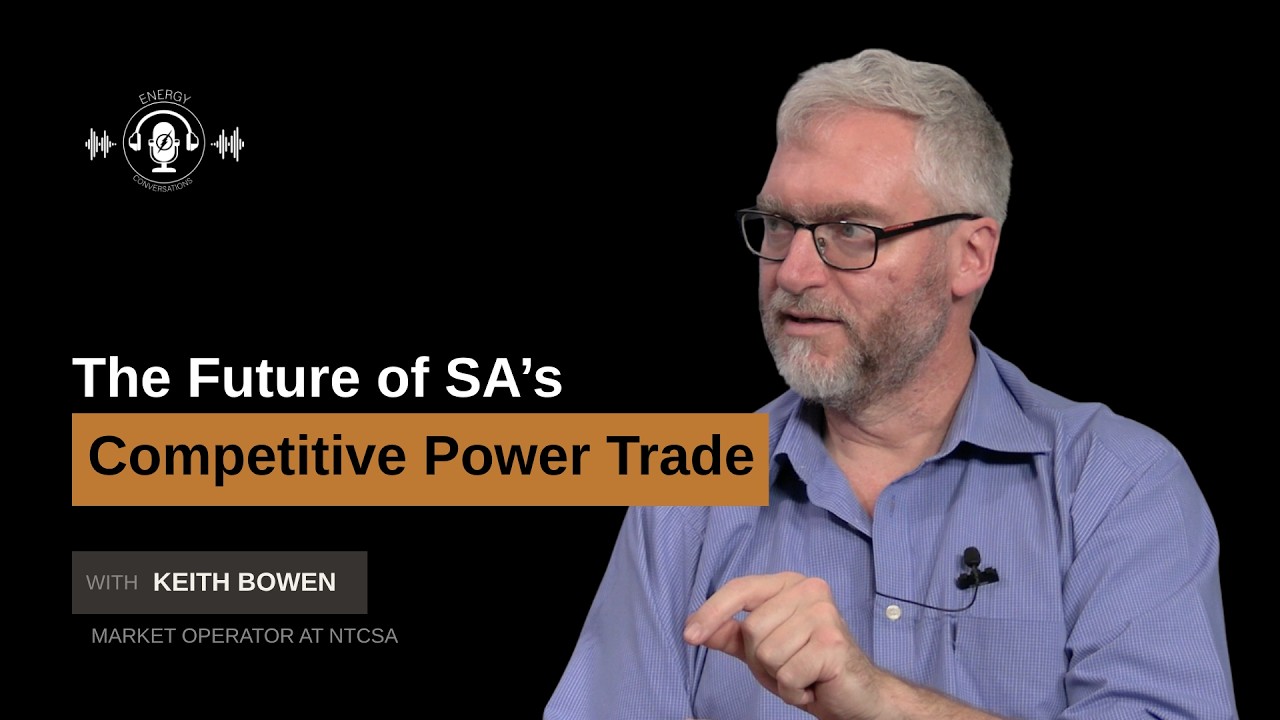
SA's Power Market Is Changing. Here's What to Know | Full Episode
Keywords
Summary
208 words
Critical Evaluation
Value of the Information & Strength of the Argument
The video provides valuable insights into the technical and practical aspects of South Africa’s electricity market reform. It offers a clear explanation of complex concepts such as wheeling, balancing mechanisms, and the role of the market operator. The argumentation is solid, based on the speaker’s direct involvement in the market’s design and operation. The discussion is well-structured, addressing key questions about the market’s purpose, changes, and implications. The speaker presents a balanced view, acknowledging challenges such as tariff reform and the need to protect vulnerable consumers. The value lies in its expert perspective and the clarity with which it explains the transition from a traditional utility model to a competitive market.
Scientific Rigor, Source Quality, Title Accuracy
The scientific rigor is moderate; the content is based on the speaker’s professional expertise and experience, but lacks citations to external sources or data. The quality of sources is limited to the speaker’s knowledge and the podcast’s context. The title accurately reflects the content, which is a comprehensive overview of the changing power market in South Africa. The discussion is relevant and timely, but the lack of verifiable references reduces its overall rigor.
199 words
Title / Content Match
The title accurately reflects the content, which focuses on the changes in South Africa's power market and provides an overview of the key aspects.
Quality & Reliability
7/10
The content is an expert interview with a senior market operator, providing detailed and technical insights into the restructuring of South Africa's electricity market. The information is current and specific, but relies on the speaker's expertise and perspective, with limited external verification or data.
Key Moments
Markers derived by PSI from the transcript: the creator did not define chapters.
- Introduction to the episode and guest Keith Bowen.
- Definition of wholesale market and why South Africa needs it.
- Explanation of wheeling and open access.
- Role of the market operator and system operator.
- Changes over the past 18 months: lifting licensing thresholds.
- Growth in wheeling capacity and need for balancing responsibility.
- Upcoming milestones: day-ahead market and external participation.
- Implications for ordinary South Africans: reliability and affordability.
- Discussion on tariff reform and subsidies.
- Skills needed for the new market and how professionals can transition.
Cited Sources
- Episode 1: Minister of Electricity and Energy Dr Kgosientsho Ramokgopa — Referenced as a previous episode in the series, providing context on the energy transition.
Concurring Sources
- South Africa's Electricity Regulation Amendment Act — The act mentioned in the video that enables competitive electricity trading.
Contribution & Novelties
This video provides an expert insider’s perspective on the practical implementation of South Africa’s electricity market reform, offering clarity on the roles of market operator, wheeling, and balancing mechanisms. It highlights the rapid growth in private wheeling and the challenges of integrating it into the grid. The discussion on tariff reform and subsidies is particularly valuable for understanding the social implications.
Pour aller plus loin :
- South Africa’s Electricity Regulation Act — Provides legal context for the market reforms.
- Wheeling (electricity) — Explains the concept of wheeling in electricity markets.
- Integrated Resource Plan (South Africa) — Details the government’s plan for future electricity generation.
104 words
Radar Profile
The radar profile shows high scores in quantity of information and technical level, indicating a detailed and specialized discussion. The quality and reliability scores are moderate, reflecting the expert opinion nature without external citations. The overall balance suggests a content that is informative but relies heavily on the speaker's perspective.
💬 Sur les 0 commentaires analysés, aucune tendance n'a pu être dégagée.