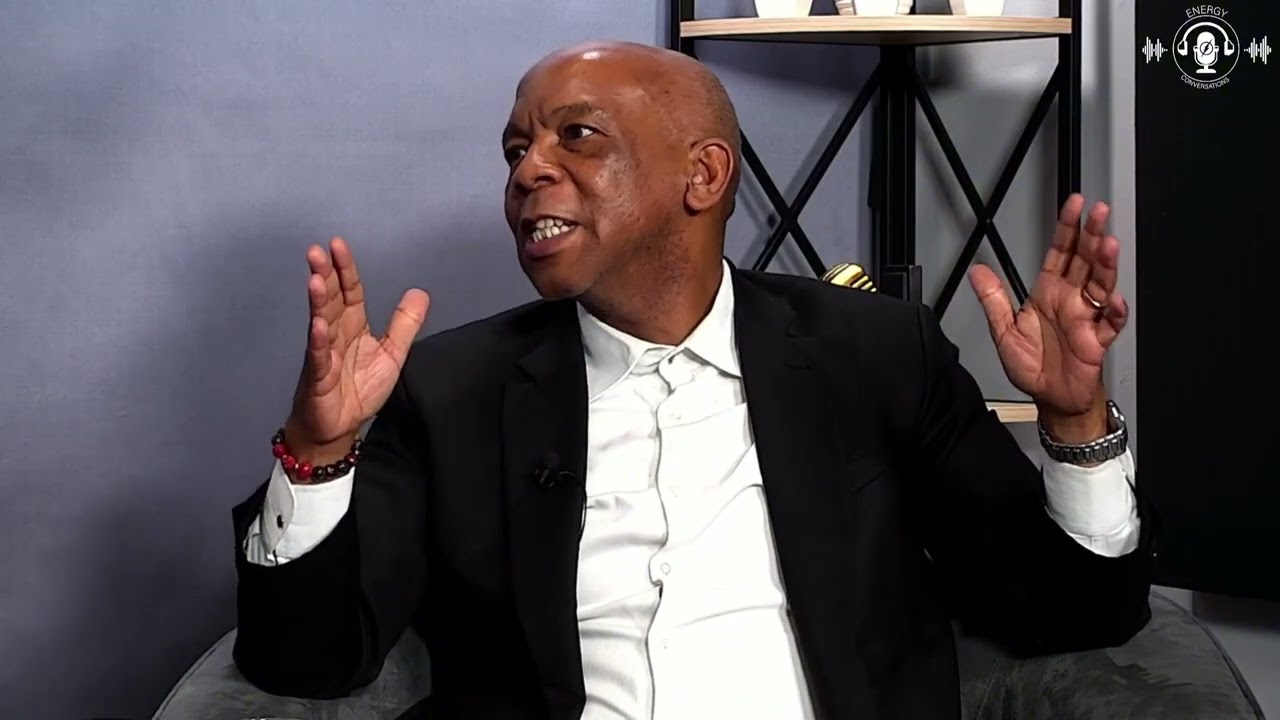
30GW Energy Build: The 49% Local Ownership Rule Explained
Keywords
Summary
175 words
Critical Evaluation
Value of the Information & Strength of the Argument
The video provides valuable insights into South Africa’s energy procurement strategy, offering specific numbers and policy details. The argumentation is coherent, with the minister addressing criticisms and explaining the rationale behind the 49% local ownership rule. However, the discussion is one-sided, lacking independent analysis or counterarguments. The value lies in the direct explanation from a key policymaker, but the argumentation is not critically examined.
Scientific Rigor, Source Quality, Title Accuracy
The scientific rigor is moderate; the video is an opinion piece from a government official, not a peer-reviewed study. Sources are not cited, but the minister references the IRP and the South African Renewable Energy Master Plan. The title accurately reflects the content. No comments were provided for analysis.
128 words
Title / Content Match
The title accurately reflects the content, focusing on the 30GW build and the 49% local ownership rule.
Quality & Reliability
7/10
The video features a government minister explaining policy details, providing specific figures and acknowledging criticisms. However, it lacks independent verification and is a promotional platform for the minister's agenda.
Key Moments
Markers derived by PSI from the transcript: the creator did not define chapters.
- Introduction and context: How small players can participate in large procurement programs.
- Discussion on systemic challenges and the need for multi-stakeholder collaboration.
- Minister explains the 30GW breakdown: 11.1GW PV, 8.9GW wind, 6GW gas, 4.5GW battery.
- Introduction of continuous bid windows to stimulate industry.
- Criticism of transmission tenders' high barriers and the rationale for initial phase.
- Explanation of 49% local ownership requirement and disaggregation of components.
- Discussion on distribution transformers and local capacity.
- Challenges with large transformers over 500 MVA and building domestic capacity.
- Emphasis on protecting end consumer by managing costs and tariffs.
- Commitment to ensure new participants in future phases.
Cited Sources
- South African Renewable Energy Master Plan — Mentioned as a plan speaking to localizing manufacturing.
- Integrated Resource Plan (IRP) — Referenced as setting out gigawatt targets.
Concurring Sources
- South African Renewable Energy Master Plan — Aligns with the goal of localizing manufacturing.
Contribution & Novelties
The video offers a direct explanation from a key government official on the 49% local ownership rule and the strategy to integrate local players into the 30GW energy build. It provides specific figures and acknowledges criticisms, offering a unique insider perspective. The discussion on disaggregating components for local content is particularly insightful.
Pour aller plus loin :
- South Africa’s Integrated Resource Plan — Background on the country’s electricity planning.
- Renewable Energy Independent Power Producer Procurement Programme — Context on the REIPPPP.
- South African Renewable Energy Master Plan — Official document on local manufacturing.
93 words
Radar Profile
The radar profile shows high scores in information quantity and quality, with moderate technical level and reliability. This indicates a content-rich discussion with some technical depth, but lacking independent verification.