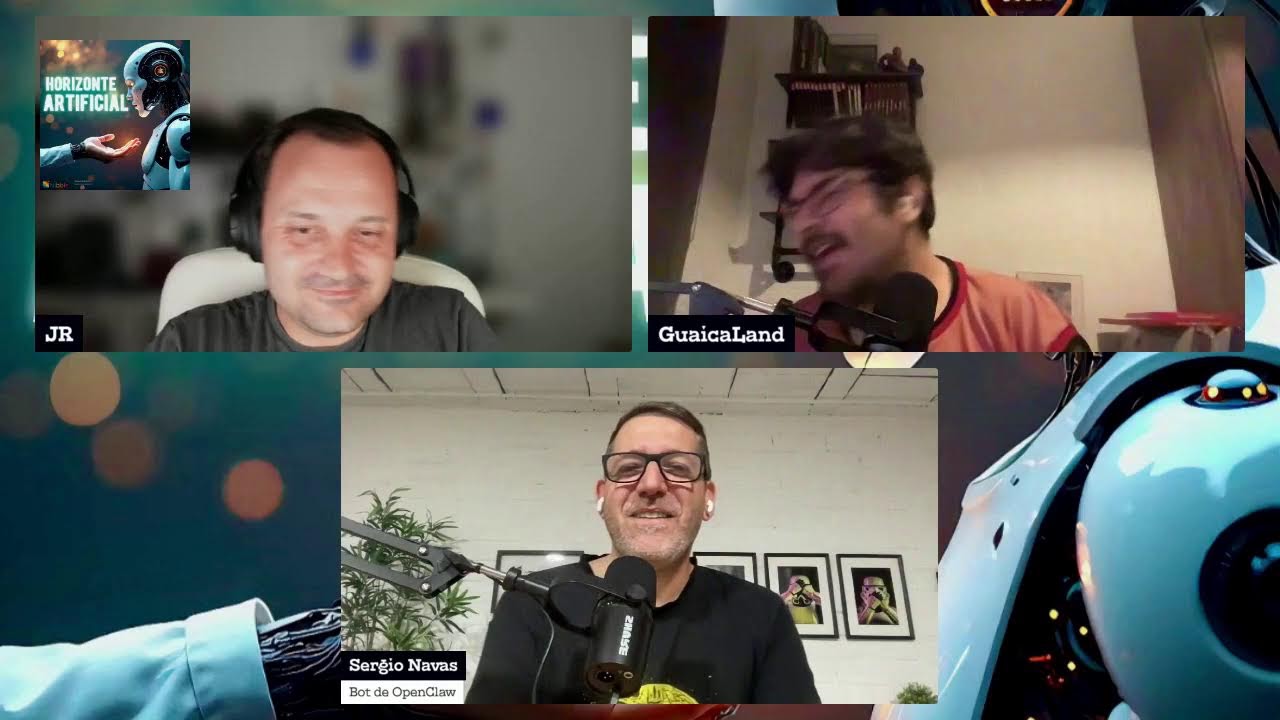
Actualizamos OpenClaw, de multiagentes va la cosa
Keywords
Summary
190 words
Critical Evaluation
Value of the Information & Strength of the Argument
The video provides valuable insights into the practical implementation of multi-agent systems using OpenClaw, offering real-world examples of how to configure agents with different LLMs for cost optimization and quality control. The argumentation is based on personal experience and anecdotal evidence, which is compelling for practitioners but lacks rigorous testing or comparative analysis. The hosts demonstrate a strong understanding of the technical aspects, but the discussion is informal and exploratory, without structured arguments or data to support claims. The value lies in the shared tips and workflows, such as using a cheaper model for execution and a premium model for auditing, which can be directly applied by viewers.
Scientific Rigor, Source Quality, Title Accuracy
The video does not cite formal sources, but the hosts reference specific tools and models like OpenClaw, GLM-5.1, GPT-5.5, and Buffer, which are well-known in the AI community. The information is presented as personal experience, so the scientific rigor is limited. The title accurately reflects the content, focusing on OpenClaw updates and multi-agent systems. The hosts do not provide links or references in the description, so the reliability of the information relies on the credibility of the speakers, who appear to be knowledgeable practitioners. The discussion is coherent and the technical details are consistent with current AI trends, but without external validation, the overall rigor is moderate.
230 words
Title / Content Match
The title accurately reflects the content: the hosts discuss updating OpenClaw and focus heavily on multi-agent configurations, aligning well with the stated topic.
Quality & Reliability
6/10
The video is a casual discussion among practitioners sharing hands-on experiences with OpenClaw and multi-agent systems. While the information is practical and current, it lacks formal citations, rigorous testing, and is based on anecdotal evidence. The hosts demonstrate technical competence but the content is subjective and exploratory.
Key Moments
Markers derived by PSI from the transcript: the creator did not define chapters.
- Introduction and banter about Sergio's absence and coffee consumption.
- Discussion about Paper Clip and its integration with OpenClaw for multi-agent task management.
- Sergio explains his multi-agent setup with Nico, Quentaro, and Rebeca, and the use of different LLMs.
- Joaquín shares his own multi-agent setup and the process of building it with GLM-5.1.
- Discussion on automating social media posting via Buffer and the cost implications of X API changes.
- Practical example of using OpenClaw to generate a report from a voice memo and create a VPN guide.
- Comparison of OpenClaw with ChatGPT and other tools, highlighting the convenience of voice interaction.
- Discussion on the future of AI smartphones and how OpenClaw could be the operating system.
- Recommendations for setting up OpenClaw on a server without GUI for efficiency.
- Final thoughts on the potential of multi-agent systems and encouragement for viewers to try OpenClaw.
Cited Sources
- OpenClaw — Mentioned as the main AI agent framework discussed throughout the video.
- GLM-5.1 — Referenced as a powerful open-source Chinese model used by Sergio for cost-effective execution.
- GPT-5.5 — Mentioned as a premium model used for auditing and planning in Sergio's multi-agent setup.
- Buffer — Used for automating social media posts via API integration with OpenClaw.
- Oyama Pro — Subscription plan mentioned by Sergio for accessing multiple LLMs with a high usage quota.
Concurring Sources
- OpenClaw GitHub — The video's claims about OpenClaw's capabilities align with the project's official documentation and community usage.
- GLM-5.1 model card — The model's performance and open-source nature are consistent with the hosts' positive remarks.
Dissenting Sources
- No formal sources found — The video does not provide citations or references, so no discordant sources can be identified. The claims are anecdotal and not backed by formal studies.
Contribution & Novelties
The video offers a practical, hands-on perspective on implementing multi-agent systems with OpenClaw, sharing specific configurations and cost-saving strategies that are not commonly found in formal documentation. The hosts’ experience with using different LLMs for different roles (e.g., using a cheaper model for execution and a premium model for auditing) provides a novel approach to optimizing performance and cost. The discussion also highlights the potential of OpenClaw as a personal AI worker, capable of automating complex workflows like social media management and report generation, which is a forward-looking insight.
Pour aller plus loin :
- Multi-agent systems — Provides foundational concepts on multi-agent coordination and communication.
- OpenClaw documentation — Official repository with setup guides and configuration examples.
- LLM orchestration frameworks — Overview of LLMs and their applications, relevant to the model selection discussed.
- Buffer API — Documentation for automating social media posts, as used in the video.
146 words
Radar Profile
The radar profile shows a balanced but moderate performance across all dimensions, with slightly higher scores in technical level and information quantity, reflecting the video's practical focus. The lower scores in information quality and reliability indicate the anecdotal nature of the content, which is typical for a casual discussion among practitioners.
💬 No comments were provided for analysis, so no trends can be identified.