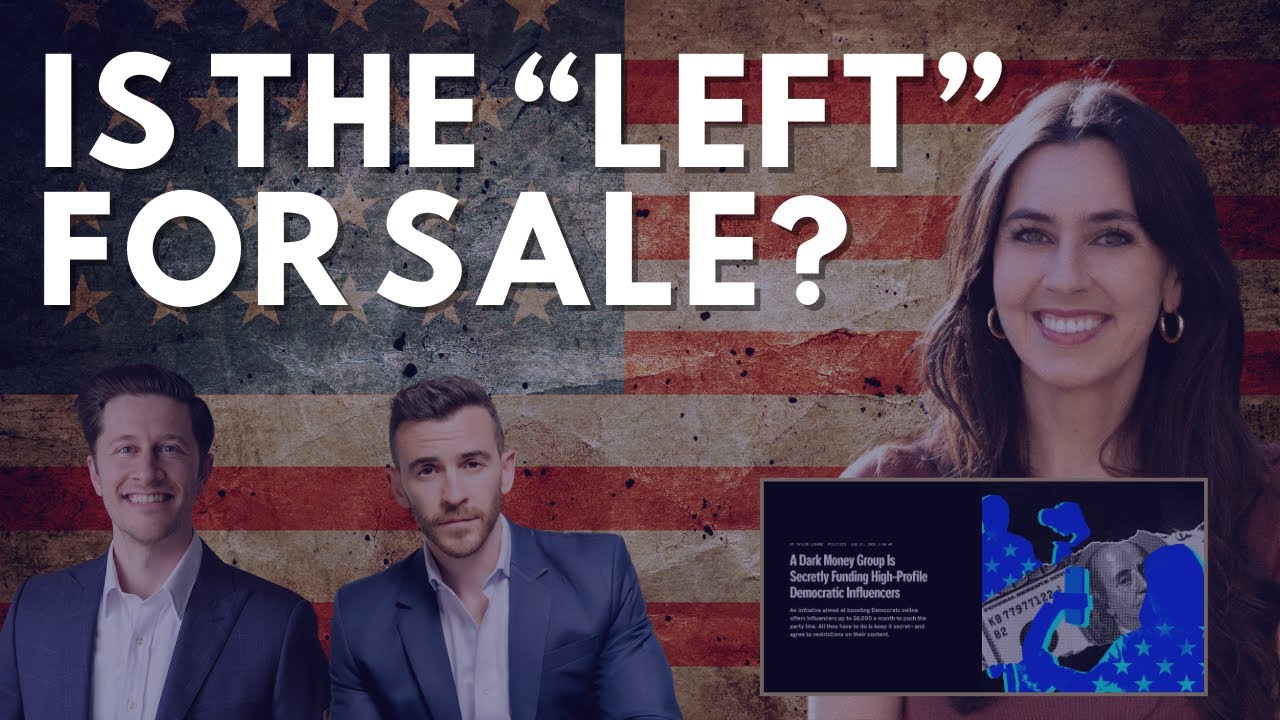
Journalist Exposes Dark Money on the Left
Keywords
Summary
142 words
Critical Evaluation
Value of the Information & Strength of the Argument
The video offers valuable insights into the complexities of political funding in independent media, highlighting the tension between financial necessity and editorial independence. The argumentation is solid, as the creator clearly distinguishes between his personal stance and the facts of the case, and he acknowledges the valid reasons why creators might accept such funding. He also provides a nuanced comparison with his own experience, which strengthens his credibility. However, the argument is somewhat one-sided, as he does not deeply explore the counterarguments from the creators involved or the potential benefits of coordinated funding.
Scientific Rigor, Source Quality, Title Accuracy
The creator references the original Wired article and mentions other commentators (David Pakman, Emma Vigeland, etc.) but does not provide direct links or citations. He also mentions the 1630 Fund and its $400 million spending, but without a source. The title accurately reflects the content, and the video is well-structured, though it could benefit from more explicit sourcing. The creator’s personal opinions are clearly labeled, which adds to the overall rigor.
179 words
Title / Content Match
The title accurately reflects the content, which focuses on the dark money controversy and its implications for left-wing media.
Quality & Reliability
7/10
The video provides a balanced analysis of a controversial article, clearly distinguishing facts from opinions, and acknowledges the complexity of the issue. The creator's personal stance is transparent, and he references the original article and other commentators, though he does not provide direct citations or links to primary sources.
Key Moments
Markers derived by PSI from the transcript: the creator did not define chapters.
- Introduction: The creator sets the context of the political climate and introduces the topic of dark money in left-wing media.
- Discussion of the Wired article by Taylor Lorenz and the Chorus network.
- Comparison with other left-wing controversies, including TYT's pivot and California's gerrymandering.
- Analysis of the $8,000 monthly payments and the content restrictions in the contracts.
- The creator shares his personal experience with MeidasTouch and contrasts it with the Chorus model.
- Call for transparency and integrity in media, and promotion of his own newsletter and collaborations.
- Conclusion: The creator urges larger creators to reset the rules and emphasizes the importance of ideas over party loyalty.
Cited Sources
- Wired article by Taylor Lorenz (not directly linked) — The article that exposed the dark money funding for left-leaning influencers.
Concurring Sources
- Wired article by Taylor Lorenz — The primary source of the controversy, which the video analyzes.
Dissenting Sources
- Responses from creators mentioned in the article (e.g., David Pakman, Emma Vigeland) — The video mentions that these creators have responded, but does not provide their counterarguments in detail.
Contribution & Novelties
The video provides a thoughtful analysis of the dark money controversy, offering a balanced perspective that acknowledges the complexities of funding in independent media. It adds value by sharing the creator’s personal experience with a similar partnership (MeidasTouch) and by framing the issue within the broader context of left-wing divisions. The call for transparency and integrity is a constructive contribution to the debate.
Pour aller plus loin :
- Dark money — Overview of dark money in politics.
- Political action committee — Explanation of PACs and their role.
- Media bias in the United States — Context on media bias and funding.
100 words
Radar Profile
The radar profile shows high scores in information quantity and quality, with moderate technical level and high reliability. This indicates a well-balanced and informative video that is accessible to a general audience while maintaining credibility.
💬 Positif. Sur les 30 commentaires analysés, la majorité exprime un soutien fort au créateur et apprécie son analyse équilibrée, bien que quelques-uns soulèvent des désaccords sur des points spécifiques.