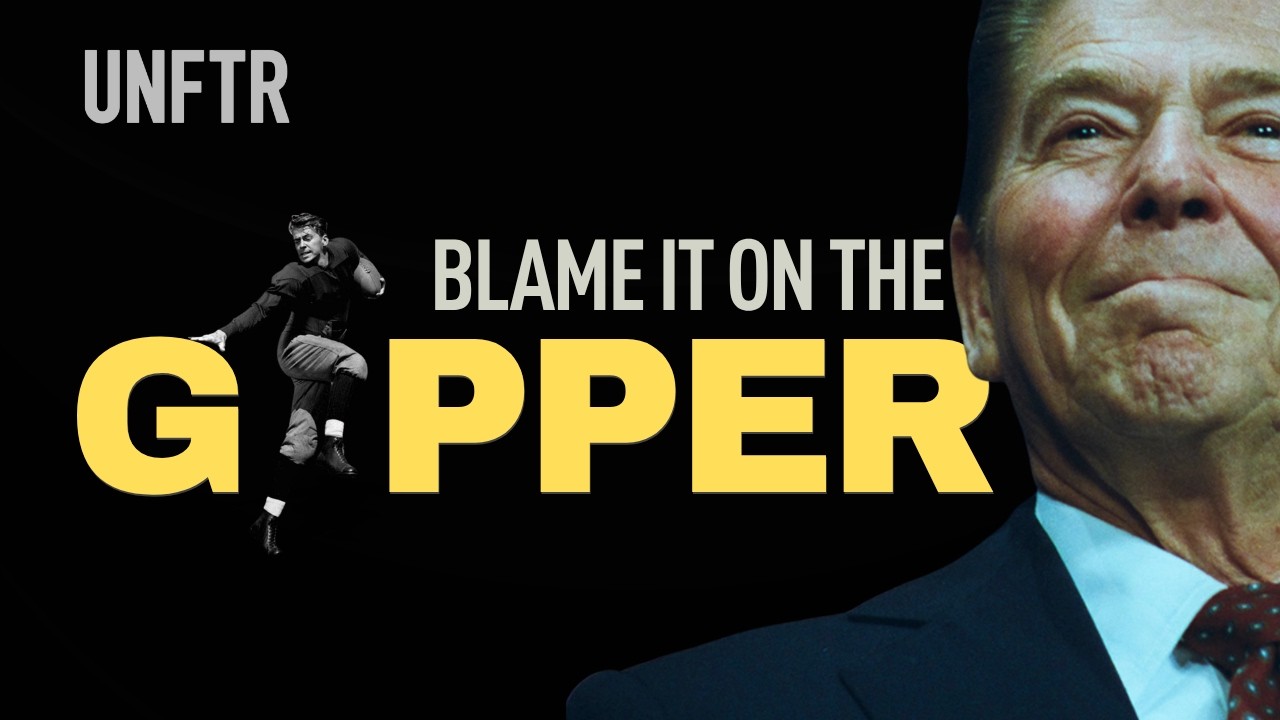
Did Reagan Destroy the American Dream?
Keywords
Summary
182 words
Critical Evaluation
Value of the Information & Strength of the Argument
The video provides a coherent and well-structured argument, connecting Reagan’s policies to long-term structural changes in the US economy and society. It effectively uses historical data and examples to support its claims, such as the increase in income inequality and the impact of tax cuts. The argumentation is persuasive, though it is clearly one-sided, presenting a critical view without engaging with conservative counterarguments. The video’s value lies in its synthesis of various sources and its ability to explain complex policy impacts in an accessible manner.
Scientific Rigor, Source Quality, Title Accuracy
The video cites a range of sources, including think tanks (Heritage Foundation, Roosevelt Institute), investigative journalism (ProPublica, The Nation), and government reports (DOJ OIG). These are credible and relevant, though the selection is biased towards progressive perspectives. The title accurately reflects the content, which is a critical examination of Reagan’s legacy. The video does not provide a balanced view, but it is transparent about its perspective.
166 words
Title / Content Match
The title accurately reflects the content, which critically examines Reagan's legacy and its impact on the American Dream.
Quality & Reliability
7/10
The video is a well-argued progressive critique of Reagan's policies, supported by a range of sources including think tanks, investigative journalism, and government reports. However, it is explicitly opinionated and selective in its use of evidence, omitting counterarguments and relying on rhetorical framing.
Chapters
Cited Sources
- New Reagan Institute Survey: Americans Still Believe in Strong US Global Leadership — Cited to illustrate the Reagan Institute's positive view of Reagan's legacy.
- Javits Sees GOP Hurt by Reagan; Fears Extinction of Party If... — Cited to show that Reagan was initially considered too radical by some Republicans.
- 1976: The Last Time Republicans Duked It Out to the Last Heated Minute — Cited to provide context on the 1976 Republican primary.
- How Four Decades of Tax Cuts Fueled Inequality — Cited to support the claim that tax cuts have fueled inequality.
- To Put Trickle-Down Economics to Rest — Cited to argue against trickle-down economics.
- Citizens United Explained — Cited to explain the impact of Citizens United on campaign finance.
- Reagan and Heritage: A Unique Partnership — Cited to show the Heritage Foundation's role in shaping Reagan's agenda.
- The Conservative Promise — Cited to provide a critical perspective on Reagan's conservatism.
- Reagan, PATCO, and the 1981 Strike: The Legacy of Air Traffic Controllers' Union and Public Sector Strikebreaking — Cited to discuss the PATCO strike and its impact on labor.
- The Truth Behind the Lies of the Original 'Welfare Queen' — Cited to debunk the 'welfare queen' myth.
- Reagan Era — Cited to discuss the War on Drugs during the Reagan era.
- The CIA's Inspector General Report on Contra Drug Trafficking — Cited to support claims about Contra drug trafficking.
- The Best Reporting on the Federal Push to Militarize Local Police — Cited to discuss the militarization of local police.
- The Hidden Cost of the U.S. Military: The Real Budget Is Far Larger Than Reported — Cited to argue that the military budget is larger than officially reported.
- White House Photo Collection Galleries — Source of photos used in the video.
Concurring Sources
- The Conservative Promise — Provides a critical view of Reagan's conservatism, aligning with the video's argument.
- How Four Decades of Tax Cuts Fueled Inequality — Supports the claim that tax cuts have increased inequality.
- To Put Trickle-Down Economics to Rest — Argues against trickle-down economics, consistent with the video's critique.
Dissenting Sources
- Reagan and Heritage: A Unique Partnership — This source, from the Heritage Foundation, presents Reagan's policies in a positive light, contrasting with the video's critical assessment.
- New Reagan Institute Survey: Americans Still Believe in Strong US Global Leadership — This source suggests that Reagan's legacy is viewed favorably by many Americans, contradicting the video's negative portrayal.
External References
Contribution & Novelties
The video synthesizes well-known critiques of Reagan’s policies into a coherent narrative, emphasizing the interconnectedness of tax cuts, welfare reform, and military spending. It offers a clear framework for understanding how these policies have shaped contemporary American politics and inequality. The video’s original contribution lies in its framing of Reagan’s legacy as a deliberate shift in mindset that persists today.
Pour aller plus loin :
- Neoliberalism — Provides background on the ideological framework discussed.
- Supply-side economics — Explains the economic theory behind Reagan’s tax cuts.
- War on drugs — Contextualizes the criminal justice policies mentioned.
- Citizens United v. FEC — Details the Supreme Court case on campaign finance.
- Posse Comitatus Act — Explains the law limiting military involvement in domestic law enforcement.
122 words
Radar Profile
The radar profile shows high scores in information quantity and quality, reflecting the video's dense and well-sourced content. The technical level is moderate, making it accessible to a general audience. The overall reliability is good, though the one-sided perspective slightly reduces its score.
💬 No comments were provided for analysis.