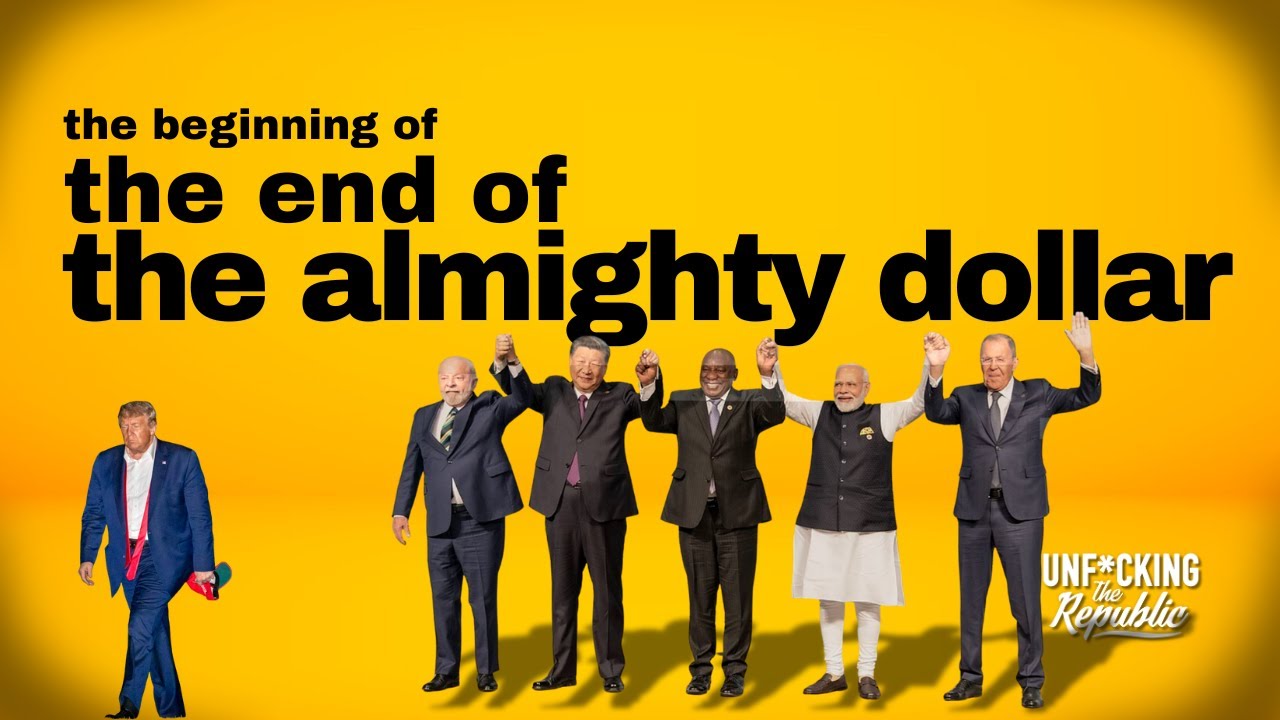
BRICS Takes Over: India's Plan to Dethrone the Dollar
Keywords
Summary
149 words
Critical Evaluation
Value of the Information & Strength of the Argument
The video provides a clear and engaging explanation of the BRICS Unit and its potential impact on the global financial system. It effectively argues that the US is undermining its own currency’s dominance through policy decisions. The argumentation is persuasive, but it relies on a one-sided perspective, emphasizing the negative aspects of US policy while downplaying potential weaknesses of the BRICS initiative. The video does not present counterarguments or address potential challenges in detail, which weakens its overall objectivity.
Scientific Rigor, Source Quality, Title Accuracy
The video references specific events and mechanisms, such as the BRICS Unit and India’s UPI, but does not provide direct citations or links to primary sources. The description includes links to UNFTR’s own website and social media, but no external references. The title accurately reflects the content, but the video’s partisan tone may affect its perceived reliability. The video does not mention any peer-reviewed studies or official reports, relying instead on general knowledge and commentary.
169 words
Title / Content Match
The title accurately reflects the content, which focuses on India's leadership in BRICS and its plans to challenge the dollar's dominance.
Quality & Reliability
6/10
The video presents a coherent argument about BRICS' efforts to create an alternative to the dollar-based system, but it relies heavily on opinion and interpretation rather than rigorous data. It cites specific events and mechanisms (e.g., the BRICS Unit, India's UPI) but lacks detailed sourcing or verification. The tone is persuasive and partisan, which may affect objectivity.
Key Moments
Markers derived by PSI from the transcript: the creator did not define chapters.
- Introduction: The world is building a post-America landscape.
- Discussion of the US dollar's exorbitant privilege and self-sabotage.
- India takes over BRICS chairmanship and unveils agenda.
- Introduction of the BRICS Unit: digital currency backed by gold and basket.
- Explanation of SWIFT and its role in the dollar system.
- Comparison with US stablecoins and criticism of Trump administration.
- Four pillars to replace SWIFT: technology, adoption, stability, trust.
- India's UPI and Ethiopia's adoption of digital infrastructure.
- Discussion of trust as the most important pillar and US erosion of it.
- Conclusion: BRICS Unit as a credible alternative, not immediate replacement.
Cited Sources
- UNFTR Memberships — Support the show
- UNFTR Merch — Shop UNFTR Merch
- UNFTR Shop — Buy coffee and other products
Concurring Sources
- BRICS — Background on BRICS membership and goals.
- De-dollarization — General trend of reducing reliance on the US dollar.
Dissenting Sources
- The Dollar's Dominance — Contrasting view on the resilience of the dollar as a reserve currency.
Contribution & Novelties
The video provides a timely analysis of India’s BRICS agenda and the introduction of the BRICS Unit, offering a clear explanation of its mechanics and potential implications. It highlights the contrast between government-backed BRICS initiatives and private US stablecoins, adding a critical perspective on US policy.
Pour aller plus loin :
- BRICS — Overview of the BRICS group and its evolution.
- SWIFT — Explanation of the SWIFT network and its role in global finance.
- Unified Payments Interface (UPI) — Details on India’s digital payment system.
- Special Drawing Rights (SDR) — A similar concept of an international reserve asset.
- John Maynard Keynes’ bancor — Historical proposal for an international currency.
109 words
Radar Profile
The radar profile shows moderate scores across all dimensions, with slightly higher scores in quantity of information and lower in technical level and reliability. This suggests the video is informative but not deeply technical or highly rigorous, aligning with its opinion-based nature.
💬 Très négatif : Sur les 30 commentaires analysés, la majorité exprime une forte désapprobation envers les États-Unis et son administration, avec des critiques virulentes et un soutien marqué à la dédollarisation.